




Motorcycle maintenance isn’t just about oil changes, tire pressure, or chain tension. Electrical systems, often overlooked, play a critical role in ensuring your bike starts reliably, runs smoothly, and keeps you safe on the road. From your battery and wiring to lights and ignition systems, skipping preventive motorcycle electrical maintenance can lead to unexpected breakdowns, expensive repairs, and even safety hazards.
Many riders only notice electrical issues when the bike refuses to start or lights flicker mid-ride. By then, the problem has often been building for weeks or months. Preventive motorcycle electrical maintenance doesn’t take long, but it can save you significant headaches and keep your bike performing at its best.
How Important is Motorcycle Electrical Maintenance?
Motorcycles have a surprisingly complex electrical system. Even a small issue like a corroded connector or loose wire can create chain reactions:
- Battery failure: Preventable neglect is the most common cause of no-start situations.
- Lighting issues: Dim or flickering lights can reduce visibility and safety.
- Ignition and charging problems: Poor connections can affect spark, throttle response, or charging efficiency.
- Accessory malfunctions: GPS, heated grips, or aftermarket electronics can fail if the system is stressed.
A proactive approach ensures reliability, longer component life, and peace of mind while riding.
Motorcycle Electrical Components Most Riders Forget
Some parts of your bike’s electrical system are easy to overlook:
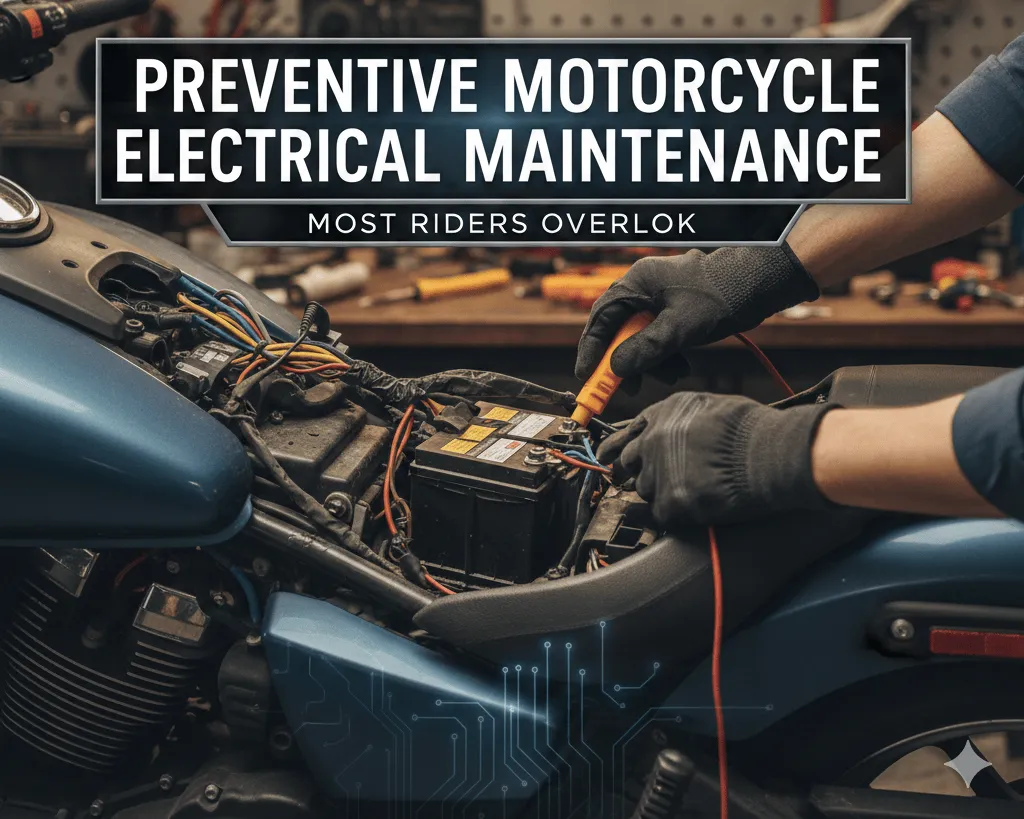
1. Battery Connections
Loose or corroded terminals are a silent killer. Even a fully charged battery may fail to deliver power if connections are poor.
- Check for corrosion, especially on exposed metal posts.
- Tighten terminals securely, but avoid over-tightening.
- Use dielectric grease on terminals to prevent future corrosion.
2. Fuses and Relays
Fuses protect your bike’s circuits from shorting or overcurrent. Relays control power flow to major components. Most riders check these only when something stops working.
- Inspect fuses regularly for discoloration or damage.
- Make sure relays click and function as intended.
- Keep spare fuses on hand for emergencies.
3. Wiring Harness and Connectors
Vibrations, heat, and moisture can degrade wiring over time. Loose or frayed wires cause intermittent electrical failures.
- Visually inspect visible wires for chafing or cracks.
- Make sure connectors are fully seated and clean.
- Use electrical tape or heat-shrink tubing to protect exposed wires.
4. Charging System
Your bike’s alternator, stator, and regulator/rectifier keep the battery charged while riding. Many riders only notice a problem when the battery dies mid-ride.
- Check battery voltage with a multimeter. A healthy battery should read around 12.6V (engine off) and 13.5–14.5V when running.
- If voltage readings are low, have your charging system inspected.
- Clean all connections between the battery, alternator, and regulator.
5. Switches and Controls
Handlebar switches, ignition keys, and starter buttons are used every ride, but rarely cleaned or lubricated. Dirt, moisture, or corrosion can cause intermittent failures.
- Use contact cleaner for switches if you notice stiffness or sticking.
- Inspect brake and clutch switches for proper engagement.
- Test turn signals, horn, and high/low beam functions regularly.
6. Lights and Indicators
Headlights, tail lights, brake lights, and turn indicators are vital for safety. Many riders ignore them until a bulb burns out.
- Inspect bulbs for brightness and proper operation.
- Clean lens covers to improve light output.
- Replace aging bulbs proactively to prevent sudden failure.
Simple Preventive Maintenance Steps
- Monthly Inspection: Check battery voltage, connections, fuses, lights, and switches.
- Cleaning Terminals and Connectors: Use a soft brush, contact cleaner, or dielectric grease to prevent corrosion.
- Check for Frayed or Exposed Wires: Repair minor damage immediately.
- Test Charging System: Use a multimeter during routine maintenance to ensure the battery charges correctly.
- Lubricate Moving Switches: Keep starter and clutch/brake switches smooth.
- Check Lights Before Every Ride: A glance ensures everything functions and improves safety.
Even spending 15–20 minutes a month on these checks can prevent unexpected breakdowns and costly repairs.
Tips from Experienced Riders
- Keep a small electrical maintenance kit in your garage: multimeter, contact cleaner, dielectric grease, spare fuses, and electrical tape.
- Document maintenance dates and findings. Over time, patterns emerge, allowing you to spot recurring weak points.
- Don’t ignore aftermarket accessories; they can strain the electrical system if not installed properly.
- For long-term storage, disconnect the battery or use a trickle charger to maintain charge and prevent sulfation.
Preventive motorcycle electrical maintenance is one of the easiest ways to ensure reliability, performance, and safety. Most riders forget simple checks like battery terminals, fuses, connectors, switches, and lights until it’s too late. Spending a small amount of time each month inspecting and cleaning these components saves headaches, keeps your bike running smoothly, and prevents roadside surprises.
Motorcycles are mechanical and electrical systems in one package. Treating the electrical side with the same diligence as engine or suspension maintenance ensures every ride is trouble-free and enjoyable. A few minutes of preventive care can make the difference between a smooth trip and an unexpected breakdown.