




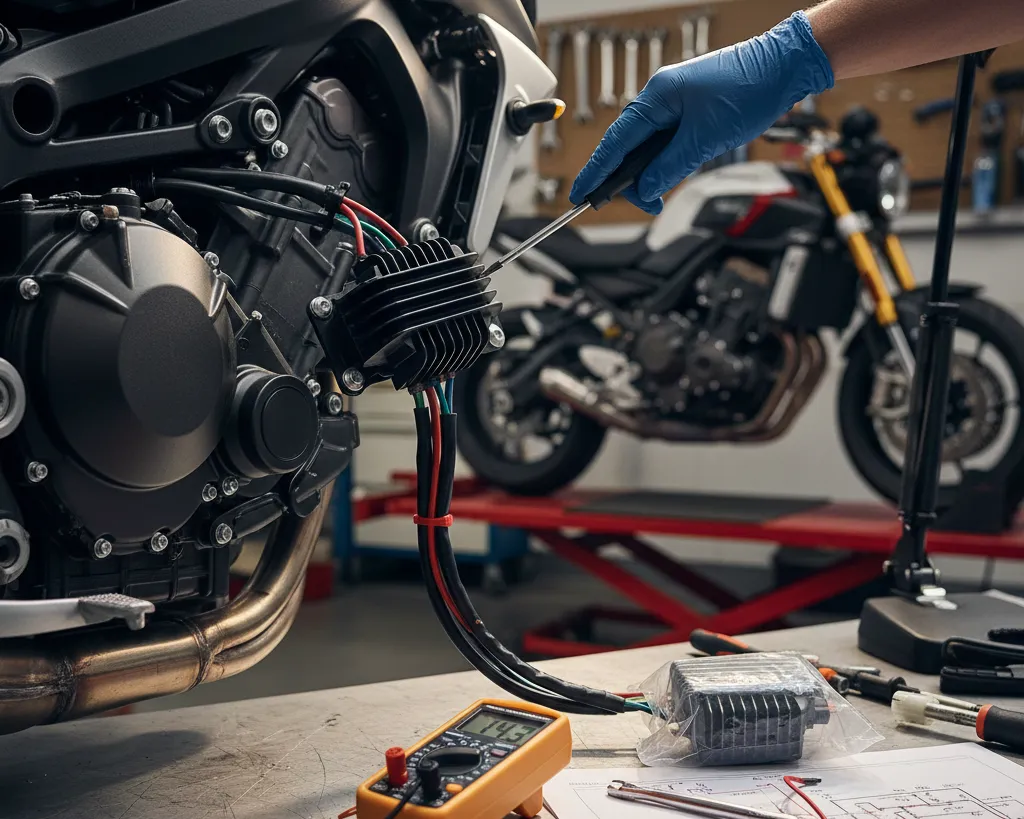

Every motorcycle has a heartbeat. When you twist the throttle, that heartbeat keeps the engine running, the lights on, the gauges working, and the battery charged. But few riders think about the part that makes sure all that electrical energy stays stable and reliable. That part is the voltage regulator. Check out the complete range at Aliwheels.com.
If you’ve ever had headlights flicker, your battery drain overnight, or your bike suddenly stall with a weak spark, the voltage regulator could be the overlooked problem. This modest component plays a major role in your motorcycle’s charging system. In this guide, we explain what the regulator does, how it works with the charging system, signs of failure, and what every rider should know before replacing it.
What’s a Voltage Regulator and What Does It Do?
The voltage regulator is part of the motorcycle charging system. Its job is simple in description and critical in purpose: it keeps the electrical voltage within a safe range so the battery doesn’t overcharge or undercharge.
When your engine runs, the alternator generates electrical power. If left unchecked, that power fluctuates with engine speed. At idle, the power can be low. At high rpm, it can spike. A battery cannot handle those spikes, and other electronics on your bike can be damaged if the voltage gets too high.
The regulator takes the raw energy from the alternator and stabilizes it. It makes sure the battery receives a steady, safe voltage so it can stay charged and your lights, instruments, and ignition system work properly. This part often works quietly in the background. Most riders only think about it when something goes wrong.
How does the Charging System Work Together?
To understand why the voltage regulator matters, it helps to know its role in the full charging circuit. The main parts of the motorcycle charging system are:
- Stator / Alternator: Generates electrical power when the engine runs.
- Voltage Regulator: Keeps the power stable and appropriate for the battery.
- Battery: Stores and provides consistent electrical energy for starting and accessories.
- Wiring and Connectors: Safely transfer current throughout the bike.
When the engine spins, the alternator produces AC (alternating current). The regulator converts that into DC (direct current) that the battery can use and store. If the regulator fails, the alternator’s power can be too high, too low, or wildly unstable. A healthy regulator keeps the voltage between roughly 13.8 and 14.5 volts while riding. Outside that range, the battery either discharges or overcharges. Both conditions cause problems sooner or later.
Common Symptoms of a Failing Voltage Regulator
Every mechanic and experienced rider knows that electrical problems are often mistaken for battery issues. Many riders replace the battery, only to find their new battery dies again because the regulator is faulty. Here are the common signs that the voltage regulator may be failing:
1. Battery Doesn’t Hold Charge
If you fully charge the battery, then come back the next day and it’s low again, the regulator may not be supplying the correct charge. A weak or failing regulator can starve the battery of current.
2. Headlights or Dash Lights Flicker
Fluctuating brightness while revving the engine or idling can indicate unstable voltage. If the lights dim at idle and brighten at higher RPM without smooth regulation, the regulator isn’t stabilizing output properly.
3. Battery Overheats or Swells
This is more serious. Overcharging from a faulty regulator can make the battery bulge or get hot. This degrades battery life quickly and can cause failure in other electrical components.
4. Engine Sputters or Cuts Out Unexpectedly
A weak or erratic spark due to unstable voltage can make the engine misfire, hesitate, or stall, especially at high speed or low rpm.
5. Electrical Accessories Act Strange
Gauges resetting, digital displays glitching, or accessories turning on/off unpredictably suggest unstable voltage. Your regulator should protect sensitive electronics from power spikes.
If you notice any of these symptoms, it’s worth testing the charging system before replacing parts indiscriminately. A quick voltage test at the battery terminals with the engine running tells a lot about system health.
How to Test a Voltage Regulator and Charging System?
You don’t need expensive tools to check whether your regulator and charging system are doing their job.
Step 1. Check battery voltage at rest
With the engine off, check the battery with a multimeter. A healthy bike battery at rest should read about 12.6 to 12.8 volts.
Step 2. Start the engine and watch the voltage
Let it idle and read the voltage again. Then rev to about 3,000 rpm. A charging system in good order will show voltage rising but staying steady, typically between 13.8 and 14.5 volts. If the reading stays low or spikes well above 15 volts, the regulator or stator needs attention.
Step 3. Watch for consistency
The reading should not bounce up and down wildly. If it does, that’s a sign of poor regulation.
Testing is simple and inexpensive, far cheaper than replacing a good component or a new battery prematurely.
Why Voltage Regulators Fail?
Just like any other part, voltage regulators wear out over time. They are subject to heat, vibration, and electrical stress. Some common causes of regulator failure include:
- Excessive heat exposure under the seat or near the engine
- Poor quality replacement parts or cheap aftermarket components
- Stator failure that leads to irregular input voltage
- Corroded or loose connectors that cause erratic charging patterns
- Overloading the electrical system with too many accessories without upgrading the regulator
More accessory lighting, heated grips, auxiliary GPS, or stereo systems can all increase the electrical load. If the regulator isn’t designed to handle that load, it will fatigue faster.
Choosing the Right Voltage Regulator
When you do need to replace a regulator, quality matters. Opt for parts that:
- They are designed for your specific motorcycle make and model
- Use robust circuitry capable of handling heat and vibration.
- come from reputable manufacturers with good warranties
A cheap replacement might work short-term, but a quality regulator pays off in reliability and longer service life.
Your motorcycle’s charging system is essential. A stable power supply means a healthy battery, dependable starts, brighter lights, accurate gauges, and a worry-free ride. To avoid the cheap pitfall, Shop a genuine Motorcycle Voltage Regulator from Aliwheels.
Installation and Maintenance Tips
If you decide to install a new regulator yourself or have a mechanic do it, keep a few things in mind:
- Inspect wiring harnesses before installation; broken or frayed wires can ruin even a new regulator.
- Clean contacts and terminals to ensure reliable electrical connections.
- Check the stator output when you replace the regulator; a faulty stator can damage a regulator.
- Torque bolts to manufacturer specs; overtightening can crack regulator housings.
Regular check-ups of the charging system as part of your preventive maintenance make roadside breakdowns far less likely.
When to Seek Professional Help?
If you’re uncomfortable with electrical testing or diagnosis, a professional mechanic is worth the cost. Charging system issues can sometimes be subtle; a failing stator can mimic regulator problems, for example.
A trained technician will:
- Do a full charging system evaluation
- Check fuses and wiring continuity.y
- test stator output under load
- Verify regulator performance
Professional diagnosis ensures you replace only what’s necessary.
The voltage regulator is a small part with a big job. It keeps your motorcycle’s electrical system stable, protects your battery, and ensures your lights, gauges, and ignition system work the way they should. Riders often overlook it until something goes wrong, but understanding how it works and recognizing early signs of failure keeps your bike reliable ride after ride.
Regular checks, quality parts, good installation practices, and respectful use of your bike’s electrical accessories keep the regulator and charging system healthy for years. Treat the charging system with the attention it deserves, and your motorcycle will reward you with dependable performance on every journey.