



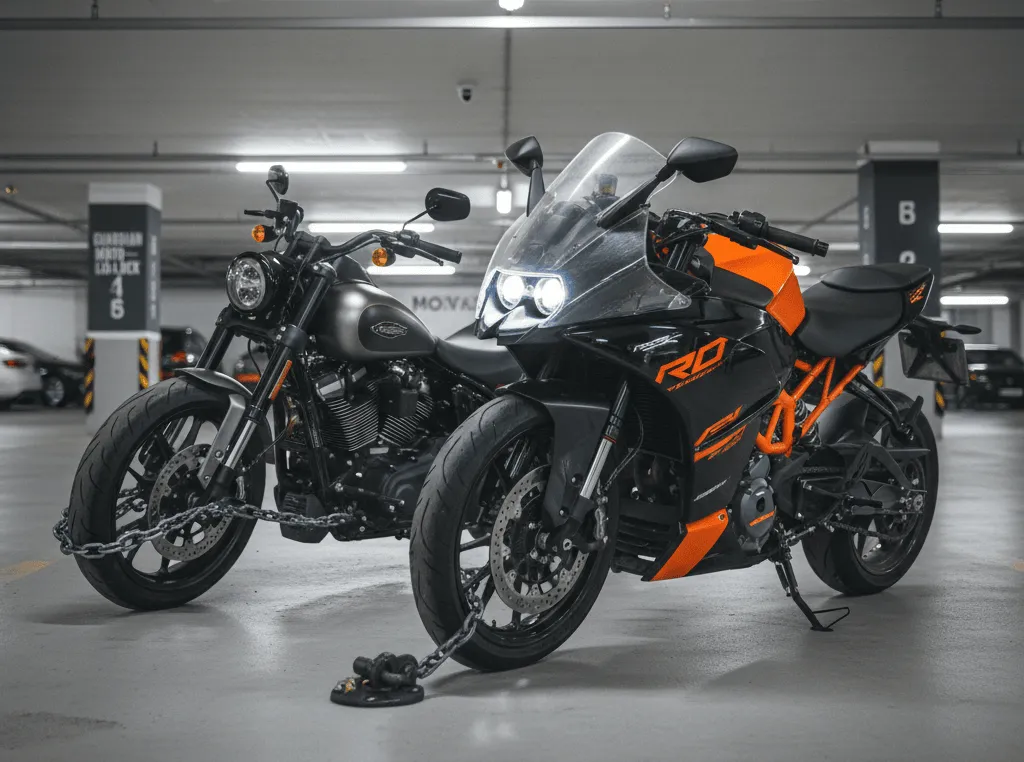

Owning a high-value motorcycle changes the way you think about security. When you ride a premium sportbike, a well-built Harley, or a carefully upgraded KTM, theft is not a distant possibility. It is a real risk that most riders underestimate until it happens to someone they know. Motorcycle security essentials are not about one lock or one alarm. It is about layers. The bikes that get stolen fastest are the ones that look easy, fast to grab, and hard to trace. The bikes that stay where they are parked are the ones that slow thieves down, draw attention, and force them to move on.
This guide breaks down how motorcycle security actually works in the real world, why high-value bikes are targeted more aggressively, and what motorcycle security parts choices make the biggest difference for sportbikes, Harleys, and KTM builds.
Why High-Value Motorcycles Are Targeted First?
Professional thieves do not steal at random. They look for bikes that can be flipped quickly or stripped for parts with high resale value. That puts certain categories at higher risk.
Sportbikes are lightweight, easy to ride, and often left unattended in public areas. Harleys are valuable not only as whole bikes but as individual parts. KTM builds attract thieves because aftermarket components, wheels, suspension parts, and electronics can be sold fast.
Another factor is predictability. Riders park in the same spots, store bikes in visible garages, or rely on steering locks alone. From a theft perspective, those habits are opportunities.
Good motorcycle security works by removing predictability and increasing effort.
The Biggest Security Mistake Riders Make
The most common mistake is assuming one security product is enough.
A disc lock alone will not stop a van theft. A GPS tracker alone will not stop a bike from being taken. A steering lock alone can be broken in seconds. Thieves plan for single defenses.
Real motorcycle security works when multiple systems overlap. Physical restraint slows movement. Audible alarms draw attention. Tracking systems help recovery. Visual deterrents make thieves skip your bike for an easier one nearby.
You are not trying to create an unstealable motorcycle. You are trying to make your bike a bad target.
Physical Security That Actually Works
Physical security is the foundation. If the bike cannot be rolled, lifted, or quietly moved, theft becomes risky and time-consuming.
Heavy-duty chains combined with solid anchor points are still one of the most effective deterrents. A chain that secures the frame or swingarm to a fixed object forces thieves to either cut, grind, or abandon the attempt. That takes time and noise. Disc locks work best when used with alarms. A visible disc lock with an integrated alarm makes rolling the bike impossible and creates instant noise if tampered with.
For garage storage, ground anchors and wheel chocks add a layer many riders overlook. A locked garage without anchoring is still vulnerable if thieves get access. The key is visibility. Thieves do not like uncertainty. If they see multiple physical barriers, they usually move on.
Motorcycle Alarms and Why Noise Still Matters?
Some riders dismiss alarms as outdated. In reality, alarms still play an important role when used correctly.
A loud alarm draws attention in public spaces and increases pressure on the thief. Most motorcycle thefts rely on speed and discretion. Alarms disrupt both.
Modern motorcycle alarms often integrate motion sensors, tilt detection, and shock sensors. When paired with physical locks, alarms serve as an early warning system rather than the only line of defense.
For high-value motorcycles, alarms are especially useful during short stops. Fuel stations, restaurants, or overnight hotel parking are prime theft windows. An alarm turns casual tampering into a public event.
GPS Tracking and Recovery Reality
GPS trackers are not for theft prevention. They are recovery tools.
That distinction matters. Trackers are incredibly useful after a theft, but they should never be relied on alone. Thieves know about trackers and will often attempt to disable them if the bike is unsecured.
The best use of a tracker is as part of a layered security setup. If a thief manages to defeat locks and alarms, tracking increases the chances of recovery before the bike is stripped.
Trackers are especially valuable for riders who park on the street, store bikes in shared garages, or travel long distances with overnight stops.
Security Differences by Bike Type
Sportbikes
Sportbikes are light and easy to lift. Security should focus on preventing movement. Disc locks with alarms, front and rear locks, and chain anchoring make a huge difference. Parking position also matters. Backing the bike into a tight spot reduces leverage.
Harleys
Harleys are heavier but extremely valuable in parts. Saddlebags, exhaust systems, wheels, and electronics are frequent targets. Security should include component locks, alarms, and garage anchoring. Cosmetic customization makes bikes easier to identify, which helps deterrence and recovery.
KTM Builds
KTM builds often include expensive suspension upgrades and electronics. These bikes benefit from discreet trackers, strong chains, and alarms tuned for motion sensitivity. Off-road riders should also think about security at trailheads, where thefts happen surprisingly often.
Parking Strategy Is Part of Security
Where and how you park matters as much as what locks you use.
Choose well-lit areas with foot traffic. Park near entrances rather than hidden corners. Avoid predictable parking routines when possible. If thieves know where your bike will be every night, security becomes easier to defeat.
In garages, avoid leaving bikes near doors or windows. Use covers to reduce visual appeal. A covered bike with visible locks looks far less tempting than a fully exposed one.
How Cheap Security Ends Up Costing More?
Low-quality locks fail fast. Thin chains can be cut in seconds. Cheap alarms constantly get ignored. Weak mounting hardware breaks under stress.
When security fails, the loss is not just the motorcycle. It is the time dealing with police reports, insurance claims, and emotional frustration. For custom builds, replacement may not even be possible.
Good motorcycle security is an investment, not an accessory.
Conclusion
Motorcycle security is not about fear. It is about respect for what you ride. If you have invested time, money, and passion into your bike, protecting it should feel natural. Thieves look for convenience. Security removes it.
A bike that is hard to move, loud when touched, and traceable if taken becomes a bad decision for anyone looking to steal. That is the goal. If you ride a sportbike, a Harley, or a KTM build, take security seriously. Buy Motorcycle Security essentials from Aliwheels. Not because theft is guaranteed, but because prevention is always easier than recovery.