




You’re cruising down the highway, or maybe carving through winding backroads. Then, you hit the brakes. At that moment, everything comes down to one component: your brake rotor. Sometimes, stock rotors meet the need just fine. But often, they don’t. And when they don’t, you notice. Soft bites, fading under load, warp after heat, or just an overall “meh” braking feel. That leads many riders to question: Is upgrading to aftermarket brake rotors worth it?
Let’s break it down with real talk: when a motorcycle Brake Rotor Upgrade makes sense, when it’s optional, and how to make the right choice for your ride.
What Brake Rotors Do?
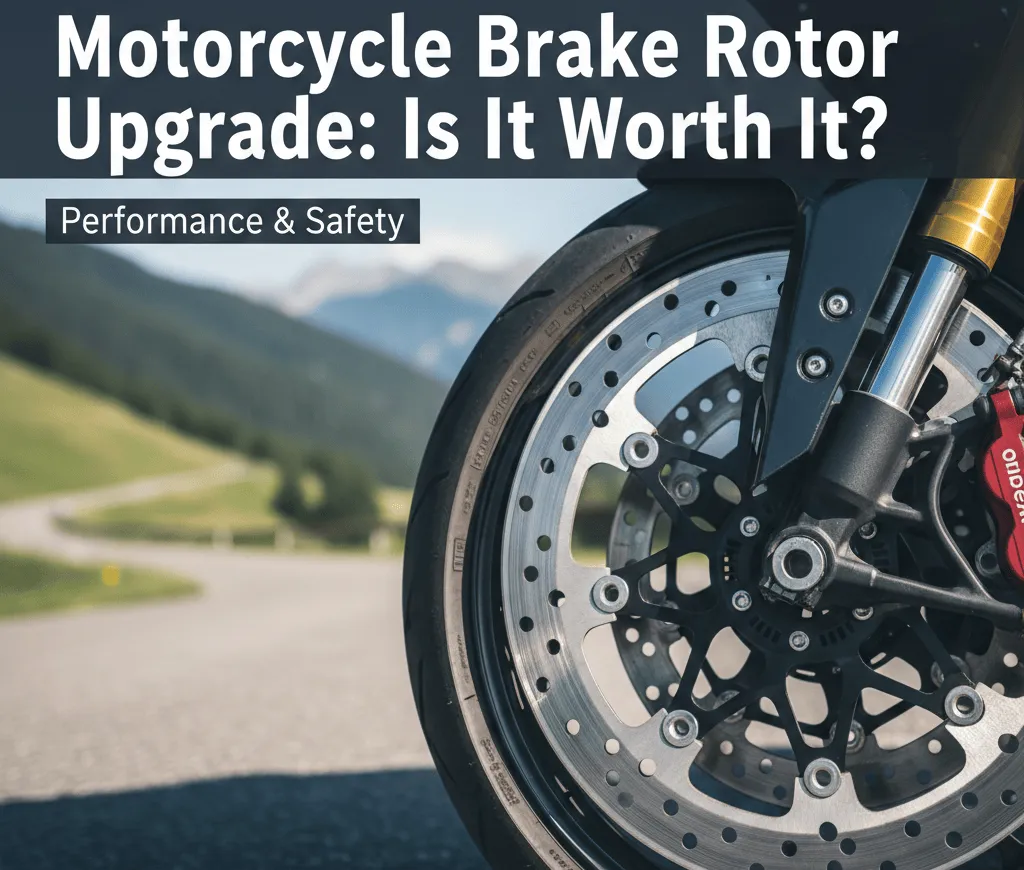
Brake rotors (discs) are the metal surfaces your brake pads clamp onto, converting kinetic energy into heat to slow your bike.
Because of that, rotors endure massive stress:
- Rapid temperature rise and cooling under repeated braking,
- heavy loads when riding with a passenger or luggage,
- Mechanical stress from weight transfer, corners, and bumps.
A good rotor does more than just let you stop. It provides consistent braking feel, fade resistance, predictable performance, and long-term reliability. A poor rotor, especially stock ones on many motorcycles, may feel fine until you need serious braking power.
That’s why rotors matter. If you’re riding casually around town, maybe you get away with stock. But if you ride hard, fast, loaded, or long-distance, rotors are among the most critical safety components.
When a Rotor Upgrade Makes Sense (And Is Usually Worth It)
1. You Ride Aggressively or Frequently Use Brakes
City commuting with constant stops. Hardcore street riding. Mountain roads. Or fast sportbike rides. If your brakes see regular use and heavy stress, a high-quality brake rotor dramatically improves braking performance.
Aftermarket brake rotors tend to:
- Dissipate heat better (helping avoid brake fade),
- Maintain a consistent bite under repeated braking, and
- Reduce stress on brake pads and calipers.
So if you ride often or push your bike hard, upgrading improves safety, performance, and peace of mind.
2. You Carry a Passenger or Heavy Load
A solo rider on smooth roads doesn’t stress the braking system much. But throw in a passenger, luggage, or saddlebags, and braking dynamics change. The mass increases, stopping distances grow, heat generated during braking spikes.
Stock rotors often strain under that demand. High-performance aftermarket rotors with better dissipation and structural strength help ensure stability and safe braking even under heavier loads.
3. You Do Long-Distance Touring or Highway Riding
Long rides or highway commuting expose weaknesses that short rides mask. Consistent braking, repeated deceleration from speed, occasional emergency stops, and stock rotors may overheat or develop warping.
Rotors with better metallurgy, venting, and structure offer consistent performance even when hot, reducing the risk of fade or failure mid-trip.
4. Your Stock Rotors Already Show Wear, Warping, or Heat Damage
If you notice vibration when braking, grinding, uneven pad wear, or strange noises, these are red flags. Warped rotors or compromised rotors can reduce braking efficiency and safety. Replacing them with quality aftermarket ones is absolutely justified.
5. You Want Better Brake Feel, Modulation & Safety Margin
Even for moderate riders, upgrading rotors can enhance the feel, firmer bite, smoother stops, and better control. Especially in wet or demanding conditions. Better rotors increase the safety margin, give more predictable control, and reduce “panic stop” anxiety.
When a Rotor Upgrade Might Be Overkill, And What to Watch Out For
Not every rider needs premium rotors. In some cases, stock might be “good enough.”
Casual riders on smooth roads with light traffic
If your riding is slow and predictable, with minimal braking stress, the marginal benefit of aftermarket rotors may be small.
Incompatibility or poor installation
A high-end rotor means nothing if installed incorrectly; warped rotors, wrong pads, improper torque, or poor wheel alignment can ruin the benefit.
Cost vs benefit, especially with regular maintenance
High-quality rotors and matching pads cost money. For a casual rider, regular maintenance of stock rotors (correct pad choice, regular checks, proper bedding) may deliver acceptable performance at a lower cost.
Overkill for low-powered or low-speed bikes
Smaller-displacement bikes or city commuters may never benefit from high-end rotors; the stress on brakes is simply not there. In those cases, focus on well-maintained stock parts instead.
What to Look for When Choosing Aftermarket Brake Rotors
If you decide to upgrade, not all rotors are equal. Choose carefully for real gains. Key factors:
Rotor Material & Quality (Steel, Slotted, Drilled, Floating)
Good rotors use higher-grade steel, better heat treatment. Slotted or drilled rotors help dissipate heat and vent gases, reducing fade. Some use “floating” designs for better heat expansion control.
Compatibility & Fitment, Pads, Calipers, Wheels
Make sure rotor thickness, diameter, bolt pattern, and pad compatibility match your bike. Mismatch leads to poor braking, noise, or even failure.
Heat Dissipation & Fade Resistance
If you ride hard or often, choose rotors advertised for high heat resistance, venting, and consistent performance under stress.
Brake Pad Pairing, Don’t Mix Cheap Pads with Premium Rotors
Upgraded rotor + stock pads = limited benefit. Quality pads (sintered or semi-metallic) are often necessary to exploit the rotor’s full potential.
Maintenance & Bedding-in Process
Upgraded rotors sometimes require proper bedding procedures or regular maintenance for best performance and lifespan. Don’t skip those steps.
So, Is It Worth It?
Yes, if you ride aggressively, often, with a load, or long-distance.
Maybe, if you ride casually and consistently check maintenance.
Probably not, if you have a small commuter bike, a gentle city ride, or light braking needs.
In other words, upgrading brake rotors is one of the most worthwhile modifications, but only if your riding style demands it. For riders pushing the limits, carrying loads, or relying on their bike often, it’s not luxury, it’s safety, performance, and peace of mind.
If your bike feels “just okay” now but you want it to be reliable, responsive, and ready for twisties or long trips, a good rotor upgrade gives you that. If your budget is tight, maintain what you have. Clean regularly. Use good pads. Check wheels and alignment. But know your limits.