




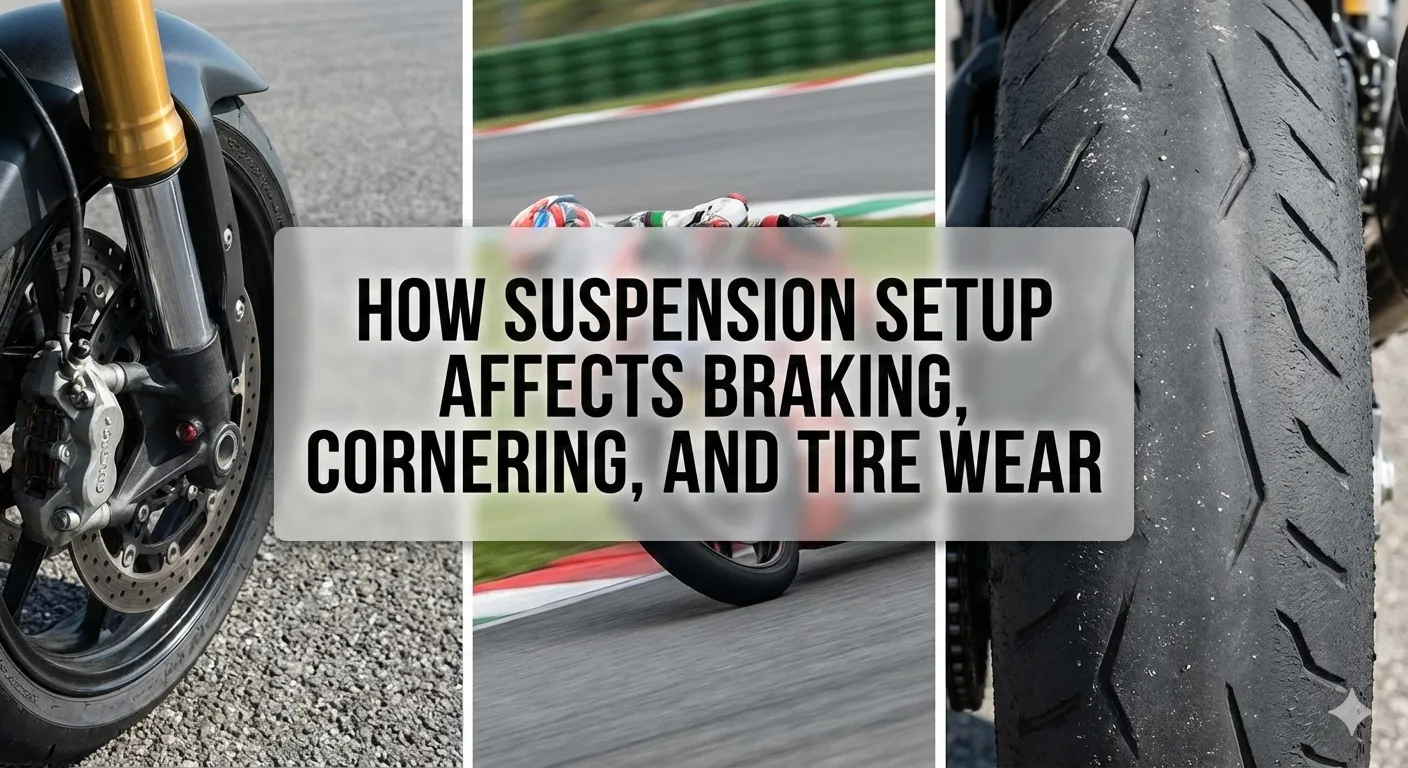

Most riders blame brakes when stopping distances feel long, tires when grip disappears mid-corner, or riding style when a bike feels nervous at speed. In reality, suspension setup sits quietly underneath all of it. When motorcycle suspension is wrong, braking feels vague, corners feel unpredictable, and tires wear out faster than they should. When suspension is right, the motorcycle suddenly feels planted, predictable, and easier to ride hard without trying.
Motorcycle Suspension is not just about comfort. It controls how weight is distributed, how tires stay in contact with the road, and how the bike responds under real-world riding forces. Whether you ride daily on the street, push hard on mountain roads, or participate in track days, suspension setup has a direct influence on safety, performance, and running costs.
How Important is Motorcycle Suspension?
Suspension has one primary job: to keep the tires in consistent contact with the road. Everything else flows from that.
Every time you brake, accelerate, or lean into a corner, weight shifts. If suspension cannot control that movement properly, the tires lose grip even if they are high-quality and properly inflated. Riders often chase better brake pads or stickier tires without realizing the suspension is preventing those upgrades from working as intended.
Poor suspension setup does not always feel dramatic. Sometimes it feels like vague steering, inconsistent braking, or unexplained tire wear that creeps up over time.
Suspension and Braking Stability
When you grab the front brake, the weight transfers forward. The front suspension compresses, the rear unloads, and the contact patch of the front tire becomes critical.
If the front suspension is too soft or dives excessively, several problems show up:
- Reduced control during hard braking
- Increased chance of front tire overload
- Unstable feeling at the handlebars
- Longer stopping distances despite good brakes.
Excessive dive changes the steering geometry mid-brake. Rake and trail shorten too quickly, which makes the bike feel twitchy just when stability matters most.
On the other side, a suspension that is too stiff prevents proper weight transfer. The tire cannot load correctly, reducing grip and making the bike feel skittish under braking. Riders often describe this as a lack of feedback or a wooden brake feel.
A correct suspension setup allows a controlled dive. The fork compresses enough to load the tire but not so much that the geometry collapses. That balance is what gives confident braking and a consistent lever feel.
How Suspension Influences Cornering Confidence
Cornering performance is where suspension quality becomes obvious, even to riders who think they are not sensitive to setup changes.
As a bike leans, suspension must manage lateral forces while maintaining tire contact. If suspension cannot react smoothly, the tire alternates between gripping and slipping. This does not always result in dramatic slides. More often, it shows up as hesitation, mid-corner corrections, or the feeling that the bike wants to stand up or fall inward unexpectedly.
Common cornering issues tied to suspension include:
- Bike runs wide on the corner exit
- The front end feels vague at lean.
- The rear feels loose or unsettled mid-corner
- Steering effort feels inconsistent.
These issues are rarely caused by frame design or tire brand alone. Suspension geometry and damping play a huge role. When suspension is balanced, the motorcycle tracks cleanly through the corner. Steering input feels predictable, mid-corner stability improves, and throttle application becomes smoother because the rear tire stays loaded properly.
Tire Wear Tells the Suspension Story
Tires are often the first place suspension problems show themselves.
Uneven wear patterns usually point to setup issues rather than aggressive riding. Suspension that is too soft allows excessive movement, causing the tire to scrub rather than roll smoothly. Suspension that is too stiff reduces compliance, leading to skipping and tearing across the surface.
Common wear signs related to suspension include:
- Cupping on the front tire from poor rebound control
- Flat spots caused by uncontrolled braking dive
- Tearing on the rear tire due to improper compression damping
- Accelerated wear on one side of the tire from a geometry imbalance
A good suspension setup does not just improve handling. It extends tire life, saves money, and keeps performance consistent across thousands of miles.
Preload, Compression, and Rebound in Real Riding Terms
Suspension tuning sounds complicated, but the principles are straightforward when viewed through real riding behavior.
Preload controls ride height and how much suspension is available for movement. Too little preload allows excessive dive and squat. Too much preload makes the bike ride high and harsh.
Compression damping controls how fast the suspension compresses under load. Too soft, and the bike collapses under braking or cornering forces. Too stiff, and the suspension cannot absorb bumps or weight transfer.
Rebound damping controls how fast the suspension returns after compression. Too slow and the suspension packs down, losing travel. Too fast, and the bike feels springy and unsettled.
The goal is not stiffness or softness. The goal is controlled movement.
Street Riding vs Aggressive Riding Setup
Street riders often assume performance suspension is only for track riding. In reality, proper setup improves everyday riding more than most bolt-on upgrades.
For street use, suspension should prioritize compliance, predictability, and stability. Rough pavement, braking zones, and uneven surfaces demand suspension that can react smoothly without drama.
Aggressive riders and track riders require firmer control, but even then, stiffness without balance leads to poor grip. A well-set suspension allows the bike to communicate traction limits clearly, giving the rider confidence rather than surprises.
Why Stock Suspension Is Often a Compromise?
Manufacturers design motorcycles for a wide range of riders, weights, and conditions. Factory suspension settings are intentionally conservative. They aim to work reasonably well for many riders rather than perfectly for one.
This is why two riders on the same motorcycle can have very different experiences. Rider weight, riding style, luggage, and terrain all change how suspension behaves.
Adjusting suspension to match the rider is not a luxury. It is a fundamental part of making the motorcycle work as designed.
Signs Your Suspension Setup Needs an Upgrade
If any of the following sound familiar, suspension tuning is worth addressing:
- The front end dives excessively under braking
- The bike feels unstable at highway speeds.
- Steering feels heavy or inconsistent.t
- Tires wear unevenly prematurely
- The bike feels harsh over bumps, yet unstable in corners.
These are not normal traits to accept. They are signals that the suspension is not working optimally.
The Long-Term Benefits of Proper Suspension Setup
When suspension is dialed in correctly, the motorcycle becomes easier to ride at every speed. Fatigue decreases. Confidence increases. Emergency braking becomes more controlled. Cornering feels smoother and more predictable.
Perhaps most importantly, suspension setup allows the rider to focus on the road instead of fighting the bike. Many riders report that suspension tuning was the single biggest improvement they made to their motorcycle, even compared to engine or brake upgrades.
Conclusion
Motorcycle suspension is the foundation of braking performance, cornering control, and tire longevity. It determines how effectively every other component on the motorcycle can do its job. Ignoring suspension setup means leaving performance, safety, and comfort on the table.
Understanding how suspension affects real riding behavior changes the way riders approach upgrades and maintenance. Instead of chasing symptoms, addressing suspension setup solves problems at their source. A motorcycle that brakes confidently, corners smoothly, and wears tires evenly is not a coincidence. It is the result of suspension working exactly as it should.