




Café racers were never meant to be polite motorcycles. They were stripped, lean, and built with one goal in mind: speed between two points, nothing extra in between. Traditionally, that world belonged to British twins and lightweight European machines. Harley-Davidson was never part of the conversation. Until riders decided it should be.
Today, interest in Harley café racer parts is growing fast, especially among riders who want something different from the usual cruiser or bagger build. A Harley café racer is not about copying old rules. It is about taking the raw character of a Harley and reshaping it into something sharp, purposeful, and personal.
Done right, it looks effortless. Done wrong, it looks confused. The difference comes down to parts selection, balance, and restraint.
What Makes a Harley Café Racer Different?
A café racer is defined more by intention than appearance. Lower bars, lighter weight, aggressive riding position, and minimal bodywork are part of the formula, but the real goal is connection. The rider should feel every input clearly.
That is where many builds fail. They focus on aesthetics first and forget how the bike rides. A proper Harley cafe racer conversion guide always starts with function.
Harleys bring torque, weight, and presence. The café racer approach trims excess and sharpens feedback without trying to erase what makes the bike a Harley in the first place.
Choosing the Right Base Motorcycle
Not every Harley makes a good starting point. Sportster platforms are the most common for a reason. They are lighter, simpler, and easier to modify without fighting frame geometry. Softails can work, but require more careful planning.
Regardless of the model, the goal stays the same. Reduce visual mass. Improve rider position. Eliminate unnecessary components. This is where lightweight Harley build parts matter. Every pound removed improves handling and responsiveness. That does not mean cheap parts. It means intentional choices.
Handlebars and Rider Position Set the Tone
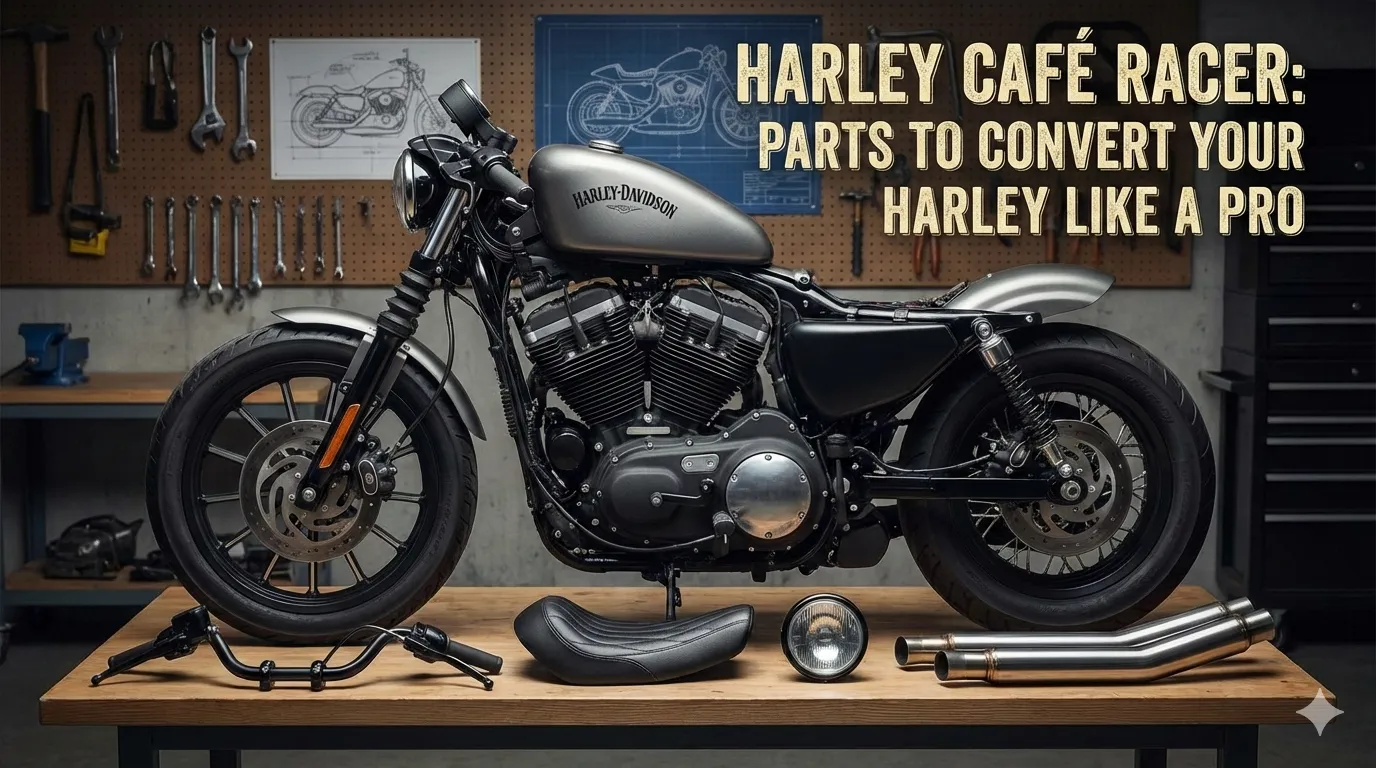
One of the most defining elements of any café racer build is the front end. Harley cafe racer handlebars and seats determine how the bike feels the moment you roll forward.
Lower bars shift weight onto the front wheel, improving feedback and steering precision. Clip-ons and narrow tracker bars are common choices. Comfort takes a back seat here, but control improves dramatically. Seats follow the same philosophy. A slim, firm seat keeps the rider locked in place under acceleration and braking. Thick touring padding has no role in a café build. Every inch should feel deliberate.
Suspension Is Where Builds Become Serious
Many café buildings look good standing still, but fall apart on the road. Suspension is often the reason.
Stock Harley suspension is designed for cruising, not aggressive cornering. A proper café racer conversion addresses this early. Stiffer rear shocks, improved fork internals, and correct sag setup transform the bike.
This is where professional builders separate themselves from casual modders. They tune suspension to match riding style, weight, and geometry. The result is confidence. Without it, the café looks just that. A look.
Brakes and Control Feel Matter More Than Speed
Café racers were built to stop hard as much as they were built to go fast. Harley café builds benefit greatly from upgraded brakes, braided lines, and a better master cylinder feel.
Control feedback matters. The rider needs to feel exactly what the bike is doing. Sloppy brakes and vague levers break that connection instantly.
Many riders upgrading into this style turn to aftermarket parts sourced through trusted retailers like Aliwheels, where fitment and quality matter more than flashy descriptions. Reliable Harley parts make or break a build long before the bike ever hits the road.
Exhaust and Intake Choices Shape the Personality
Sound and airflow play a big role in café racer identity. Shorter, cleaner exhaust systems reduce visual bulk and sharpen throttle response. Intake systems that breathe better add responsiveness without chasing noise for its own sake.
The key is balance. A café racer should sound purposeful, not obnoxious. Experienced builders avoid parts that look good in photos but ruin rideability.
Wiring, Lighting, and Clean Lines
One of the hardest parts of a café racer build is making it look simple. Clean wiring, minimal lighting, and thoughtful component placement separate professional builds from messy ones.
Smaller headlights, tucked wiring looms, and discreet indicators help reduce clutter. This is where patience matters. Rushing this stage shows immediately.
A clean electrical setup also improves reliability. Loose connections and exposed wiring lead to problems that ruin the riding experience.
Why Harley Café Builds Are Gaining Momentum?
Search interest around custom Harley cafe racer setups continues to rise because riders are looking for identity again. Factory bikes are better than ever, but they feel similar. Café builds offer contrast.
They also reward skill. Riding a café racer is more demanding than riding a cruiser. The bike asks for attention. In return, it delivers engagement.
This tradeoff appeals to riders who value feel over comfort and involvement over convenience.
Where do Builders Source Parts That Actually Work?
As Harley café builds become more common, parts availability has improved. The challenge is choosing components that fit properly and perform as expected.
Riders who take their builds seriously rely on suppliers that understand Harley platforms and aftermarket compatibility. Aliwheels has become a trusted source for Harley parts because it bridges that gap. Offering components that fit, last, and support both performance and style goals.
When a build depends on every detail working together, reliability is not optional.
Thoughts From the Saddle
A Harley café racer is not a costume. It is a commitment. The riding position is demanding. The setup is unforgiving. But the reward is a motorcycle that feels alive in a way few factory machines do.
For riders willing to build with intention, choose quality parts, and respect the balance between heritage and performance, the café racer path offers something rare. A Harley that does not just look different, but rides with purpose. That is what separates a real build from a trend.