




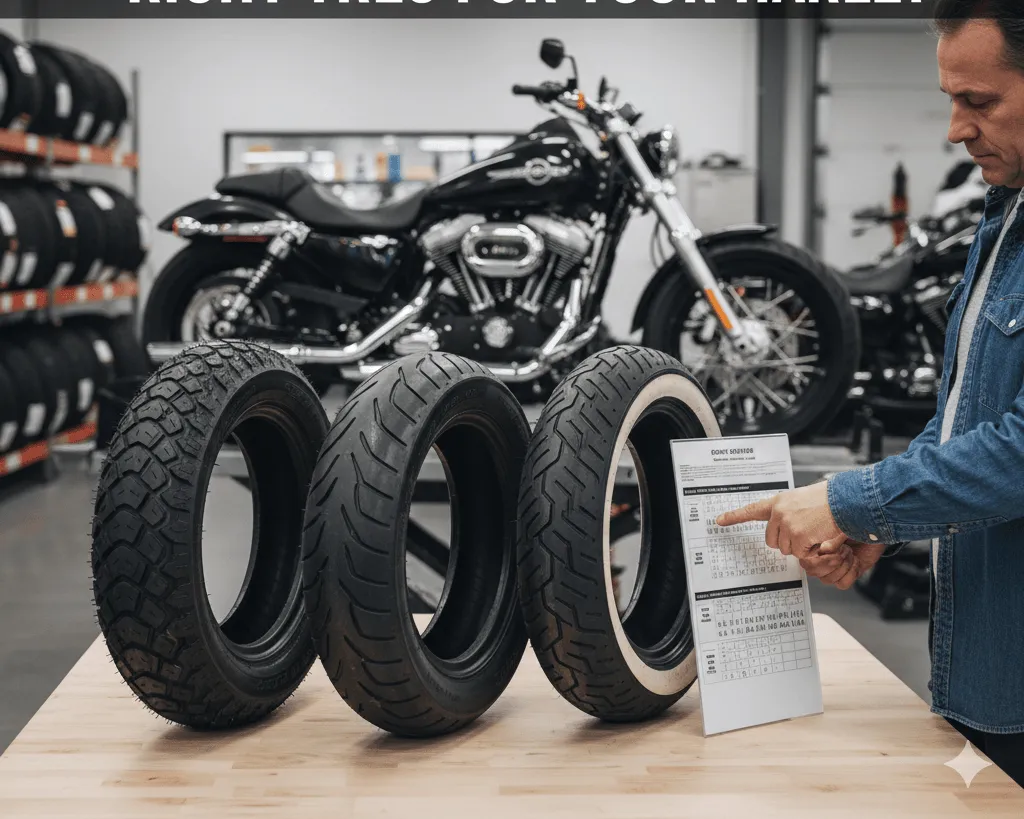

Riding a Harley is more than luxury and looks. One of the most critical, yet often overlooked, aspects is the tires. The right tires can make a ride smooth and safe, while the wrong ones can turn even a perfect‑looking Harley into a shaky, skittish machine. This guide helps you understand tire types, when to pick touring vs sport tires, correct sizing, how long tires last, and what to watch out for during installation. Ideal for long‑term owners and new riders alike.
What kind of tires does a Harley need?
Harleys mostly fall into two broad riding categories:
- Touring/cruising: long highway miles, heavy load, relaxed riding.
- Urban/sport‑cruiser or aggressive street riding: twisty roads, quick throttle, lighter load.
Because these two styles stress tires differently, one tire type doesn’t fit all.
For touring riders: you want a tire that offers longevity, stability, comfort over bumps, high mileage, and predictable behavior under load.
For sport‑cruiser riders: you prefer grip, quick turn‑in, responsive handling, and good traction under braking/acceleration.
A good tire for a Harley touring Softail might feel sloppy if you ride hard, twisty roads, and a sport‑biased tire might feel harsh and wear fast on heavy touring loads.
Aliwheels Harley Tire Size Guide
Tire sizes on Harley, like on other bikes, are usually stamped on the sidewall as a code (e.g., “180/65‑16 M/C 81H” or “130/90‑16 M/C 73H”). Understanding this helps you pick the right replacement:
- First number (e.g., 180 or 130): tire width in millimeters. Wider tires often give more stability, better road contact, but less agility.
- Second number (aspect ratio, e.g., 65 or 90): sidewall height as a percent of the width. Lower ratio tires have lower sidewalls: sportier but firmer ride; higher ratio gives softer ride.
- After the dash (e.g., 16): rim diameter in inches. Must match wheel size.
- Speed & load rating (e.g., 81H, 73H): shows maximum load and speed safety margins. For heavy Harleys with two-up riding or touring, picking tires with a higher load rating than minimum is smart.
When you replace tires, match all parameters (width, aspect ratio, rim size) exactly, except you may go one size up/down only if your bike & manual allow it.
Touring Tires vs Sport‑Cruiser Tires: What to Choose?
Touring / Cruiser Tires, ideal if your usual day ride ends at 150+ miles, you carry luggage, do two-up rides, or plan long interstate trips.
They prioritize:
- Long tread life
- Heat‑resistance under load
- Stability under weight and twin-engine vibration
- Smooth, comfortable ride quality
Sport‑Cruiser / Performance‑biased Tires, ideal if you ride shorter distances, enjoy spirited cornering, lean heavily on braking/acceleration, or ride twisty roads.
They give:
- Sharper handling and turn‑in
- Better grip under braking and lean
- More predictable behavior under hard acceleration
Hybrid / All‑Purpose Tires: a compromise between both worlds: decent lifespan, fair comfort, acceptable grip. Good if you mix touring and occasional sporty riding or don’t want to switch tires each season.
How Long Do Harley Tires Last? Realistic Expectations
Tire longevity depends on several factors: riding style, load, maintenance, road type, and climate. For a mid‑sized Harley cruiser with proper maintenance and moderate riding, you can expect:
- 10,000 – 15,000 miles on the rear tire (for touring tires)
- 12,000 – 18,000 miles on the front tire
If you ride aggressively, lots of stop-and-go, frequent cornering, or carry heavy loads , expect faster wear. Heat, under‑inflation, or poor maintenance accelerates wear even more.
Check tread wear indicators (TWI) and sidewall condition often. Replace the tire as soon as wear reaches TWI or if cracks / uneven wear appear, especially before a long ride.
What to Check Before Buying New Tires?
When you get a new tire for your Harley, and before you ride:
- Confirm size, rating, and rim compatibility (as described above).
- Check the manufacturer date (mold stamp, avoid tires older than 3–5 years); old rubber compounds dry out and get unsafe even if unused.
- Ensure balanced mounting, warped rims, or uneven seating do not lead to vibration or instability at speed.
- Check wheel bearings, axle alignment, brake rotor clearances; old components can cause wobbles even on new tires.
- Adjust tire pressure as per load and riding type: heavier load or touring pressure often slightly above standard.
A good-fitting and balanced tire is the foundation of a safe ride, especially on a heavy cruiser like a Harley.
Tire Recommendations for Harley Cruisers 2026
For Harley riders, here are the typical tire types that match the needs of various riding styles:
- Touring / Long‑haul Cruisers → high‑mileage cruiser/touring tires (high load rating, soft compound). Best for Softail, Road King, touring suspensions.
- Daily city + Weekend road use → hybrid all‑purpose tires (balanced between comfort and grip). Good for riders who mix errands, urban, and occasional highway.
- Sport‑cruiser / Performance‑leaning riders → sport‑cruiser tires (grippy compound, low profile). Best for riders who enjoy cornering or aggressive throttle work on light Harleys or Sportsters.
If you ride across different conditions, hot summers, cold winters, rain, and long trips, a hybrid or well-rated touring tire is often the most practical all‑rounder.
Stronger Tires, Powerful Ride
No matter how shiny your chrome is, how loud your exhaust roars, or how comfortable your seat is, nothing affects ride quality, safety, and feel like tires. The wrong tire ruins comfort. The wrong tire ruins confidence. The wrong tire ruins long-distance plans.
Choosing the correct size, matching tire type to your riding style (touring vs sport vs hybrid), checking condition, and mounting properly, that’s the difference between a smooth 500‑mile day and a roadside headache.
When you treat tires as part of the bike’s health, not an afterthought, your Harley becomes more reliable, more enjoyable, and safer. Ride smart. Ride safe. Choose your tires like your life depends on them, because on a Harley, they does.