




A sticky throttle cable is one of those problems that can ruin a ride in seconds. The throttle feels slow to return, jerks unexpectedly, or stays partially open even when you release the grip. For daily riders and touring enthusiasts alike, a sticky throttle cable is not just annoying, but it is dangerous.
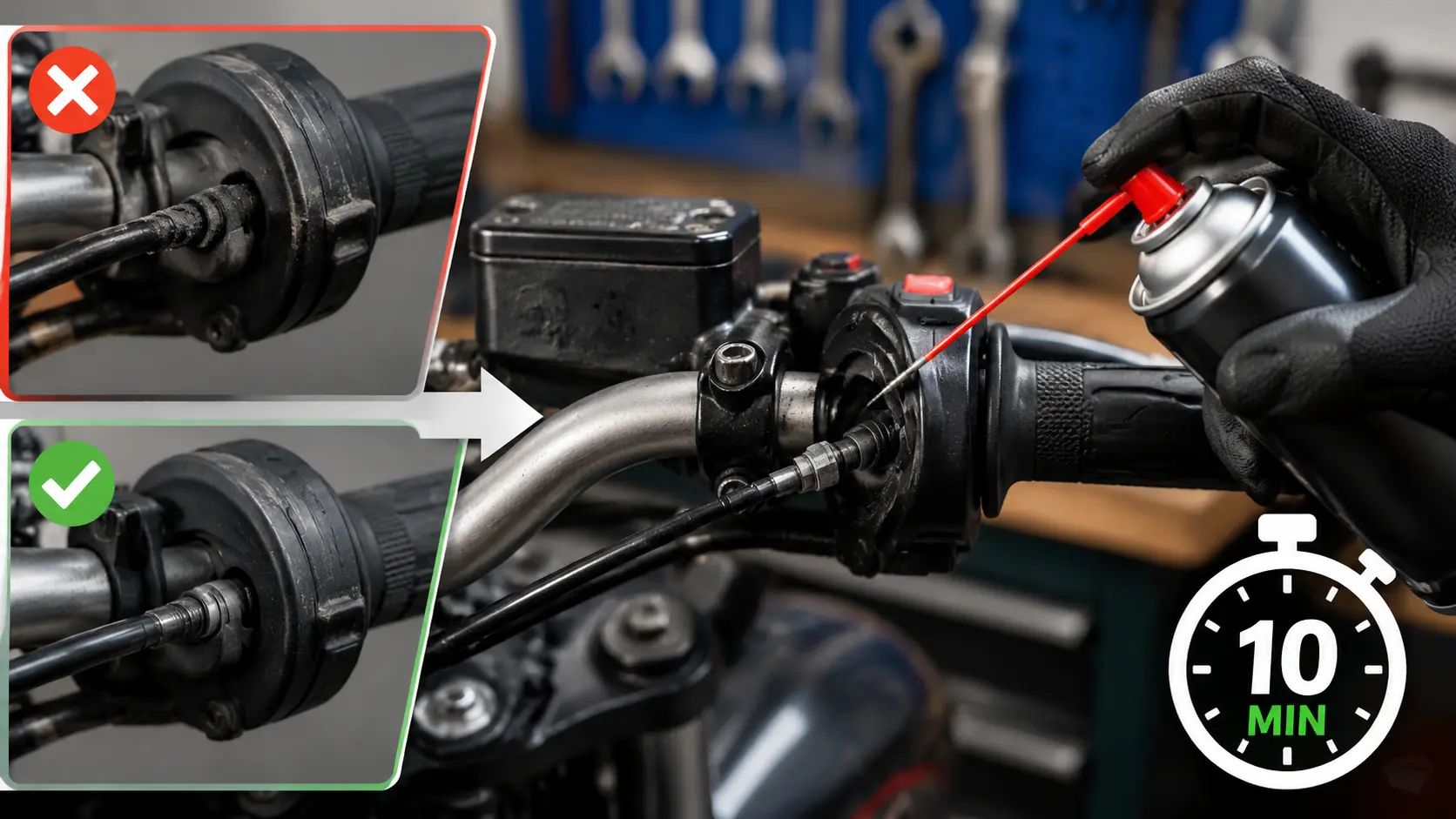
The good news? Most sticky throttle cables can be fixed in less than 10 minutes with basic tools and a little know-how. This guide walks you through the fastest, safest, and most effective way to restore smooth throttle action without spending hundreds at a workshop.
Why Do Throttle Cables Get Sticky?
Motorcycle Throttle cables are simple but critical components. They run from the handlebar twist grip to the carburetor or throttle body, usually inside a protective housing. Dirt, rust, lack of lubrication, and corrosion are the main reasons cables stick.
Common causes include:
- Dust, debris, or grime inside the cable housing
- Lack of lubrication over time
- Rust forming on the inner wire
- Incorrect routing or tight bends in the cable
- Excessive heat or exposure to rain and moisture
Riders often notice the issue after long rides, during wet weather, or when bikes sit unused for weeks. A sticky throttle compromises throttle response, which is a serious safety risk.
Tools and Supplies You Will Need
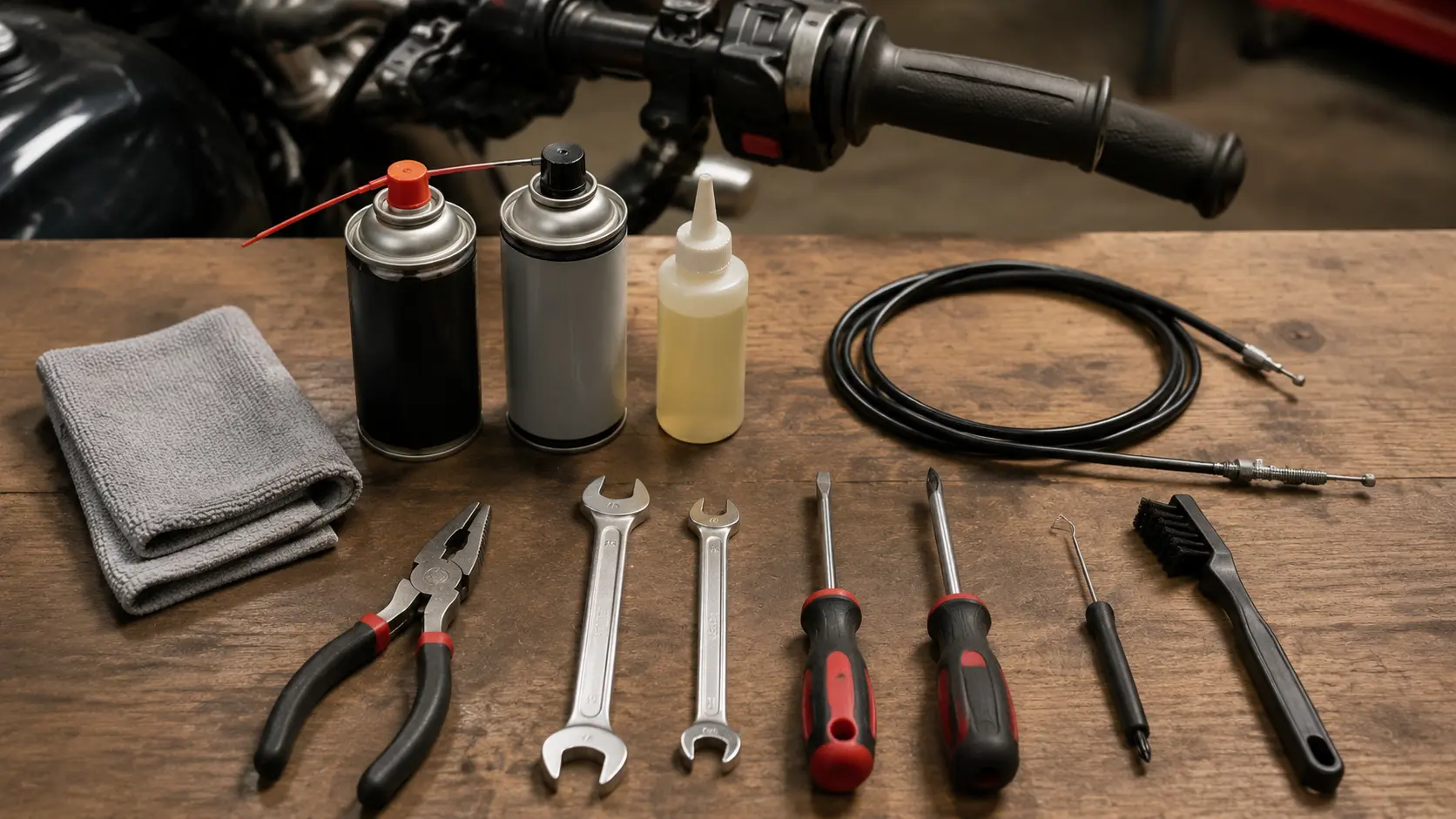
Fixing a sticky throttle cable is simple, and you don’t need a full workshop. Gather the following:
- Lubricant specifically for cables (cable lube or light penetrating oil)
- A rag or paper towel
- Small screwdriver or wrench (to loosen throttle housing if needed)
- Optional: compressed air to blow out debris
Using proper lubricant is crucial. WD-40 or household oil can work short-term, but dedicated motorcycle cable lubricants keep the cable smooth longer and protect against rust.
Step 1: Inspect the Cable
Before applying lubricant, visually inspect the throttle cable:
- Check the cable housing for cracks or frays
- Look at the inner wire at both ends (handlebar and carburetor/throttle body)
- Make sure the cable is properly routed without sharp bends or kinks
If the cable shows severe damage, replacement is safer than lubrication. Small frays or rust spots can often be fixed with lube, but a worn cable can snap under stress.
Step 2: Loosen the Throttle Housing
On most bikes, the throttle cable passes through a small housing attached to the handlebar grip.
- Use a screwdriver to carefully open the housing
- Rotate the throttle grip to expose the cable wire
- Avoid pulling too hard or bending the wire excessively
This exposes the throttle cable for lubrication and allows debris to escape.
Long tail keyword naturally used: open motorcycle throttle housing for cleaning.
Step 3: Apply Cable Lubricant
Insert the cable into the lubricant applicator or drip a few drops directly into the housing. Slowly rotate the throttle grip back and forth to work the lubricant along the wire.
- Repeat until lubricant reaches the throttle body or carburetor end
- Wipe off excess to prevent attracting dirt
This motion ensures the entire cable is coated and reduces friction inside the housing.
Step 4: Check Cable Routing and Adjust Tension
After lubrication, verify that the cable routing is correct:
- Avoid tight bends, sharp angles, or sections pressed against the frame
- Make sure the throttle snaps back fully when released
- Adjust cable tension at the adjuster screw if the grip feels loose or too tight
A properly routed and tensioned cable reduces stress and prevents future sticking.
Step 5: Test the Throttle
Once lubricated and routed correctly:
- Start the bike in neutral
- Twist the throttle several times to ensure smooth movement
- Observe the return speed and feel of the grip
The throttle should move freely and return immediately without hesitation. If it still sticks, repeat lubrication or consider replacing the cable if corrosion is severe.
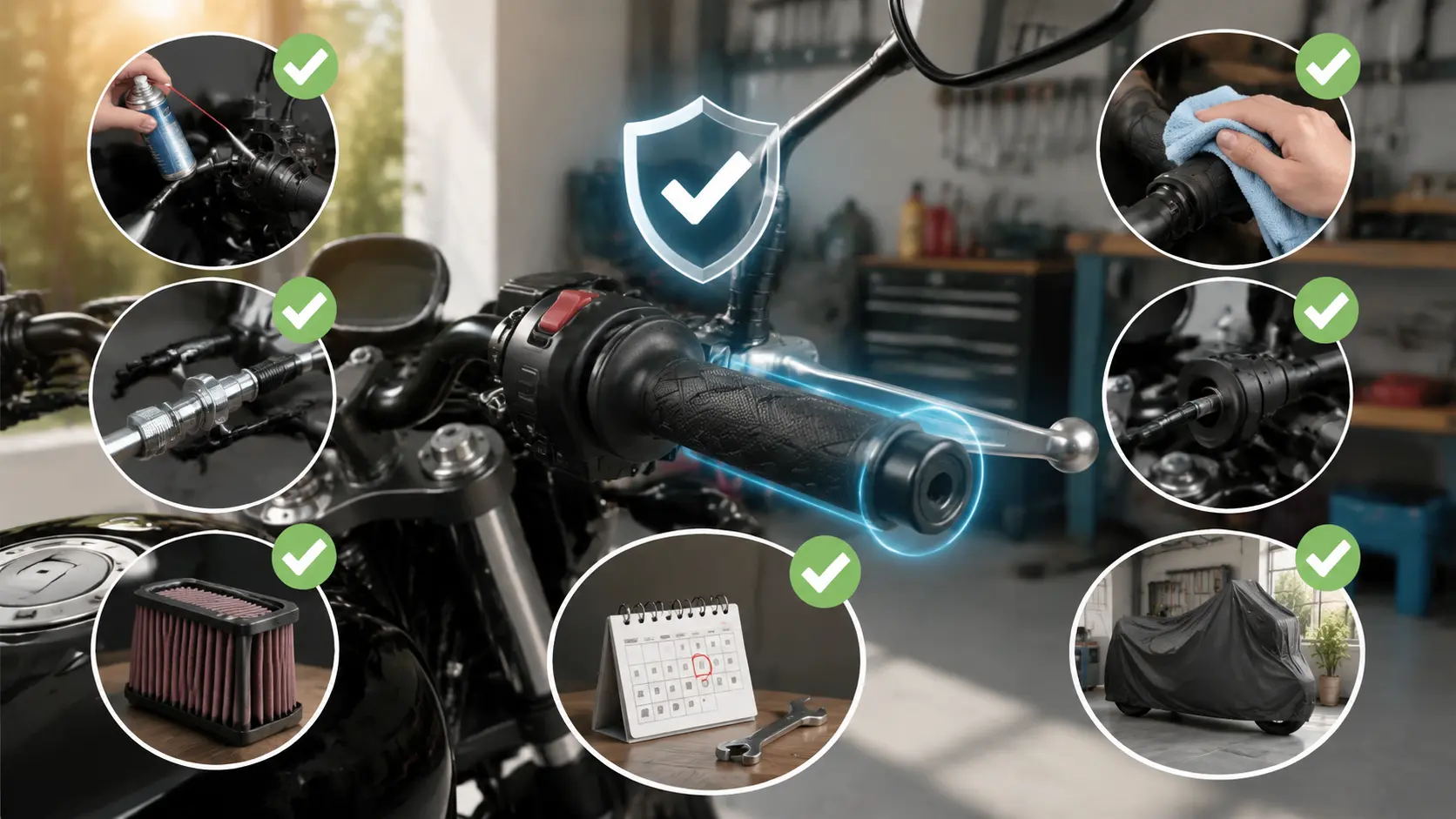
Tips to Prevent Sticky Throttle in the Future
Sticky cables do not have to return. Experienced riders follow a few preventive steps:
- Lubricate the throttle cable every 3–6 months
- Avoid routing cables over sharp edges or near hot engine parts
- Keep the housing clean and free of debris
- Replace old cables proactively, especially on bikes over 5–7 years old
When to Replace the Throttle Cable?
Even with lubrication, some cables will not restore full smoothness. Replace the cable if:
- Inner wire shows severe rust or fraying
- The housing is cracked or brittle
- Throttle grip still sticks after lubrication
- Cable length has stretched beyond adjustment range
Replacement is inexpensive compared to the risk of losing throttle control on the road.
Conclusion
A sticky throttle cable is one of the simplest motorcycle problems to fix but one of the most critical for safety. With basic tools, proper lubrication, and a 10-minute routine, you can restore smooth throttle response and prevent dangerous surprises during rides.
Following this method regularly ensures reliable control, extends cable life, and keeps your ride enjoyable, safe, and predictable.
This approach works on carbureted and fuel injected motorcycles, from daily commuters to touring bikes.