


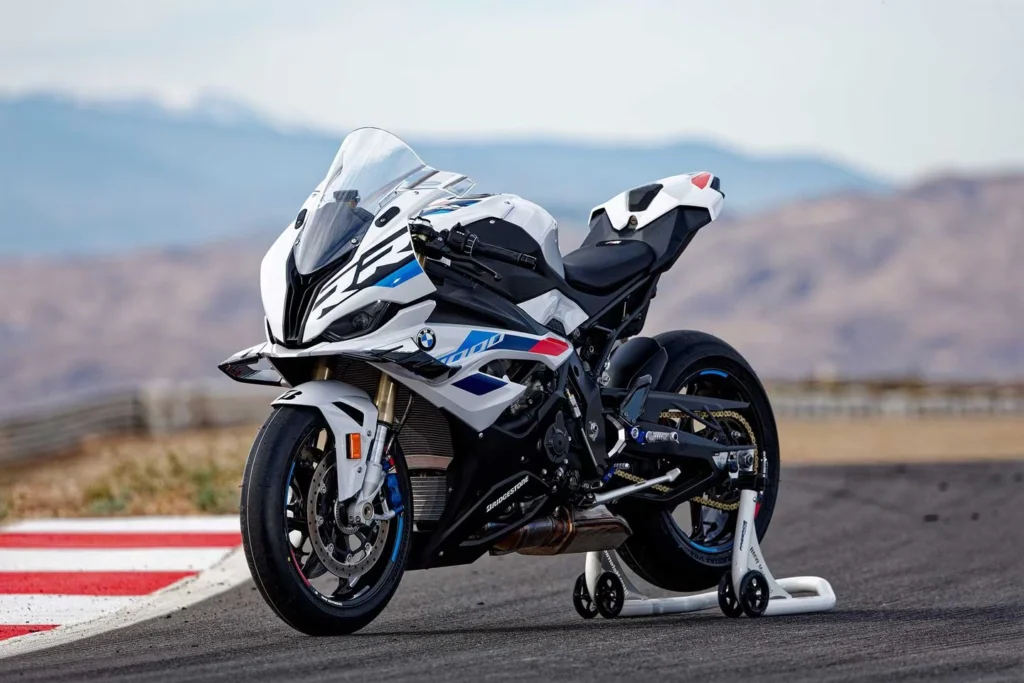

Your BMW S1000RR shifts fine most of the time. Then, without warning, it drops into neutral mid-upshift, or the quickshifter simply stops responding. BMW S1000 RR quickshifter problems have followed this bike through three distinct engine and electronics generations since 2009, and each generation develops its own version of the fault. Knowing which one you own changes where you should actually look first.
Not One Bike, Three Different Electronics Generations
BMW launched the S1000RR in 2009 as the first production superbike with a factory quickshifter option, a genuine first at the time. But the bike changed substantially in the years that followed, and its shift electronics changed right along with it.
Early models through around 2014 ran simpler electronics paired with a mechanical clutch switch. Later models moved to a more integrated ride-by-wire setup. The current K67 generation, launched around 2019, added ShiftCam technology borrowed from BMW’s boxer engines, along with a completely redesigned wiring architecture around the shift mechanism.
This history matters once something goes wrong. A fix that solves S1000RR quickshifter problems on a 2012 model can be completely irrelevant on a 2023 bike, because the hardware behind the identical symptom is different.
Early Models: A Simple Switch Causes Most of the Trouble
If you own an earlier BMW S1000RR and your shifter has started acting inconsistently, check the clutch-side micro switch first. This small switch tells the ECU exactly when to cut ignition briefly during a clutchless upshift.
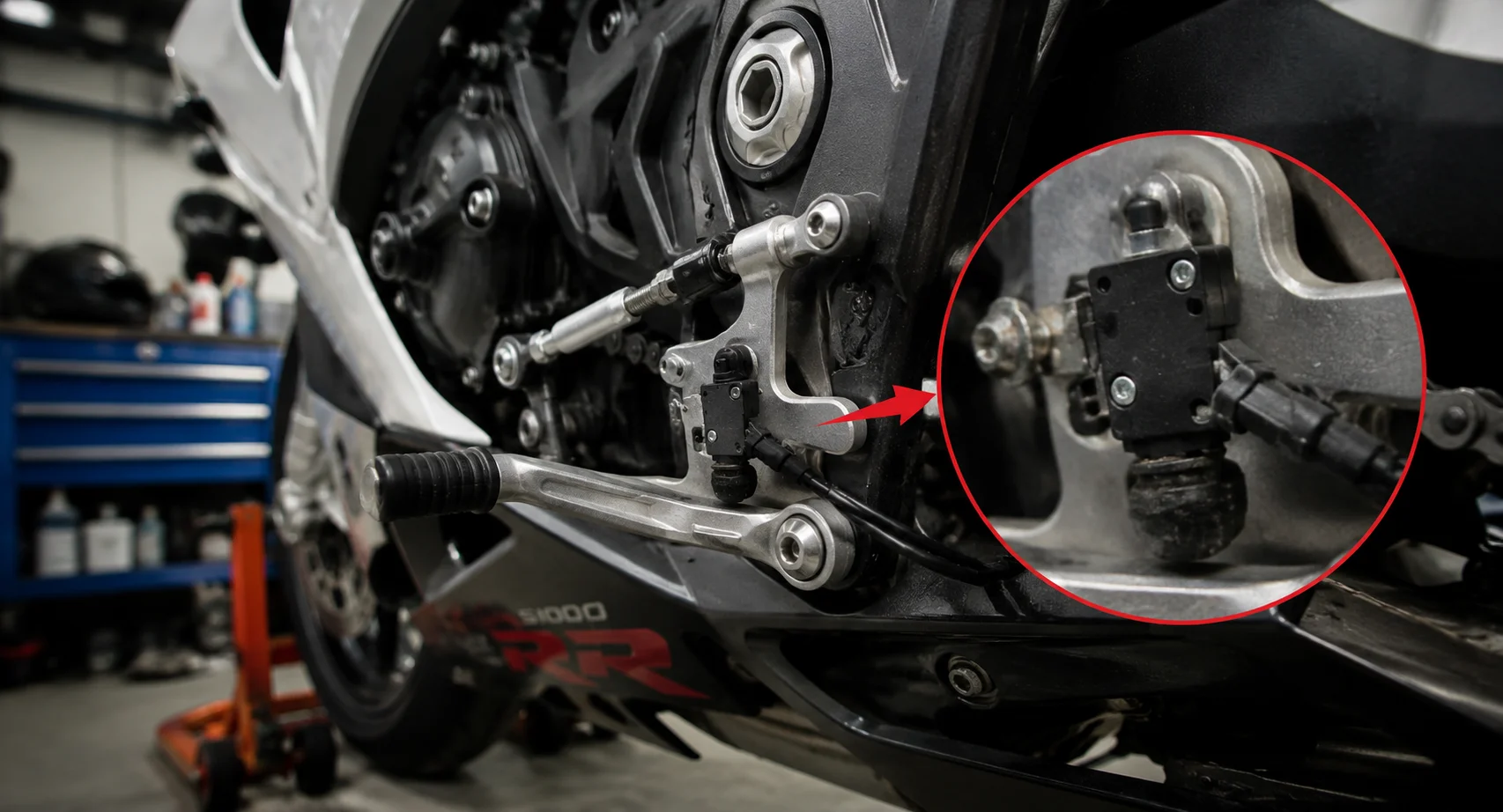
One rider running a stock setup reported flawless shifting. His riding partner’s identical-year bike kept killing the engine every time he tried the quickshifter. The real difference turned out to be aftermarket rearsets installed on the second bike. Swapping components near the shift linkage had knocked the micro switch out of adjustment, even though the switch itself hadn’t failed at all.
If you’ve changed levers, rearsets, or shift linkage recently, and your quickshifter started misbehaving around the same time, that’s rarely a coincidence. Recheck the switch position before assuming you need a new part.
Riding Style Causes More BMW S1000RR Quickshifter Problems Than Owners Expect
Full throttle matters more here than most riders realize. Using the quickshifter while cruising gently, rather than genuinely accelerating, produces clunky, hesitant shifts that feel like a fault but aren’t one. BMW’s own documentation notes this directly: using the quickshifter at high revs with a neutral throttle, with no real load on the drivetrain, can stress the transmission through rapid, unnecessary load changes.
Before chasing a mechanical fault, ask yourself honestly whether you’re feathering the throttle properly during upshifts. This single habit resolves a surprising share of complaints that get blamed on the shifter itself.
Newer Models: When Adjustment Looks Fine but Isn’t
Here’s where things get tricky on 2023 and 2024 bikes. One owner dealing with clunky first-to-second shifts, occasionally dropping into neutral unexpectedly, checked his clutch lever free play and found it looked completely normal.
He called BMW technical support anyway. Their advice: adjust the clutch regardless of what the lever suggested. Once adjusted, the actual clutch engagement point turned out to be significantly out of spec, something lever free play alone couldn’t reveal.
This is the real lesson for later-generation owners chasing S1000RR quickshifter problems. Free play at the lever and correct internal clutch adjustment are two separate measurements, and checking only the first one leaves you chasing a ghost.
Resetting Transmission Adaptations the Right Way
Modern S1000RR models learn and store shift patterns electronically, which means a genuine mechanical fix sometimes needs a software reset to actually take effect afterward. Put the rear wheel on a stand. Start the engine. Use the clutch to manually cycle through each gear, waiting at every gear for the dash indicator to stop blinking before moving on.
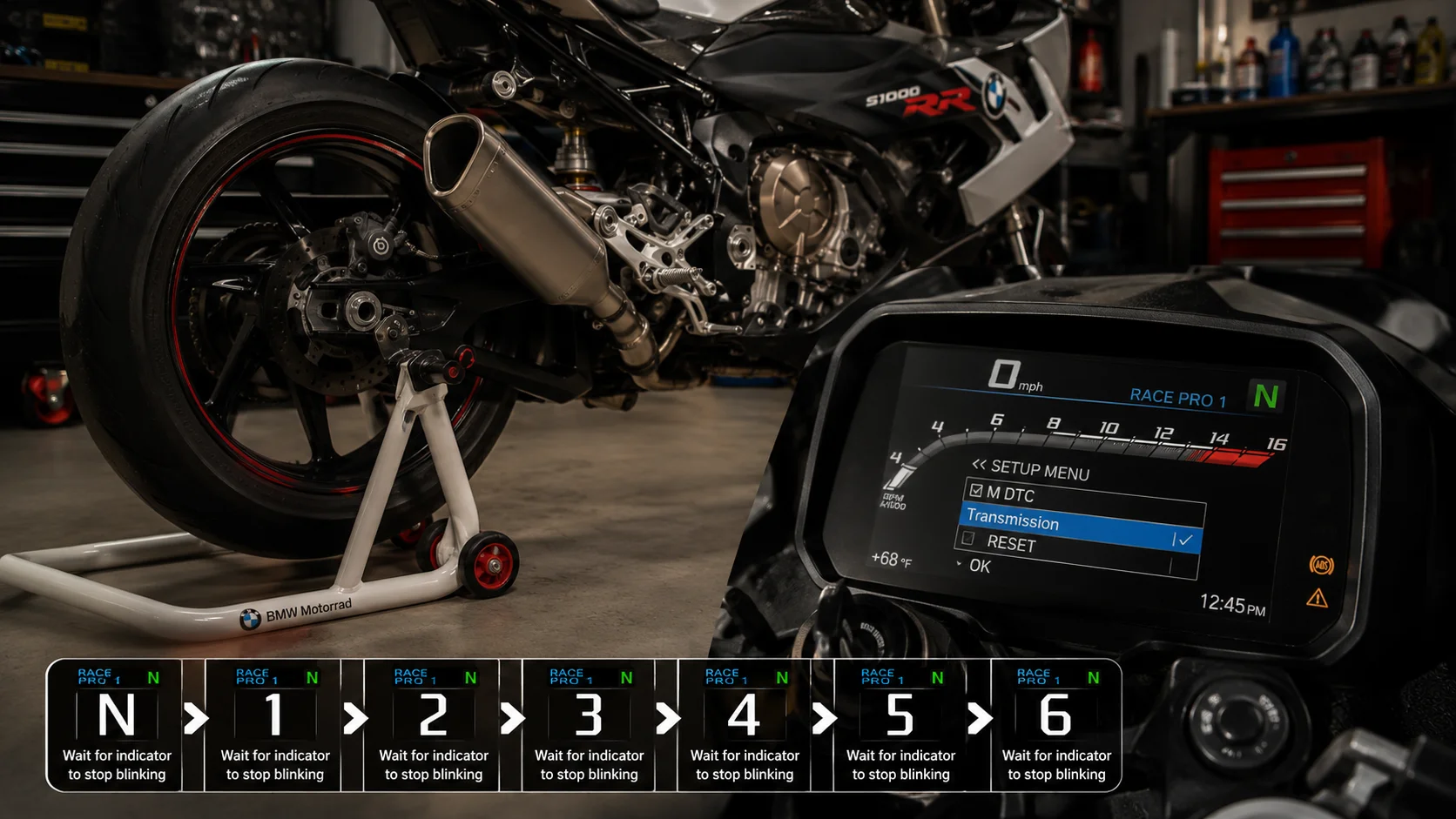
Skip this step after a repair, and you might still feel the old shift behavior, even though the mechanical issue underneath is already fixed. The bike is simply running on stale, previously learned data.
The K67 Generation’s Unique Failure Point
If you own a 2020 or newer S1000RR built on the K67 platform, troubleshooting looks completely different from earlier generations. This platform ties shift function directly to the ShiftCam solenoid, and the connector feeding that solenoid has a documented weak point.
BMW designed this connector as a two-piece click-together assembly. Removing it correctly requires sliding one section back first, then using a separate thumb tab to finish the disconnection. Skip that sequence, and it’s remarkably easy to damage the connection without realizing it, leaving a connector that looks fine externally but no longer makes solid contact.
The resulting symptom is unusual and worth knowing specifically: an RPM limit that behaves like limp mode, often without throwing a diagnostic trouble code at all. A bad camshaft sequence signal, caused by the damaged connector, doesn’t always register clearly enough for a GS-911 tool or BMW’s own ISTA software to flag it. You can stare at a clean diagnostic scan while the real fault sits in a connector nobody’s physically inspected yet.
If you own a K67-generation bike and you’re facing an unexplained power limit with a clean scan, inspect this connector before assuming something more serious is wrong.
When It’s Actually the Gearbox, Not the Shifter
Sometimes what looks like a shift problem is really a transmission problem wearing a shifter’s costume. One owner described his bike sticking between second and third gear, with noticeably more lever travel available than the selector actually needed. Every other gear worked fine through the quickshifter. Only that one pairing kept sticking.
A local mechanic quoted roughly $1,200 just to strip the gearbox for inspection, with total repair costs estimated near $2,000 depending on findings. For a bike ridden mainly on weekends, that’s a genuinely tough number, and it pushed the owner toward considering the teardown himself.
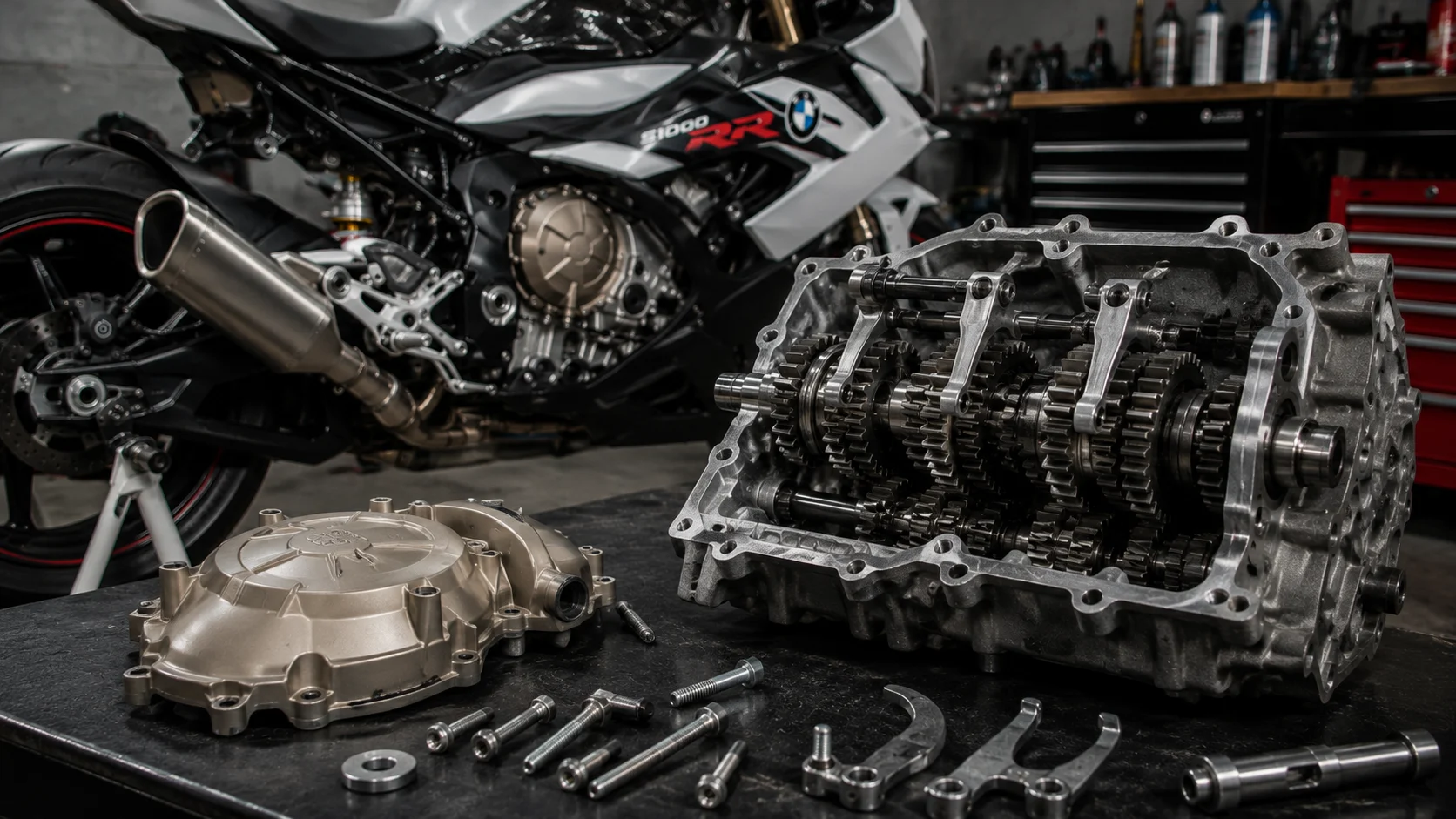
This case also surfaced something worth knowing for anyone doing their own work: some clutch cover bolts on this platform are aluminum rather than steel, a deliberate weight-saving choice from launch. These bolts can snap if reused after removal. Once the cover’s been off, fresh hardware is the safer call rather than reinstalling the originals.
The usual suspects in gearbox-specific cases like this one are worn shift star engagement pins or damaged selector forks, both of which require actually opening the transmission to confirm. There’s no reliable way to diagnose this from the outside.
Deciding Whether to DIY the Deeper Repairs
Micro switch adjustment and transmission adaptation resets sit well within reach for most owners with basic tools and a service manual. Inspecting the K67 solenoid connector is manageable too, since it mainly demands care during disconnection rather than special equipment.
A genuine internal gearbox fault is a different category of repair entirely. Removing the gearbox on this platform sometimes requires pulling the engine first, depending on model year, and getting that wrong turns a contained problem into a much bigger one. If your symptoms point toward the transmission itself, get a second opinion before committing to a DIY teardown, and remember that even professional shops quote real money for this specific job.
A Practical Troubleshooting Order for BMW S1000RR Quickshifter Problems
Start with the cheapest checks first, regardless of which generation you ride. Confirm your throttle technique during upshifts, since timing genuinely affects shift quality across every model year. Check the microswitch position if you’ve modified anything near the clutch side recently. Verify actual clutch adjustment rather than trusting lever free play alone on newer bikes. Inspect the ShiftCam solenoid connector directly if you own a K67-generation bike showing an unexplained power limit with no fault code.
Only after ruling out all of these should you consider a genuine internal transmission fault, since that’s the most expensive and invasive item on this list.
Parts for Your S1000RR
Aliwheels stocks fitment-matched components for the BMW S1000RR platform. If troubleshooting your quickshifter leads to bodywork removal for better access, or a related component needs replacing along the way, we carry the BMW S1000RR Fairings for 2017-2018 and the BMW S1000RR Headlight for 2015-2018, both confirmed direct fitment for those model years.
Frequently Asked Questions
Why does my S1000RR drop into neutral during upshifts?
This often points to a microswitch out of adjustment, especially after changing rearsets or shift linkage. On newer models, verify actual clutch adjustment rather than trusting lever free play.
My S1000RR quickshifter feels clunky only at low RPM. What’s wrong?
This is frequently a throttle technique issue rather than a fault. Using the quickshifter without genuine acceleration can feel hesitant even on a fully healthy system.
My bike has an RPM limit but no fault code. What should I check?
On K67-generation bikes from 2020 onward, inspect the ShiftCam solenoid connector directly. Damage here doesn’t always trigger a code, even though it can cause a limp-mode-style power limit.
Do I need to reset anything after fixing a clutch adjustment issue?
Yes. Reset your transmission adaptations by cycling through the gears with the rear wheel elevated, waiting for the indicator to stop blinking at each gear.
How do I know if it’s the quickshifter or the actual gearbox?
If the problem is isolated to one gear pairing, with every other gear shifting normally, suspect the gearbox itself, specifically shift star pins or selector forks, rather than the shift switch.
Browse our full BMW motorcycle parts collection for fitment-matched components across the BMW S1000RR and related platforms.