




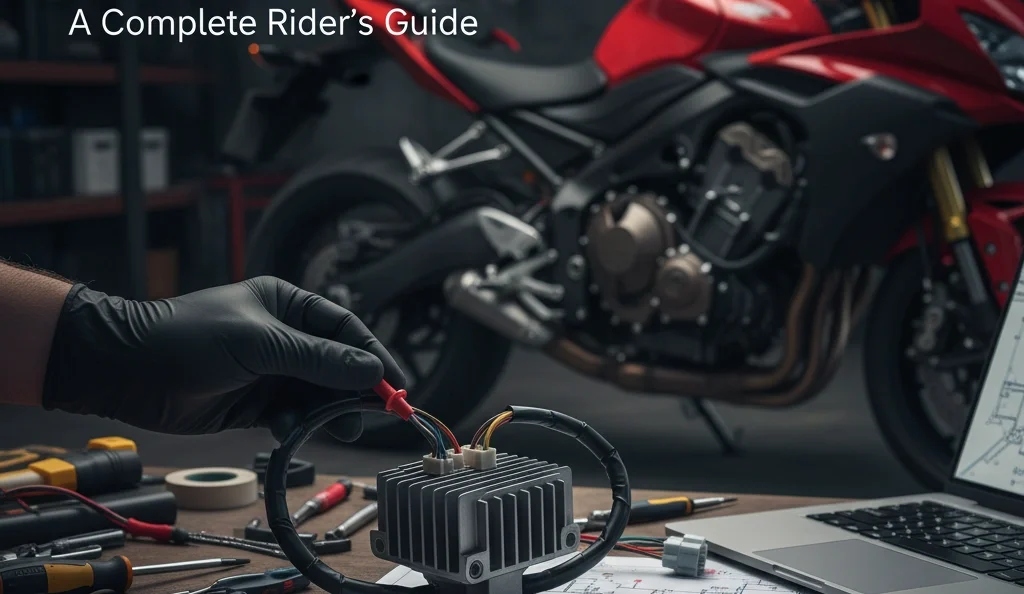

The electrical system of your motorcycle is its blood, and at the centre of it is a small yet very vital part: the voltage regulator. This silent hero emerges during the tuning of power to ensure that they remain consistent to safeguard your vital motorcycle systems. In the event of failure, the result may be a simple flat battery or a devastating electric power outage.
This guide will not only equip you, the rider, with the knowledge needed to trace, diagnose and correct the issues with the voltage regulator before it leaves you without transport. This knowledge is central to ensuring that your motorcycle is reliable, and you can go about your business on the road.
What is a Voltage Regulator?
The regulator of voltage, in simple terms, is the controller of the electrical part of your motorcycle. It receives the alternating current (AC) generated by the alternator or stator, and changes it into direct current (DC). Most of all, it controls the voltage prior to delivering it to the battery as well as other electronic devices.
Its main purpose is to prevent overcharging, which can fry your battery and destroy delicate electronics, and undercharging. It will result in not only a battery with very little charge left, but also a motorcycle which refuses to start. Basically, it prevents any major imbalance where some parts will be guaranteed a certain amount of power, which is continually safe even at varying engine speeds.
An Indication of a Damaged Voltage Regulator
The faulty voltage regulator emits loud warning signals. It is better to know them at the right time, which can save you time and money.
- Flickering Lights or Dim Lights: The indicator light, together with your headlight, might flicker or seem unusually low, especially when not in motion, indicating an unstable power supply.
- Never fully charged battery: Persistently Flat Battery. The battery goes flat even after a full charge, and keeps degenerating. Check that the regulator is charging the battery correctly as long as you are riding.
- Burning Smell or Visual Damage: Due to overheating, a unique burning smell will occur because of the regulator unit. Obviously, melted wiring in full view or a blistered look at the regulator itself is a sure indication.
This is used frequently in components like headlight and taillights. It will frequently blow due to an over-charging regulator running too much voltage through the system.
Techniques of Regulator Failure: Common Causes
Knowledge of the failure of the regulators can be used to avoid future problems.
- Overheating: Voltage regulators produce a good amount of heat and need to be placed close to the engine. Thermal breakdown may be caused when there is poor ventilation or excessive usage during hot weather.
- Vibration and Age: Ongoing selection in the engine vibration may also be caused by time, loosening internal solder joints, whereas overall wear and tear will ultimately have its way on any part.
- Corrosion and Poor Connections: The electrical connectors of the regulator can sustain corrosion due to the presence of moisture and road salt, which causes resistance, overheating, and failure.
- Stator problems: If the stator is faulty, it may cause unregulated or excessive current flow to the regulator, which may result in overloading and burnout.

Diagnosing Voltage Regulator Problems
Your best friend in the diagnosis is a multimeter. Follow these steps:
1. Safety First: Make sure that the motorcycle is securely on a stable stand and that the engine is turned off.
2. Test Battery Voltage at Rest: Adjust both your multimeter to DC volts. A full charge battery ought to take between 12.5 and 12.8 as the optimal voltage.
3. Test Voltage Running Engine: open the motorcycle and allow the engine to run idle. Once more, put the multimeter probes on the battery terminals. At this point, slowly raise the engine speed to something like 3 -5000 RPM.
4. Interpret the Results:
- Normal: Voltage ought to increase and stabilise at a range of 13.5-14.5 volts. This means that there is a healthy charging system.
- Undercharging: When the voltage stays under 13 volts, your battery is not charging. This may be an indicator of a defective regulator or stator.
- Over-charging: Once the voltage rises over 14.8 volts, then your voltage regulator is certainly broken and should be replaced immediately to avoid battery and electrical damage.
Repairing and replacing a Broken Voltage Regulator:
In case your diagnostics confirm that you have a faulty regulator, then the only choice that makes sense is a replacement.
- Safety: It is always necessary to unscrew the negative terminal of a battery prior to embarking on any electrical undertaking.
- Repair vs. Replace: Regulators are generally sealed units that can not be repaired. The usual procedure is replacement.
- The Process: Find out the regulator (usually in front of the engine or underneath a seat). Write any document about the wiring connections and then disconnect them. Unscrew the old and screw in the new, and re-run the wiring lower and lower as it was.
- Quality Matters: Choose to buy a better-quality replacement. Although OEM can be considered a safe choice, well-known aftermarket brands may be very reliable and perform well, and they can also often be better in price.
Warding off problems in Voltage Regulators
Active maintenance could save dramatically on your regulator life cost.
- Check-ups / Visual check-up: During normal services, check the regulator and the wiring system carefully, looking at their condition and potential damage, corrosion or unstable contact.
- Keep Connections Clean: Norton and maintain a clean connection between all electrical parts (connections) by applying a dielectric grease, which prevents corrosion.
- Maintain Good Airflow: Do not attach extra devices or changes that can prevent air from flowing to the area where the regulator is.
- Find Quality Parts: When changing anything about the charging system, always find good parts with reliable suppliers.
Landing on Aliwheels Advantage as a supplier of Electric parts
Electrical problems may seem challenging, but you need not work on them by yourself. Reliability is something we know at Aliwheels. We provide a full product line of high-quality motorcycle electrical parts, such as long-lasting voltage regulators that are compatible with green voltage regulators, to a broad selection of All-Brand Regulators.
We are gearing towards offering riders easy and convenient parts that you can install with the belief that they can do the trick. Furthermore, we have a service team that will ensure that you make the correct decision that befits your motorcycle.
Conclusion
A healthy voltage regulator is one of the pillars of a good motorcycle. You can prevent unforeseen failures and save your investment by learning to know the indications of failure. Carrying out easy checkup procedures and taking precautionary maintenance.
Having reliable suppliers of quality components, such as Aliwheels, can help you feel secure in keeping your motorcycle in a good state. To keep in mind, even a basic electrical layperson can save a lot of time that way, one should check it up frequently and be sure about the ride.