


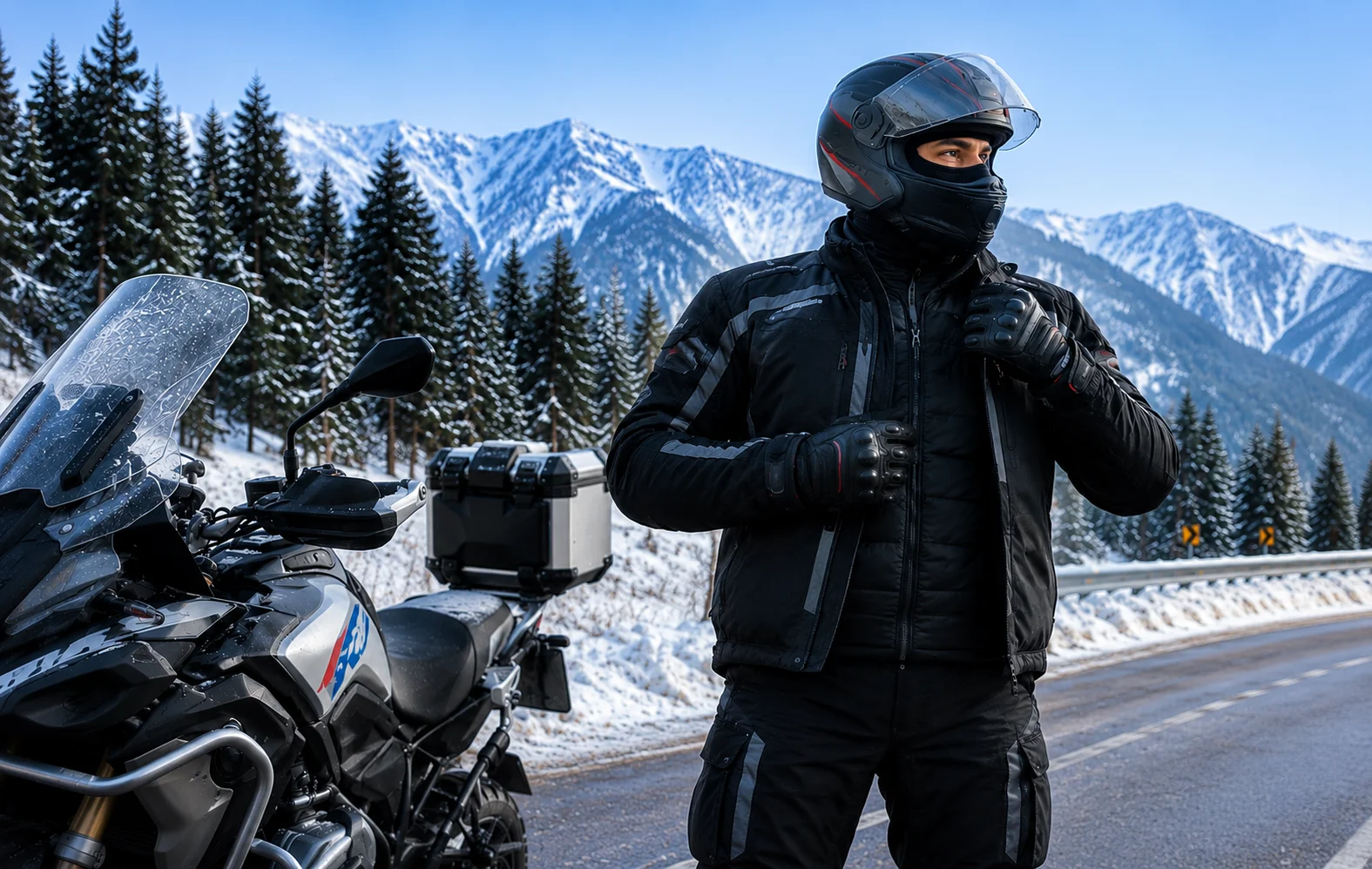

Winters should not end the riding spirit. But poor winter motorcycle apparel can bring it to an end. Every year, riders park their motorcycles as temperatures begin to fall. Some do it because roads become unsafe. But the majority of riders assume riding through winter is simply uncomfortable.
Yet there are riders in places with far harsher winters. They commute every day without freezing. The difference between both types of riders is understanding how cold affects the human body on a motorcycle.
Most riders make the same mistake. They buy the most thick motorcycle jacket they can find, zip it up, and expect it to solve everything. Twenty minutes later their hands are numb, cold air is creeping through the collar, and their back feels damp from trapped perspiration. The expensive jacket wasn’t the problem. The layering system was.
Cold weather motorcycle riding is about controlling three things simultaneously
- Body heat
- Moisture
- Wind
Ignore any one and the other two become almost impossible to manage.
Once you understand how each layer works together, winter riding becomes far more comfortable. You don’t necessarily need expensive heated motorcycle gear or an entirely new riding wardrobe. In many cases, choosing the right winter motorcycle jacket and combining it with the correct base layers and accessories is enough to stay warm through long highway rides and daily commuting alike.
This guide explains how experienced riders choose an effective winter motorcycle apparel, how to choose the right motorcycle jacket for cold weather, and which pieces of motorcycle gear & apparelmake the biggest difference once temperatures begin to drop.
Why Winter Riding Feel More Colder?
Walk outside on a 40°F morning and you might feel comfortable wearing a sweater. Ride at 65 mph in the same temperature and it becomes an entirely different experience. The reason is that it’s cold.
When you are riding, your body is inside a constant stream of moving air. That airflow strips away the thin layer of warm air your body naturally creates around itself. The faster you ride, the faster your body loses heat.
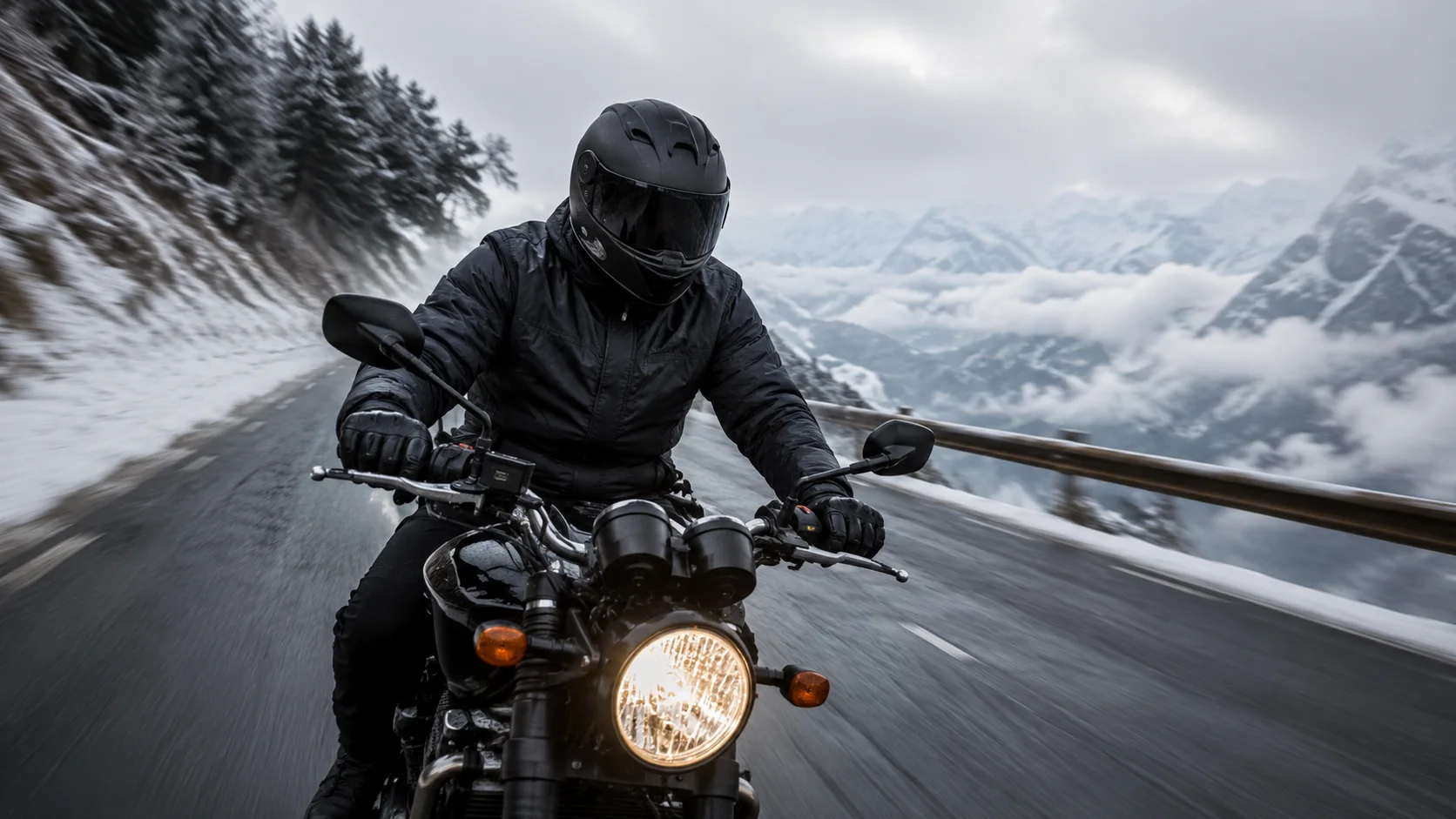
A perfectly warm motorcycle jacket may feel comfortable while just standing beside your motorcycle, but once you’re riding down the highway, it will be a different experience. But the wind isn’t the only challenge here.
Winter motorcycle riding brings moisture, whether from rain, melting snow, fog, or damp morning air. Moisture conducts heat away from your body much faster than dry air. Even slight perspiration trapped beneath your clothing can leave you feeling cold once your riding pace increases. That’s why experienced riders don’t think about motorcycle winter apparel as individual products.
They think in systems.
Every piece of clothing performs a specific job. Remove one layer or replace it with the wrong material and the entire system becomes less effective.
Your Motorcycle Jacket is not supposed to do all
One of the biggest misconceptions among new riders is believing a motorcycle jacket should provide all the warmth they need. It shouldn’t.
A quality motorcycle riding jacket has three primary responsibilities.
- First, it protects you during a crash.
- Second, it blocks wind from reaching your body.
- Third, it keeps rain and road spray away from the insulation underneath.
Generating warmth is actually not a function of a motorcycle jacket.
In actuality, the warmth comes from the air trapped inside your clothing. Your body produces that heat naturally. Your riding apparel simply prevents it from escaping. This is why many premium textile motorcycle jackets outperform thicker casual winter coats on the road. They aren’t necessarily warmer by themselves. They’re simply much better at sealing out moving air.
When shopping for a winter motorcycle jacket, riders should look beyond appearance.
Features that genuinely improve cold-weather comfort include:
- Windproof textile or leather construction
- CE-certified shoulder and elbow armor
- Adjustable wrist closures
- A high collar that seals around the neck
- Waist adjustment to reduce drafts
- A removable thermal liner
- Waterproof or water-resistant construction
Many riders also misunderstand fit. A motorcycle jacket that’s too tight compresses the insulation beneath it and reduces its ability to trap warm air. A motorcycle jacket that’s too loose allows cold air to circulate inside while riding. The best winter motorcycle jacket fits close enough to prevent airflow but still leaves enough room for proper layering underneath.
Build Your Winter Protection System From the Inside Out
Think of winter motorcycle apparel like building a house. You don’t start with the roof. You begin with the foundation. The layer touching your skin has the biggest influence on how comfortable you’ll remain several hours later.
The Insulation Layer Does the Real Heating
After moisture management comes insulation.This layer’s purpose isn’t to generate heat. Its job is to trap the warmth your body already produces.
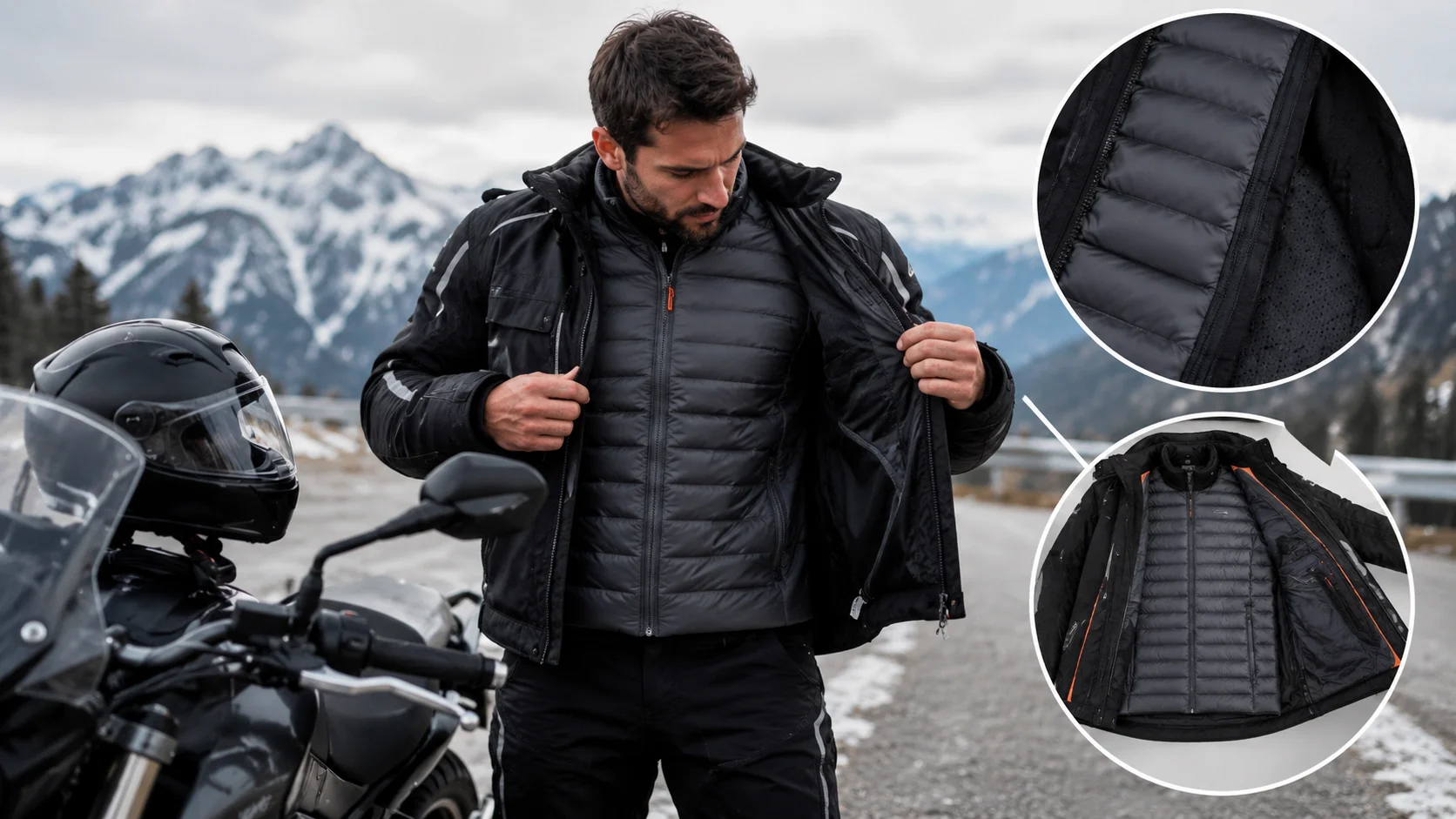
Fleece jackets, thermal liners, and lightweight insulated mid-layers all perform this task by creating pockets of still air around your body.Those tiny pockets dramatically slow heat loss while remaining much lighter than wearing multiple thick sweaters.
This is where removable jacket liners become especially useful.
Instead of owning separate jackets for every season, many riders simply adjust the insulation inside the same outer shell.
For example, the Racing Jacket by Duhan Edition at Aliwheels includes a removable thermal liner that can be installed during winter and removed once temperatures rise. It allows one motorcycle jacket to remain useful across multiple seasons without sacrificing comfort.
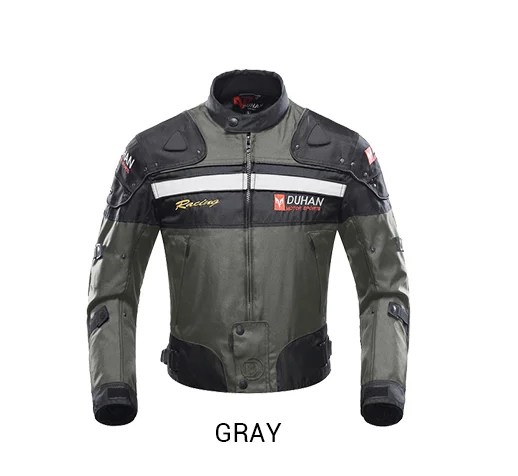
Riders who spend most of winter commuting or touring in consistently cold temperatures prefer insulated motorcycle jackets with built-in thermal construction. These jackets eliminate the need for frequent adjustments while providing excellent warmth during prolonged rides.
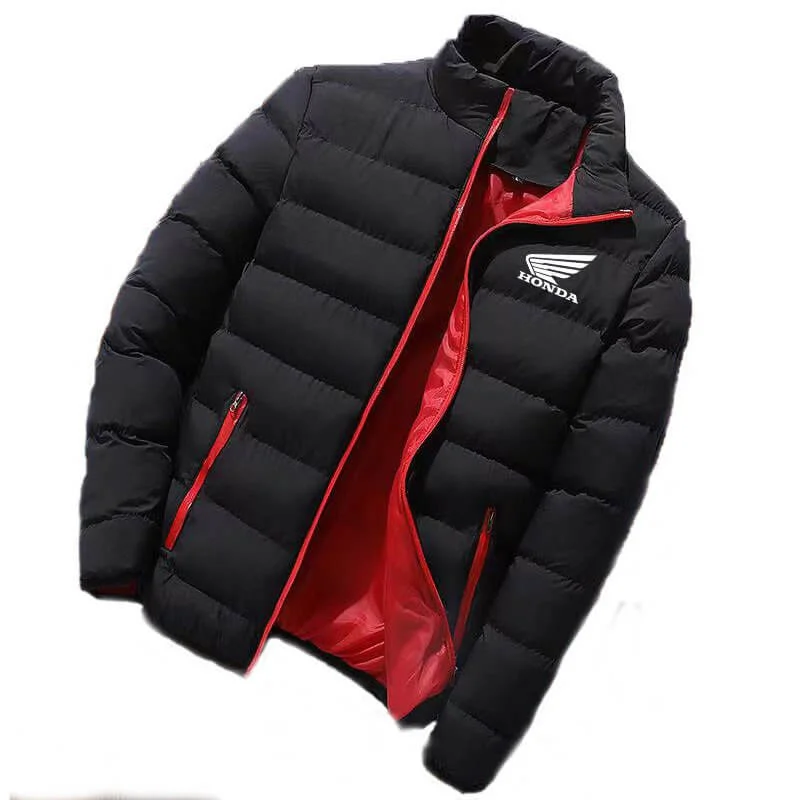
If you’re building toward a dedicated cold-weather setup, the Honda Motorcycle Racing Winter Jacket takes the opposite approach, thick polyester insulation built in from the start, with a turtleneck collar that closes off one of the biggest wind entry points on any jacket. This is the right choice for riders who do most of their riding in genuinely cold conditions and don’t need the same jacket to double as summer gear.
Buyers Guide: Choosing the Right Winter Motorcycle Jacket
Not every motorcycle jacket is built for winter riding. Some are designed primarily for airflow and ventilation. Others focus on track performance where riders generate plenty of body heat. Neither performs particularly well on a cold highway ride in January.
A quality winter motorcycle jacket should solve two problems before anything else.
It should keep wind outside.
It should keep insulation inside.
Everything else comes after that.
Textile motorcycle jackets are often the preferred choice for winter because they combine abrasion resistance with weather protection. Many include removable thermal liners and waterproof membranes, allowing the same jacket to handle changing conditions throughout the year.
Leather motorcycle jackets can also work exceptionally well in winter. Thick leather naturally blocks wind, but most leather jackets require additional insulation underneath because leather itself provides little thermal protection.
Whichever material you choose, pay attention to the features that matter on the road rather than those that simply look impressive on a product page.
- A high collar prevents cold air from entering around the neck.
- Adjustable cuffs seal around gloves to stop wind reaching your wrists.
- Waist adjusters prevent air from flowing upward into the jacket while riding.
- Ventilation zippers should close securely when temperatures fall.
Small design details like these often determine whether a ride remains comfortable after two hours or becomes miserable after twenty minutes.
Windproof Beats Thick Every Time
Many riders assume thicker automatically means warmer. In fact, it doesn’t.
Imagine wearing a thick wool sweater while standing outdoors. Now imagine wearing that same sweater while riding at highway speed. The sweater hasn’t changed.The airflow has.
Wind removes heat remarkably quickly. If your outer layer allows cold air to pass through, adding thicker clothing underneath produces only limited improvement.
This is why experienced riders prioritize a windproof motorcycle jacket before adding heavier insulation.
Once the wind is stopped, your existing body heat remains trapped inside the layers beneath. Without that barrier, every additional layer works harder while delivering smaller results.
Waterproof Protection Jackets Are Equally Important
Winter riding isn’t always about snow. In many regions, winter means constant drizzle, wet roads, fog, and occasional freezing rain. Water changes the experience.
Even excellent insulation becomes far less effective once it becomes wet.
Moisture collapses the tiny pockets of warm air trapped inside insulated clothing. Once that happens, heat escapes rapidly.
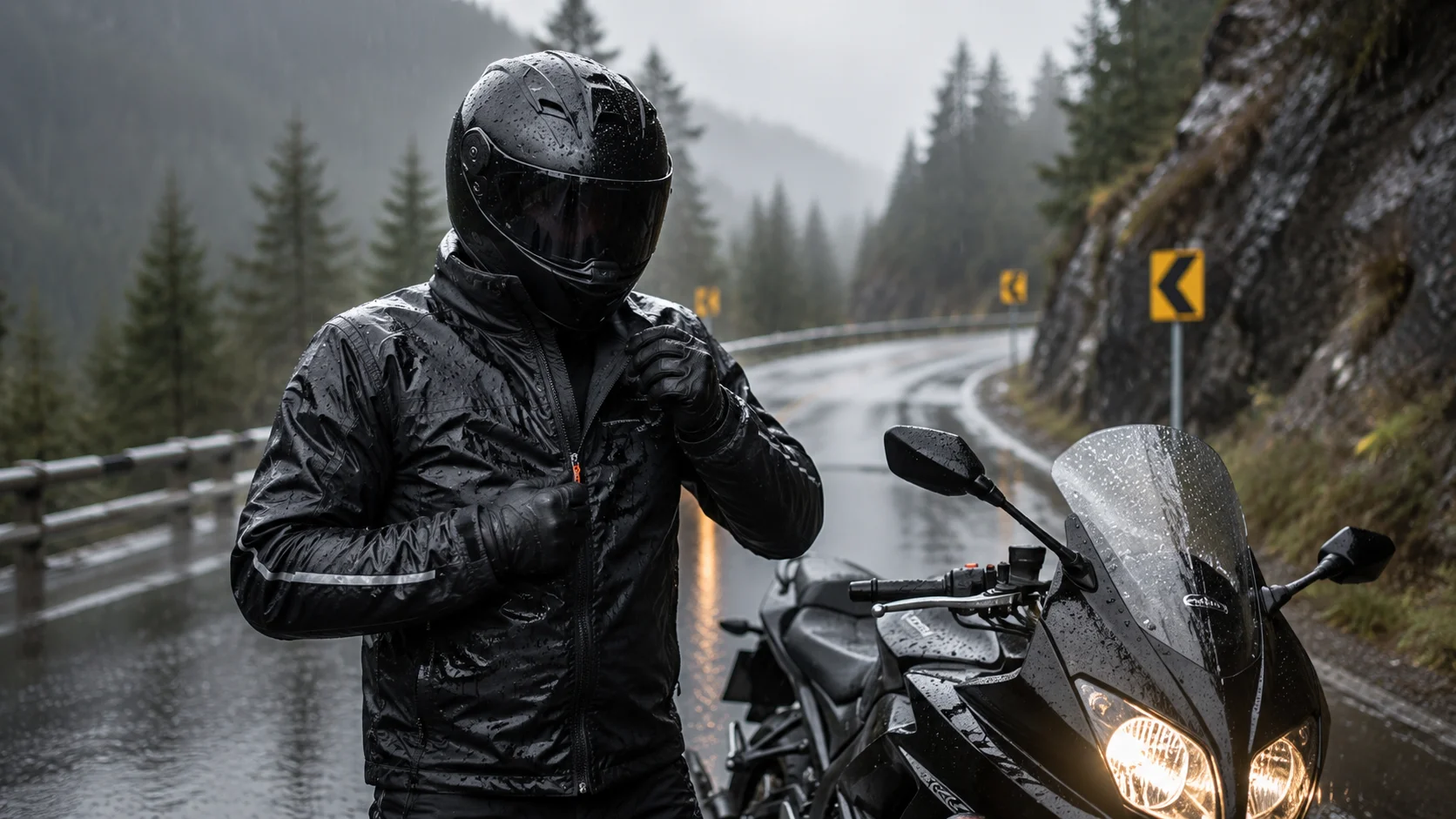
If your winter motorcycle jacket doesn’t include a waterproof membrane, carrying dedicated motorcycle rain gear is one of the smartest investments you can make.
A lightweight waterproof shell worn over your normal riding jacket blocks rain before it reaches your insulation. It also creates another barrier against wind, increasing warmth without adding significant bulk.
This is particularly useful during long-distance touring where weather conditions can change dramatically over a single day.
Aliwheels offers a wide selection of motorcycle rain gear designed specifically to fit over existing riding apparel without restricting movement or interfering with protective armor.
Don’t Let Your Hands Become the Weak Link
Ask riders what gets cold first.Most answer immediately.
“My hands.”
They’re usually right.
Your hands freeze in moving air while gripping metal handlebars that conduct heat away from your body. Add reduced blood circulation during cold weather, and fingers quickly become uncomfortable.
Good winter motorcycle gloves solve this by combining insulation, weather protection, and impact protection in a single piece of gear.
Look for motorcycle gloves that include:
- CE-certified knuckle protection
- Waterproof construction
- Thermal insulation
- Long gauntlet cuffs
- Adjustable wrist closures
The cuff deserves special attention.
Many riders neglect a gap between their gloves and jacket sleeves. Cold air enters through this small opening and travels directly toward the forearm.
Quality winter gloves should overlap the jacket sleeve, creating one continuous barrier against wind. If you’re shopping for winter riding gear, matching your gloves to your jacket is just as important as choosing either product individually.
Protect Your Neck Before Wearing A Jacket
Many riders complain about cold weather while leaving one of the largest exposed areas completely unprotected.
Their neck.
Even a small opening between the helmet and jacket collar allows air to get in the most sensitive areas. Fortunately, it’s one of the easiest problems to solve.
Get a quality motorcycle balaclava from Aliwheels that perfectly covers the head, neck, and lower face while remaining thin enough to fit comfortably beneath a helmet.
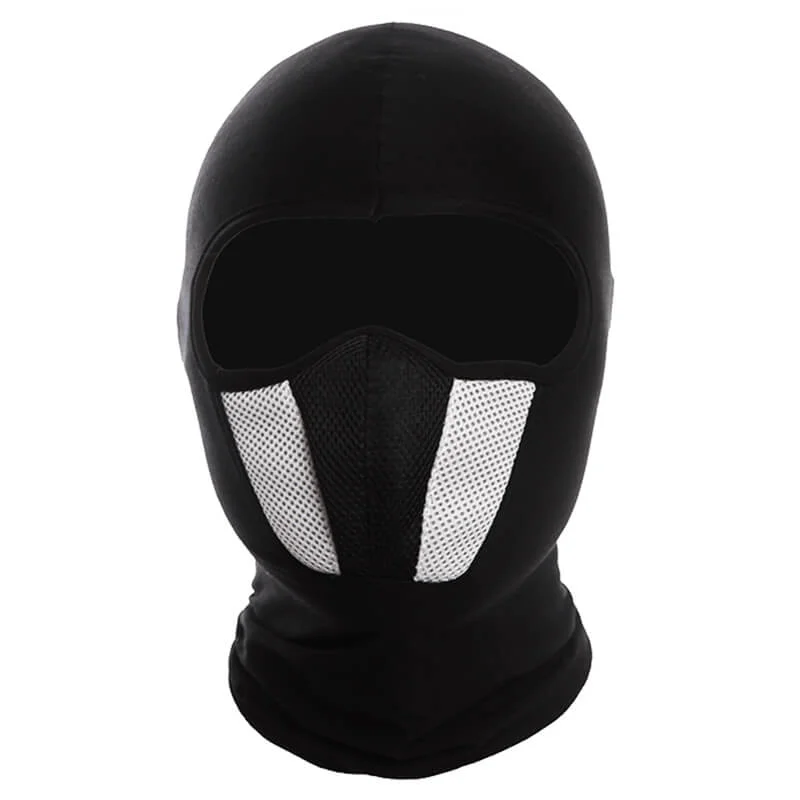
Besides improving warmth, a motorcycle balaclava offers several additional advantages. It reduces wind noise, helps absorb perspiration inside the helmet. Also, it minimizes visor fogging by directing warm breath away from the face shield.
For riders commuting every morning, it’s one of the highest-value pieces of winter motorcycle apparel available.
Don’t Forget About Impact Protection
Winter doesn’t make crashes less dangerous. If anything, slippery roads make protective equipment even more important.One mistake riders occasionally make is replacing protective riding gear with ordinary winter clothing.
A ski jacket might feel warm. But it offers virtually no abrasion resistance.
A heavy winter coat might block the wind. But It won’t protect shoulders, elbows, or your spine during a slide.
Your winter motorcycle jacket should always include CE-certified armor. If your jacket has a pocket for a back protector, use it.
Additional insulation should never replace impact protection.
Aliwheels offers a full collection of motorcycle back protectors that integrate easily into compatible riding jackets, giving riders extra confidence without sacrificing comfort.
Browse our full Motorcycle Back Protectors collection to make sure your winter setup includes real CE-rated protection underneath the insulation, not just warmth with nothing backing it up if you go down.
Your Winter Riding Gear Around
There is no perfect winter motorcycle apparel. The right combination depends on where you ride, how often you ride, and how long you’re in the saddle.
A rider commuting twenty minutes through city traffic needs something very different from someone covering 400 highway miles in freezing temperatures. Its better to build your gear around your riding style instead of buying equipment you’ll never fully use.
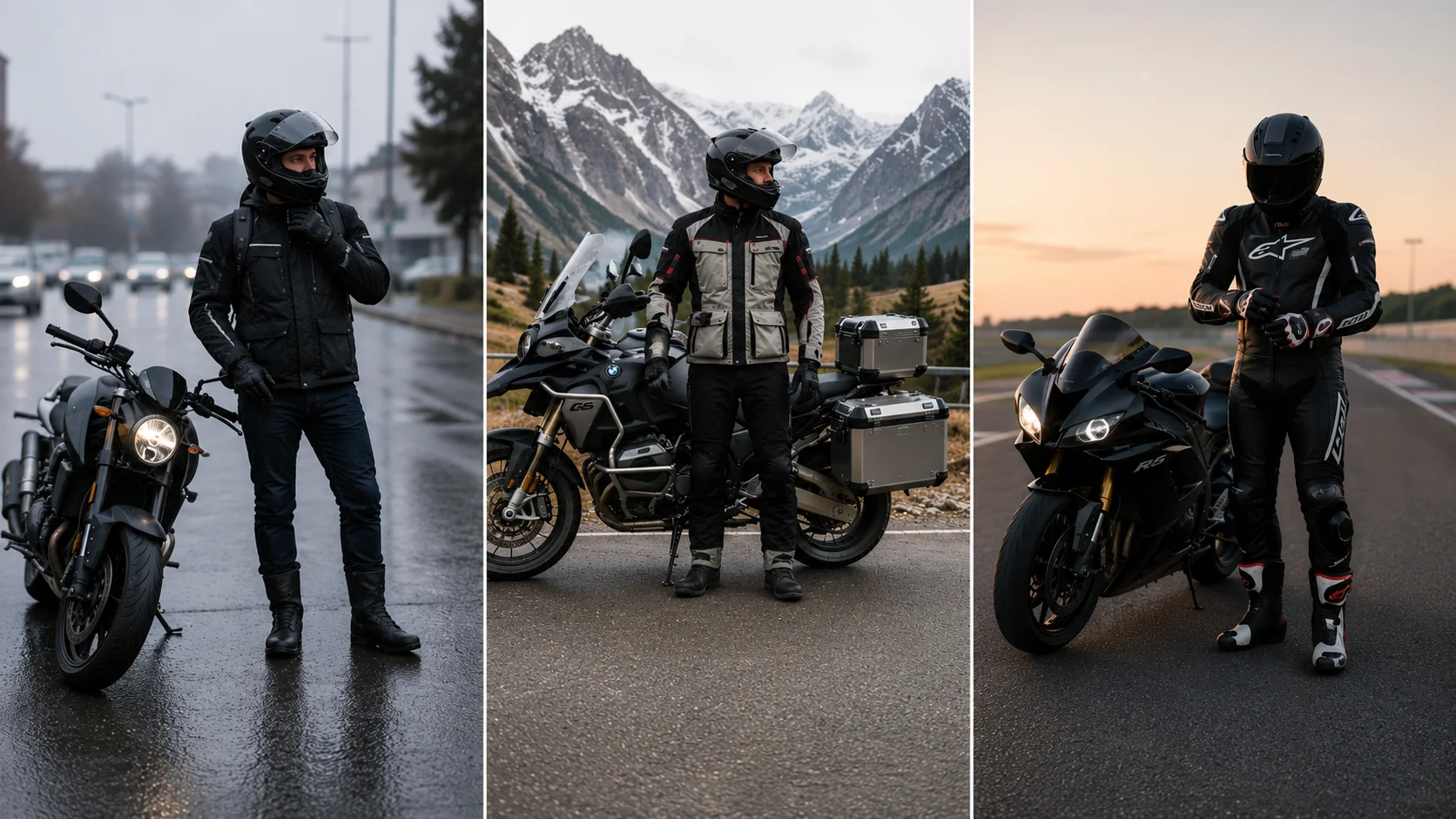
For Daily Commuters
Commuters need gear that’s comfortable enough to wear every day without becoming a chore.
A practical setup includes:
- Moisture-wicking base layer
- CE AA textile winter motorcycle jacket with removable thermal liner
- Waterproof motorcycle gloves
- CE-certified riding jeans
- Waterproof touring boots
- Thin motorcycle balaclava
- Compact rain suit stored under the seat
This combination handles changing temperatures throughout the day while remaining comfortable enough for daily use.
For Long-Distance Touring
Touring places completely different demands on your gear. You’ll spend hours exposed to wind while riding through multiple weather conditions in a single day. Your priorities become weather protection, fatigue reduction, and adaptability.
A complete touring setup should include:
- Merino wool or technical base layers
- Premium insulated touring motorcycle jacket
- Waterproof riding pants
- Heated grips or insulated gloves
- Waterproof touring boots
- Neck tube or balaclava
- Waterproof outer shell for unexpected rain
A quality textile touring jacket usually works better than heavy leather here because modern textile fabrics combine insulation, waterproofing, and ventilation in one package while remaining lighter over long distances.
For Sport Bike Riders
Sport riding creates more body movement but also exposes the rider to stronger wind pressure. That makes exact fit even more important.
A loose jacket begins moving around at speed, allowing cold air to enter while also shifting protective armor away from its intended position.
Sport riders should prioritize:
- Compression base layers
- Slim-fitting leather or textile motorcycle jacket
- Removable thermal liner
- CE Level 2 back protector
- Insulated racing gloves
- Waterproof over-jacket when required
The goal is maintaining mobility while preventing wind from entering around the waist, wrists, and neck.
Browse our full Riding Gear collection at Aliwheels. Choose from a wide range of motorcycle winter apparel, from base layers to outer shells, back protection, and rain protection, all in one place.
Frequently Asked Questions
What should I wear under a winter motorcycle jacket?
Start with a moisture-wicking base layer made from polyester or merino wool. Add a lightweight insulating layer such as fleece or a thermal liner before putting on your motorcycle jacket. Avoid cotton because it traps moisture and makes you feel colder during long rides.
Is a leather motorcycle jacket warm enough for winter?
Leather blocks wind extremely well, but it doesn’t provide much insulation by itself. For winter riding, wear proper thermal layers underneath or choose a leather jacket with a removable insulated liner.
What’s the best winter motorcycle jacket for everyday riding?
The best option depends on your riding style, but a CE-certified textile motorcycle jacket with a removable thermal liner, waterproof construction, adjustable cuffs, and good ventilation offers the greatest flexibility for changing weather.
Do I really need a motorcycle balaclava?
Yes. A motorcycle balaclava covers the neck and lower face, which are two of the biggest sources of heat loss during winter rides. It also helps reduce wind noise and visor fogging.
Should motorcycle gloves go over or under jacket sleeves?
Most winter motorcycle gloves are designed to fit over your jacket sleeves. This creates a continuous barrier that stops cold air and rain from entering around your wrists.
Can I wear normal winter clothing while riding?
Normal winter clothing keeps you warm while walking, but it isn’t designed for motorcycle riding. It usually lacks abrasion resistance, impact protection, and proper wind sealing. Motorcycle-specific apparel provides both weather protection and crash protection.
Is waterproof gear necessary during winter?
If there’s any chance of rain, snow, or wet roads, waterproof gear is highly recommended. Wet insulation loses much of its ability to retain heat, making even short rides uncomfortable.
How many layers should I wear for cold-weather riding?
Three layers work best for most conditions: a moisture-wicking base layer, an insulating middle layer, and a windproof motorcycle jacket. Add waterproof outerwear when riding in rain or snow.
Does wearing more layers affect motorcycle safety?
Only if those layers interfere with how your riding gear fits. Your motorcycle jacket should still allow armor to sit correctly over your shoulders, elbows, and back. Excessively bulky clothing can shift protective armor away from its intended position.
How do I know if my winter motorcycle jacket fits properly?
Put the jacket on with all your winter layers underneath and sit on your motorcycle in your normal riding position. The sleeves should reach your wrists, the back should stay covered, and the armor should remain centered over your joints without restricting movement.