





Your motorcycle battery keeps dying. You replace it. Then it dies again. Sound familiar? Most riders blame the battery. But here is the truth. In most cases, a poor motorcycle voltage regulator is usually the real culprit. And if you keep ignoring it, you will keep burning through batteries and frying electrical parts until something bigger strikes.
Let’s break it down so you can catch the problem early.
What a Motorcycle Voltage Regulator Actually Do?
Think of the voltage regulator as the gatekeeper of your bike’s electrical system. Your engine produces AC power through the alternator. The regulator converts that into usable DC power. Then it keeps the voltage steady, typically between 13.5V and 14.7V, so nothing gets overloaded.
A healthy regulator keeps your charging system balanced. When it fails, everything downstream suffers. That includes your battery, your headlights, and your ignition system.
Without a functioning regulator, your bike either gets too little charge or dangerously too much. Either way, it is a problem.
6 Motorcycle Voltage Regulator Symptoms You Should Not Ignore
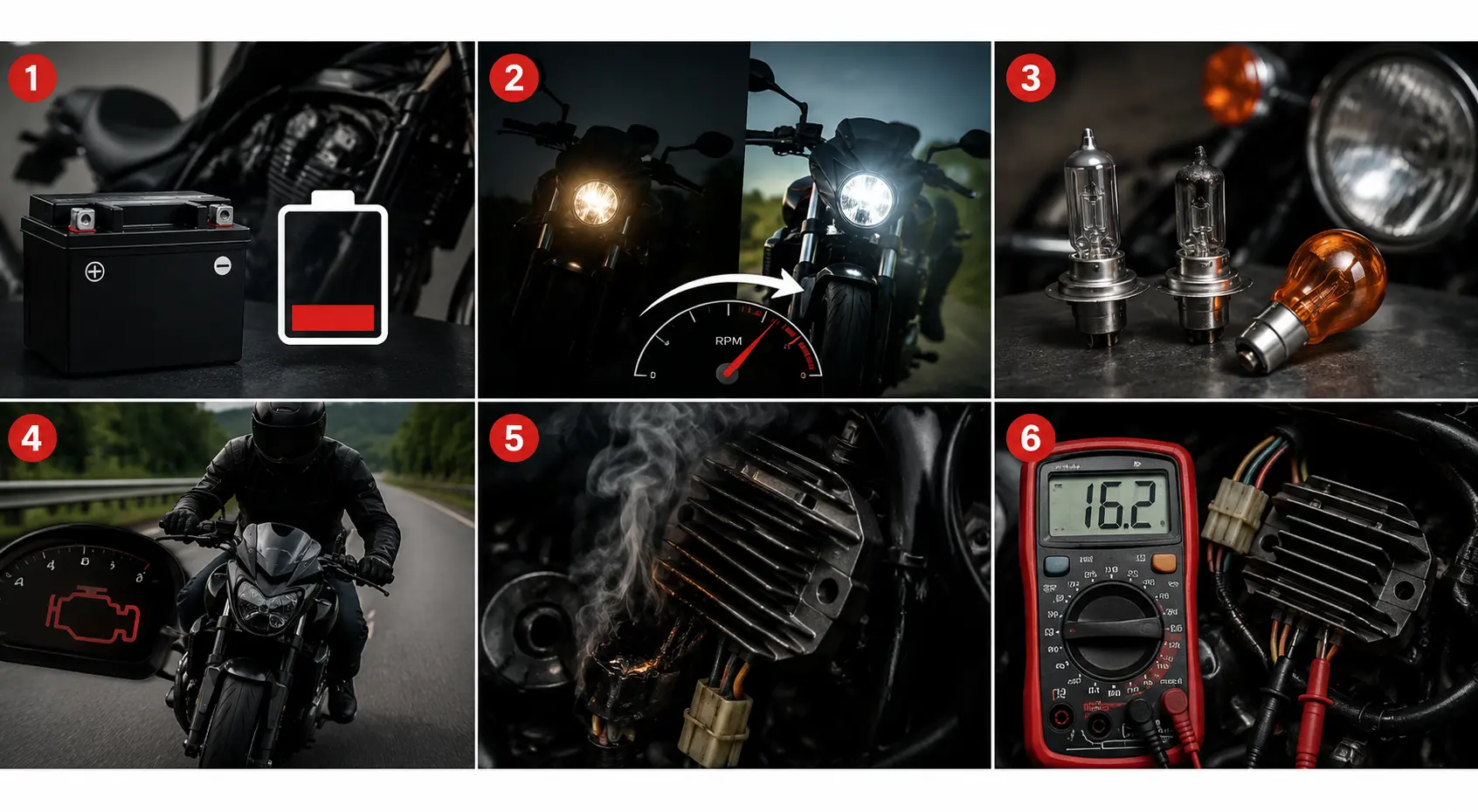
1. Your Motorcycle Battery Keeps Dying No Matter How Many You Replace
This is the most obvious sign. However, most riders replace the battery and call it done. If your new battery drains within days or weeks, the regulator is not giving it a proper charge. The battery is a victim, not the cause.
Riders on forums consistently report this pattern. Multiple new batteries get installed before anyone diagnoses the failed regulator.
2. Lights Dim at Idle Then Brighten When You Rev
This is a classic tell. At idle, your engine spins slower and produces less power. A weakening regulator cannot compensate properly. So your lights dim or flicker. Then as RPMs climb, suddenly everything looks brighter.
That flickering is your electrical system screaming for attention. Do not ignore it.
3. Bulbs Are Burning Out Way Too Fast
On the flip side, overvoltage is just as dangerous. When the regulator fails in the other direction, it sends too much voltage through your system. Bulbs burn out faster than normal. Electronic components get fried over time.
The NHTSA issued formal recalls on both Kawasaki and Ducati models specifically because overheating voltage regulators caused overcharging conditions. Both manufacturers replaced the regulator as the solution.
4. The Bike Cuts Out Without Warning While Riding
If your regulator cannot maintain charge, your battery slowly drains while you ride. Eventually, the ignition system loses enough power to cut out entirely. Without warning. At highway speed.
This is not just a frustrating breakdown. It is a genuine safety risk. Kawasaki’s recall notice specifically highlighted engine stalling while riding as a crash risk linked to regulator failure.
5. Something Smells Like It’s Burning Near the Electrics
A failing regulator runs hot. When it starts to overheat, it can burn surrounding wires and connectors. If you notice a burning plastic or electrical smell, especially after longer rides, check the regulator immediately.
According to motorcycle mechanics on forums like Triumph Rat and ADVrider, regulator overheating is especially common on bikes where the unit is mounted near the exhaust or behind fairings with poor airflow.
6. Your Multimeter Confirms a Bad Voltage Regulator
If you own a multimeter, this is the easiest confirmation step. Start your bike and let it reach normal temperature. Connect the multimeter across the battery terminals. At around 3,000 RPM, a healthy system should read between 13.5V and 14.7V.
Below 13V means your regulator is undercharging. Above 15V means it is overcharging. Either reading confirms the regulator needs replacement.
When a Motorcycle Voltage Regulator Fails?
Heat is the number one enemy of any motorcycle voltage regulator. Regulators are often tucked into tight spaces with poor ventilation. Over time, thermal stress breaks down internal components. Dirty or corroded connections also force the regulator to work harder, which accelerates failure.
Older bikes with high-mileage electrical systems are especially vulnerable. However, even newer bikes are not immune, as seen with the Harley-Davidson voltage regulator wire recall affecting nearly 42,000 motorcycles.

How to Fix a Bad Voltage Regulator on Your Motorcycle?
First, test your system with a multimeter before spending money on parts. If the readings confirm a faulty regulator, do not wait. The longer you ride with a failing one, the more damage it causes downstream.
Second, replace the regulator and the battery at the same time if the battery has been subjected to undercharging or overcharging for a while. A compromised battery paired with a new regulator is a recipe for continued frustration.
You can find quality replacement voltage regulators for Honda, Yamaha, Kawasaki, Suzuki, Ducati, BMW, KTM, and more at Aliwheels Voltage Regulator, with free worldwide shipping on orders over $300. Browse the full Batteries and Electrical category to cover everything your charging system needs.
Conclusion
Your voltage regulator seems like a small part. If your battery keeps dying, your lights are flickering, your bulbs blow out frequently, or your bike stalls unexpectedly. Stop replacing symptoms and start diagnosing the real cause.
Test it. Get it replaced from Aliwheels today!