



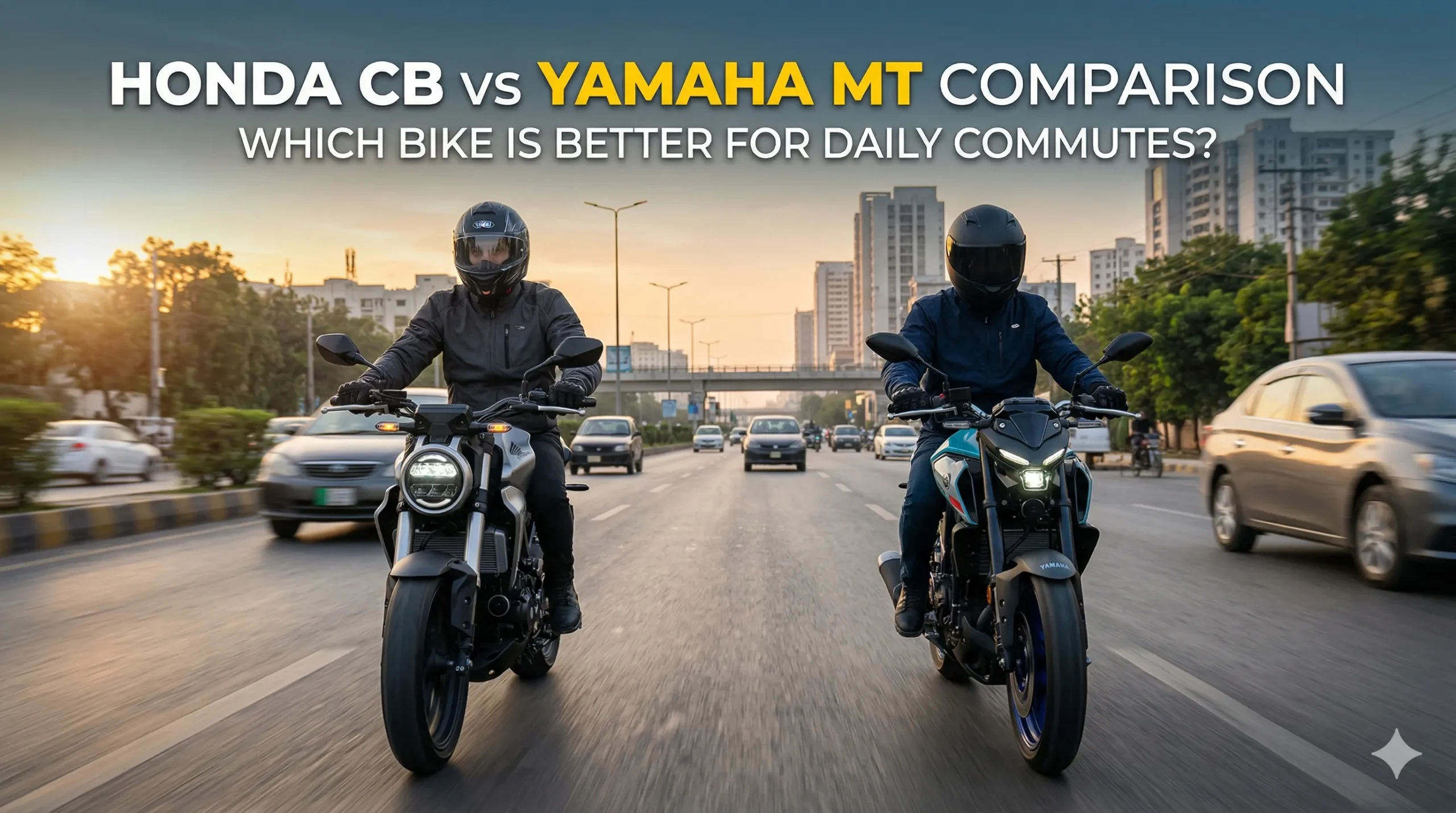

When you’re shopping for a naked streetfighter that handles everything from daily commuting to weekend canyon carving, the Honda CB series and Yamaha MT lineup represent two of the most popular choices. But beyond spec sheets and magazine reviews, which one delivers better real-world usability for riders who actually use their bikes every day?
I’ve spent considerable time on both platforms, commuting through traffic, touring cross-country, and exploring twisty backroads. Let me share what you need to know about Honda CB vs Yamaha MT practicality so you can choose the bike that fits your actual riding life.
Everyday Ergonomics and Comfort
Riding position dramatically affects how much you’ll actually enjoy using your bike daily.
The Honda CB series (CB500F, CB650R, CB1000R) features upright, neutral ergonomics that prioritize all-day comfort. The handlebars are positioned naturally, the seat height is accessible for most riders, and the footpeg placement doesn’t cramp your legs during long rides. After 2-3 hours in the saddle, the CB feels planted and fatigue-free.
The Yamaha MT series (MT-03, MT-07, MT-09, MT-10) employs more aggressive “torque sport” positioning with a slightly forward-leaning posture and higher footpegs. The MT-07 and MT-09 are comfortable for rides under an hour, but start showing their sportier nature on longer hauls. Your wrists carry more weight, and the firm seat padding prioritizes support over plushness.
Verdict: Honda CB wins for all-day comfort; Yamaha MT favors more engaged riding.
Engine Performance and Daily Driveability
Real-world engine performance means more than peak horsepower numbers.
The Honda CB engines deliver smooth, linear power across the rev range. The CB650R’s inline-four provides silky smooth power delivery that makes city riding effortless; you can lug it in higher gears through traffic without constant shifting. Honda’s philosophy prioritizes refinement and usability.
The Yamaha MT engines are characterful and engaging but less refined. The MT-07’s CP2 parallel-twin is torquey and fun but slightly vibey. The MT-09’s CP3 crossplane triple is thrilling with its unique firing order and explosive mid-range, but it’s more temperamental than Honda’s smooth fours.
Yamaha prioritizes excitement and character over ultimate smoothness. This creates more engaging riding but can be tiring in heavy traffic when you just want smooth, predictable power delivery.
Verdict: Honda CB offers better refinement for daily use; Yamaha MT provides more character and excitement.
Fuel Efficiency for Riders
Fuel economy directly impacts the cost and convenience of using your bike regularly.
The Honda CB500F delivers an exceptional 60-70 mpg in mixed riding. The CB650R returns 45-55 mpg depending on riding style. The CB1000R achieves 40-48 mpg, impressive for a liter bike.
The Yamaha MT-07 delivers 50-58 mpg in typical use. The MT-09 returns 40-48 mpg, while the MT-10 achieves 35-42 mpg. The MT engines’ performance focus means real-world mileage often sits at the lower end of these ranges.
Over a year of regular riding, the Honda saves you approximately $75-100 in fuel costs compared to equivalent Yamaha models.
Verdict: Honda CB provides better fuel economy across all displacement categories.
Maintenance and Service Accessibility
Service requirements affect both cost and convenience for bikes you actually ride regularly.
Honda CB motorcycles have longer service intervals, typically 8,000-12,000 miles for major services. Valve clearance checks occur every 16,000 miles on most models. Parts are widely available, and any competent mechanic can work on them.
Yamaha MT bikes require slightly more frequent attention. The MT-09’s crossplane triple needs valve checks every 16,000 miles, but the unique engine design means dealer service is often preferred over independent shops, potentially increasing costs.
Verdict: Honda CB has slightly more convenient maintenance schedules and broader service network accessibility.
Luggage and Touring Capability
Carrying capacity matters for riders using their bikes for errands, commuting to work, or weekend trips.
The Honda CB series makes luggage mounting straightforward. The subframe and mounting points accommodate aftermarket racks, side cases, and tank bags easily. The stable handling remains predictable even when loaded.
The Yamaha MT series can accept luggage, but the aggressive styling and tail section design make mounting less elegant. Aftermarket solutions exist, but they often look like afterthoughts on the MT’s sharp design.
Verdict: Honda CB is significantly more luggage-friendly.
Urban Maneuverability
City riding capability separates bikes you’ll enjoy using from bikes you’ll avoid when facing traffic.
The Honda CB500F weighs just 190 kg, making it incredibly nimble. The CB650R (206 kg) and CB1000R (213 kg) remain manageable. Light clutch effort and smooth power delivery make stop-and-go riding less tiresome.
The Yamaha MT-07 (184 kg) is exceptionally light and flickable, possibly the most maneuverable bike in this comparison. The MT-09 (193 kg) and MT-10 (210 kg) remain agile despite more power.
Verdict: Yamaha MT-07 wins pure maneuverability; Honda CB offers easier, more relaxed city riding overall.
Pillion Comfort
Passenger accommodation matters if you ever carry a friend or partner.
Honda CB bikes feature reasonable pillion seats and grab handles. The upright riding position and stable handling make passengers feel secure.
Yamaha MT motorcycles have firm, small pillion seats clearly designed as afterthoughts. Passengers report discomfort after 20-30 minutes.
Verdict: Honda CB is noticeably better for carrying passengers.
Weather Protection and Year-Round Use
Neither bike offers much weather protection, being naked streetfighters, but subtle differences exist.
Honda CB models expose you fully to the elements, but their upright position makes adding aftermarket windscreens practical. The more relaxed position makes fighting wind and rain less fatiguing.
Yamaha MT bikes offer similar exposure, but the aggressive riding position means more weight on your arms when fighting the wind.
Verdict: Slight edge to Honda CB for year-round usability.
Long-Distance Capability
Touring potential extends your bike’s versatility beyond daily use.
The Honda CB650R and CB1000R can cover 300-400-mile days comfortably with proper luggage. The smooth engines, comfortable ergonomics, and fuel efficiency make them capable sport-touring machines.
The Yamaha MT-09 and MT-10 can tour but are less refined over long distances. The vibration, firm seats, and aggressive position make them better suited to 150-200-mile days.
Verdict: Honda CB handles long-distance riding more comfortably.
Conclusion: Which Delivers Better Real-World Usability?
For Honda CB vs Yamaha MT real-world usability, the Honda CB series wins for most riders prioritizing practical daily use. The CB’s more comfortable ergonomics, better fuel economy, easier luggage accommodation, and refined engines make it superior for commuting, errands, touring, and all-day riding.
Choose Honda CB if:
- Comfort during daily use is a priority
- You want better fuel economy
- Carrying luggage or passengers is common
- Smooth, predictable power appeals to you
- You value practical versatility
Choose Yamaha MT if:
- Exciting engine character matters most
- You prioritize weekend fun over daily commuting
- You rarely carry passengers or luggage
- You want the most engaging riding experience
- Pure maneuverability trumps overall comfort
The Yamaha MT is the more thrilling motorcycle, but the Honda CB is better for daily commute that you’ll actually enjoy riding every single day. For real-world usability, that practical excellence makes the Honda CB the smarter choice for most riders.