



If you spend enough time around Harley touring bikes, especially Road Glides, Street Glides, Ultras, and Electra Glides, one pattern becomes obvious. These machines are built to cover serious miles, but once the odometer starts climbing, certain parts always begin asking for attention. Ask any experienced Harley mechanic, and you will hear the same answer again and again. High-mileage touring bikes do not fail all at once. They wear out in predictable ways.
Understanding which Harley touring bike maintenance parts wear first can save riders thousands in repairs and, more importantly, prevent roadside breakdowns that ruin long-distance trips.
Mileage changes everything on a touring Harley
A Harley that has crossed 15,000 or 20,000 miles is no longer operating like it did when it rolled off the showroom floor. Heat cycles, vibration, road grime, and rider load all compound over time. Touring bikes are heavier, carry luggage, and often ride two-up. That extra weight accelerates wear in areas many riders ignore until handling or comfort suddenly drops.
This is why seasoned mechanics focus on proactive replacement rather than waiting for failure. The goal is not performance upgrades. It is preserving ride quality, safety, and reliability.
Suspension is almost always the first wake-up call
One of the most common Harley touring wear parts mechanics replace is suspension. Rear shocks and front forks quietly degrade long before riders realize what is happening. Oil inside the shocks breaks down. Seals wear. Springs lose tension.
Many riders complain about vague handling, excessive dive under braking, or bottoming out over bumps. Mechanics quickly recognize suspension sag on touring Harley models because it affects stability and tire wear.
Touring suspension replacement parts are often installed earlier than riders expect, especially on bikes that carry saddlebags, tour packs, or a passenger regularly. Replacing worn shocks and refreshing fork internals dramatically improves control and comfort, often making the bike feel years younger.
Brakes are replaced more often than riders think
Brake pads and rotors on touring Harleys work harder than most riders realize. These bikes are heavy, and many spend time in stop-and-go traffic or long downhill stretches.
Brake pads and rotors for touring Harley models are among the first items mechanics inspect during service. Pads wear unevenly when suspension is tired, and rotors can warp subtly over time, leading to pulsing at the lever.
Ignoring brake wear does not just reduce stopping power. It stresses calipers, increases heat, and compromises rider confidence. Experienced mechanics recommend inspecting brakes more frequently once a bike passes 15,000 miles, especially if it is used for long trips.
Handlebars, grips, and controls tell a story of use
Another area mechanics replace early on high-mileage touring bikes is the rider interface. Touring handlebars and grips upgrades are not always about looks. Rubber grips harden with age. Internal bar dampers loosen. Control bushings’ wear.
Riders often report increased vibration, numb hands, or a sloppy throttle feel. Mechanics know these are signs that the grips, bushings, and sometimes the bars themselves need attention. Replacing worn controls restores feedback and reduces fatigue on long rides.
This is one of those maintenance items riders underestimate because the bike still runs fine. Comfort issues are dismissed until they become impossible to ignore.
Electrical components quietly age in the background
While not always replaced first, electrical components are closely monitored by mechanics servicing touring Harleys. Heat from large V-twins affects connectors, grounds, and charging components over time.
Routine inspections focus on battery condition, regulator output, and wiring integrity. Electrical problems often appear gradually and show up as intermittent issues that frustrate riders. Addressing them early prevents breakdowns far from home.
High-mileage Harley servicing always includes checking charging system health because touring riders rely heavily on electronics for navigation, communication, and lighting.
Drivetrain wear shows up in subtle ways
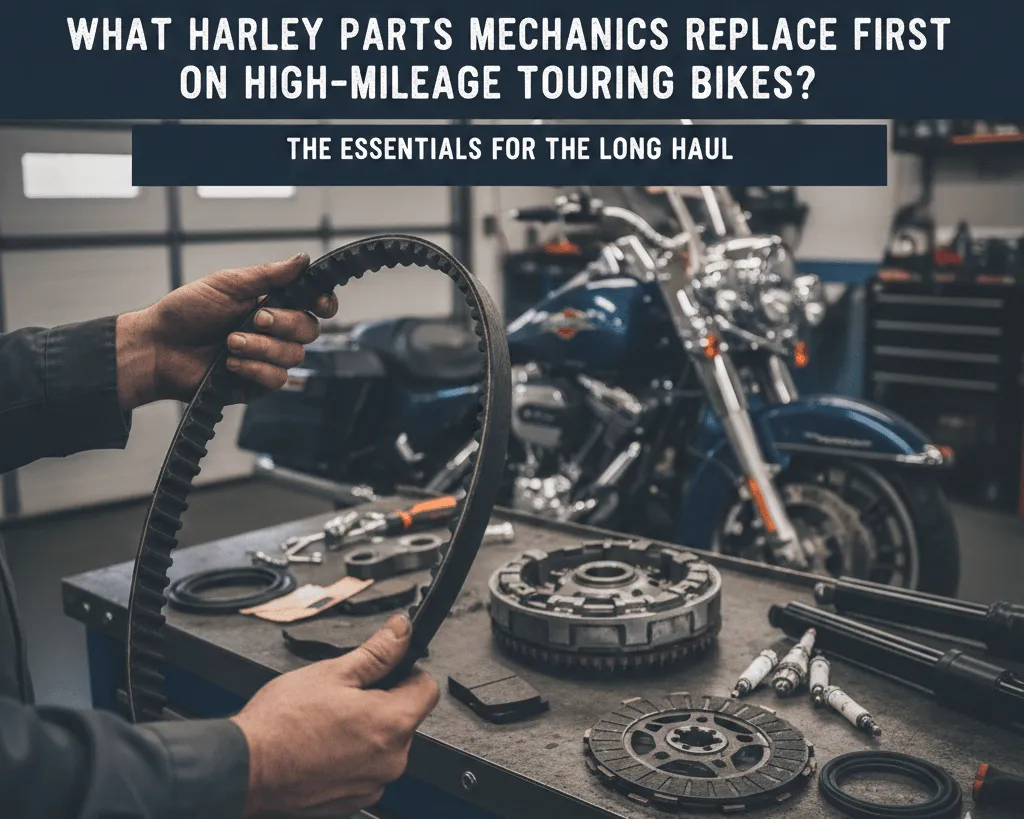
Belts, pulleys, and clutch components are another group of Harley touring bike maintenance parts that mechanics keep a close eye on. Touring bikes put a consistent load on the drivetrain, especially during two-up riding and highway cruising.
Slipping clutches, noisy pulleys, or vibration under load are signals mechanics do not ignore. While these parts can last a long time, replacing them before failure avoids expensive collateral damage.
Why do mechanics replace parts before they fail?
The biggest difference between rider expectations and mechanic reality is timing. Riders often wait for a problem to become obvious. Mechanics look for early indicators.
Routine parts Harley mechanics recommend replacing early are not about upselling. They are about preserving the touring experience. A touring Harley is meant to be comfortable, stable, and predictable. Once suspension sags, brakes fade, and controls loosen, that experience disappears.
Replacing worn components restores balance across the bike. Handling improves. Braking feels confident. Long rides become enjoyable again instead of exhausting.
Touring bikes reward proactive maintenance
High-mileage touring bikes are not fragile. They are honest. They tell you what they need if you listen. The riders who enjoy the most miles are the ones who treat maintenance as part of ownership, not a reaction to failure.
Mechanics see the difference clearly. Bikes that receive timely suspension service, brake inspections, and control refreshes age gracefully. Bikes that ignore these areas develop compounded issues that are far more expensive to fix later.
Thoughts from the workshop floor
Every touring Harley tells a story through its wear patterns. Suspension, brakes, and rider contact points almost always lead that story. These are the areas mechanics replace first because they affect everything else.
Understanding common Harley touring wear parts helps riders make smarter decisions and avoid unnecessary downtime. High-mileage touring bikes are capable of crossing states and countries when properly maintained. The key is replacing the right parts at the right time, before comfort and safety suffer.
Get Quality Harley Tiuring Parts from Aliwheels today. A touring Harley that is cared for properly does not just last longer. It rides better with every mile.