

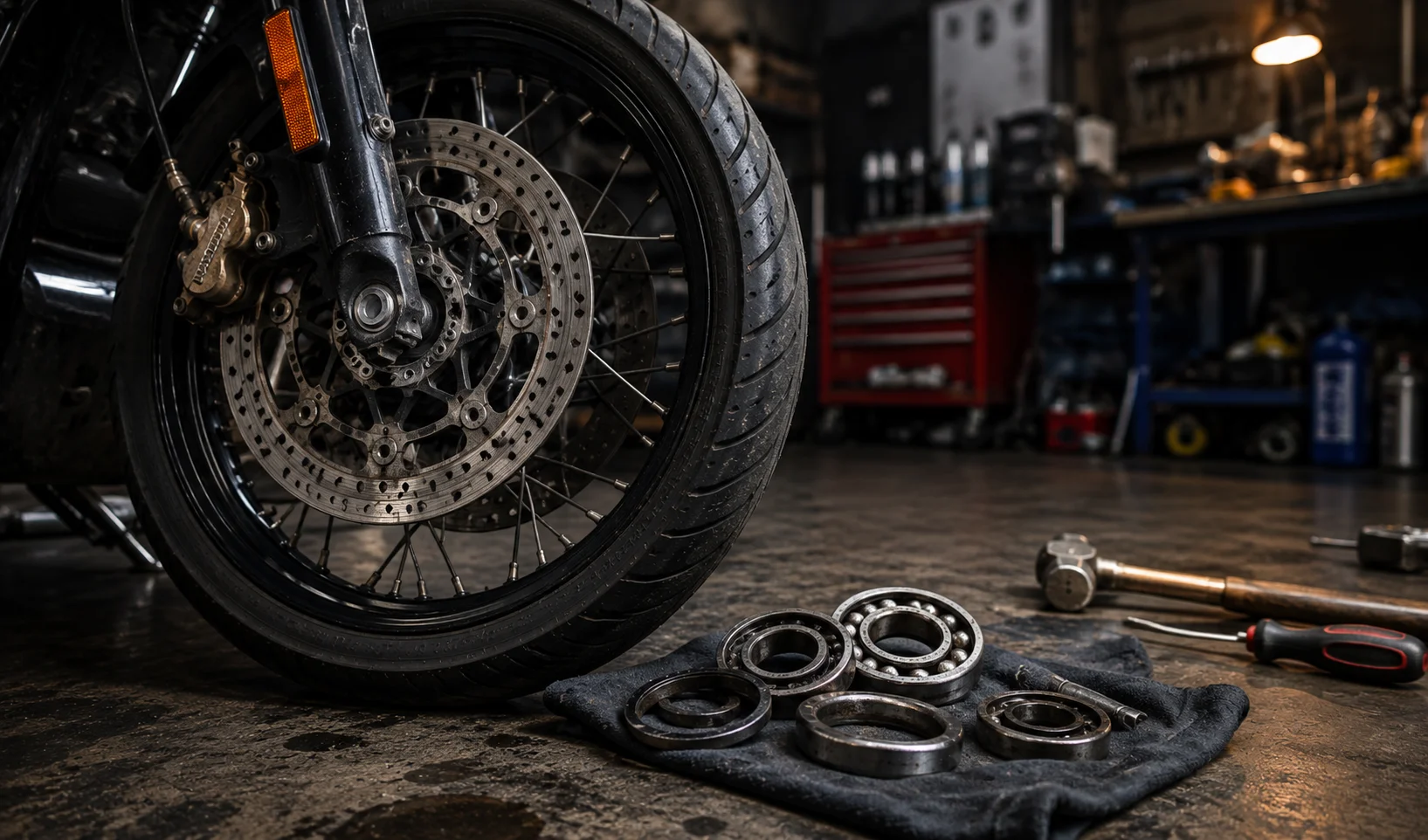

Wheel bearings rarely get a second thought until they start failing, and by the time they’re failing loudly, you’ve usually been riding on a genuinely unsafe wheel longer than you realized. These small components sit buried inside your hub, quietly doing the job of letting your wheel spin freely under real load, cornering forces, braking forces, and the constant weight of the bike and rider bearing down on them mile after mile. Catching the early signs saves you money and, more importantly, keeps a bearing failure from happening somewhere far worse than your driveway.
A Grinding or Growling Noise From the Wheel
This is usually the first sign riders notice, and it has a specific character once you learn to recognize it. A failing bearing produces a low grinding or growling sound that changes pitch with wheel speed, growing louder as you accelerate and quieter as you slow down. It sounds different from a chain noise or a brake issue, both of which tend to have their own distinct character, and it’s usually most obvious at moderate, steady speeds rather than during hard acceleration or braking, when other noises can mask it.
Pull over somewhere safe and, if you have a way to get the wheel off the ground, spin it by hand. A bad bearing often growls or feels gritty even off the ground and under no load, which confirms the noise you heard while riding isn’t coming from somewhere else on the bike entirely, like a dragging brake pad or a chain rubbing against a guard.
Play or Wobble When You Rock the Wheel
With the bike supported and the wheel off the ground, grab it at the top and bottom, not the sides, and try to rock it back and forth. A healthy bearing allows no noticeable play at all. Any wobble or looseness here points directly at bearing wear, since that’s exactly the kind of movement bearings exist to eliminate in the first place.
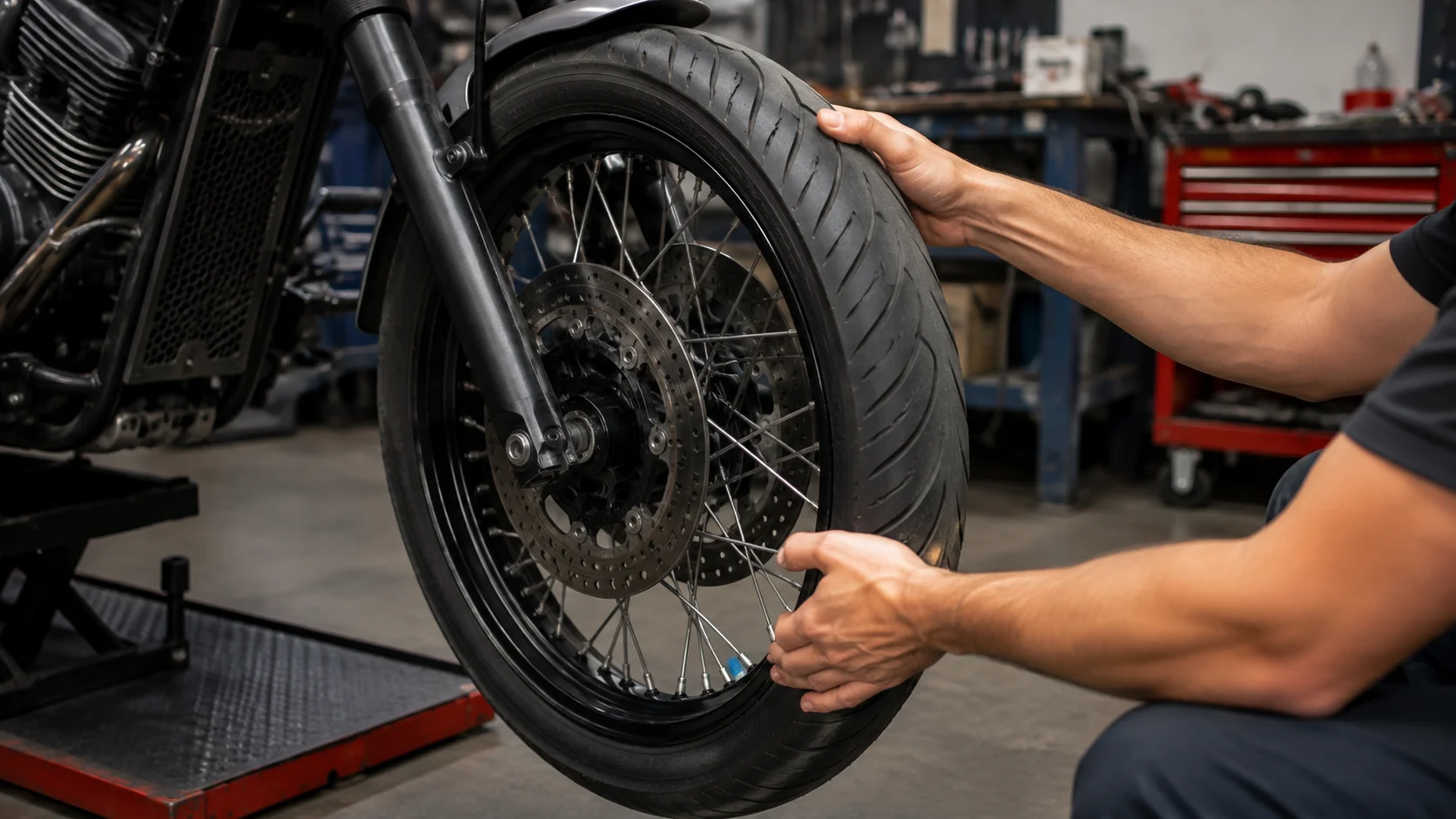
This check takes thirty seconds and tells you more than almost anything else on this list. If you feel play, don’t wait on a repair. A wheel with genuine bearing looseness can behave unpredictably under hard braking or aggressive cornering, and that’s not a risk worth taking to save a few days before you can get to a shop.
Uneven or Accelerated Tire Wear
A wheel that isn’t spinning perfectly true because of a failing bearing puts uneven pressure on the tire as it rolls, and that shows up over time as wear patterns that don’t match what you’d expect given your riding style. If you’re noticing unusual wear concentrated on one side of a tire, or wear that’s progressing noticeably faster than it used to without any real change in how or where you ride, bearing condition is worth checking before you simply blame the tire itself and replace it without addressing the actual cause.
This one’s easy to miss because tire wear has so many possible explanations, alignment, riding style, and tire pressure habits. Bearings rarely make the initial suspect list, which is exactly why it’s worth adding to your checklist specifically.
Vibration That Changes With Wheel Speed, Not Engine Speed
Bearing wear often introduces a vibration that becomes more noticeable as speed increases, and the key detail here is that it’s tied specifically to wheel rotation rather than engine RPM. Riders sometimes chase this as a balance issue or a tire problem first, since the symptom can feel fairly similar in the seat of your pants. But a vibration that scales with how fast the wheel is turning, rather than how fast the engine is revving, points toward the wheel assembly itself, and bearings are one of the most common causes hiding behind that specific pattern.
A simple way to help isolate this is paying attention to whether the vibration changes when you pull in the clutch and coast at the same road speed. If it persists the same way with the engine disconnected from the drivetrain, that’s a strong signal you’re dealing with something wheel-related rather than engine-related.
Heat Coming From the Wheel Hub After a Ride
A failing bearing generates friction it shouldn’t, and that friction produces heat as a natural byproduct. After a ride, carefully check the hub area near the bearing, not immediately after stopping when everything on the bike is naturally warm from riding, but noticeably hotter than you’d reasonably expect compared to the opposite wheel under the same conditions. Uneven heat between your front and rear hub, or between the left and right side of a wheel that uses dual bearings, is a useful comparison point that isolates the problem more precisely than any single check on its own.
Be careful doing this check. Give the bike enough time to cool from normal operating heat first, then compare relative warmth between wheels rather than touching anything immediately after a ride when burns are a real risk.
Why Riders Often Miss This Until It’s Serious
Part of what makes bearing wear tricky is how gradual it usually is. Unlike a sudden flat tire or a snapped cable, bearing degradation happens slowly across thousands of miles, and your brain adapts to small changes in how the bike feels without you consciously noticing. This is exactly why a deliberate check- rocking the wheel, listening carefully, and feeling for heat- matters more than just trusting your gut sense that everything still feels normal. Riders who only catch bearing wear once it’s making obvious noise have often been riding on a genuinely compromised wheel for longer than they’d like to admit in hindsight.
If You’re Doing the Repair Yourself
Removing and installing wheel bearings correctly requires the right tools, since forcing a bearing in or out with improvised methods risks damaging the hub or the new bearing before it’s even seen a mile of use. Aliwheels carry a wheel bearing remover, installer, and puller tool kit built for the Harley-Davidson Street Bob FXBB 107, covering 2018 through 2024 models, which includes pullers, installers, and backing plates sized specifically for that platform’s bearing dimensions. If you ride something other than a Street Bob, check our full parts catalog for the bearing tools and replacement bearings matched to your specific make and model, since bearing sizes vary enough across brands and models that a generic, unmatched tool can do more harm than good.
Don’t Wait Once You’ve Confirmed It
Bearings don’t get better with time or careful riding. Once wear genuinely starts, it progresses, and a bearing that fails while you’re actually riding can lock a wheel or let it wobble badly enough to cause a real loss of control. If you’ve confirmed play, unusual noise, or excess heat pointing at a specific wheel, treat replacement as urgent rather than something to schedule around convenience or a busy week. This is one of the few items on any maintenance checklist where the cost of waiting genuinely isn’t worth whatever time or money you’d save by putting it off.