


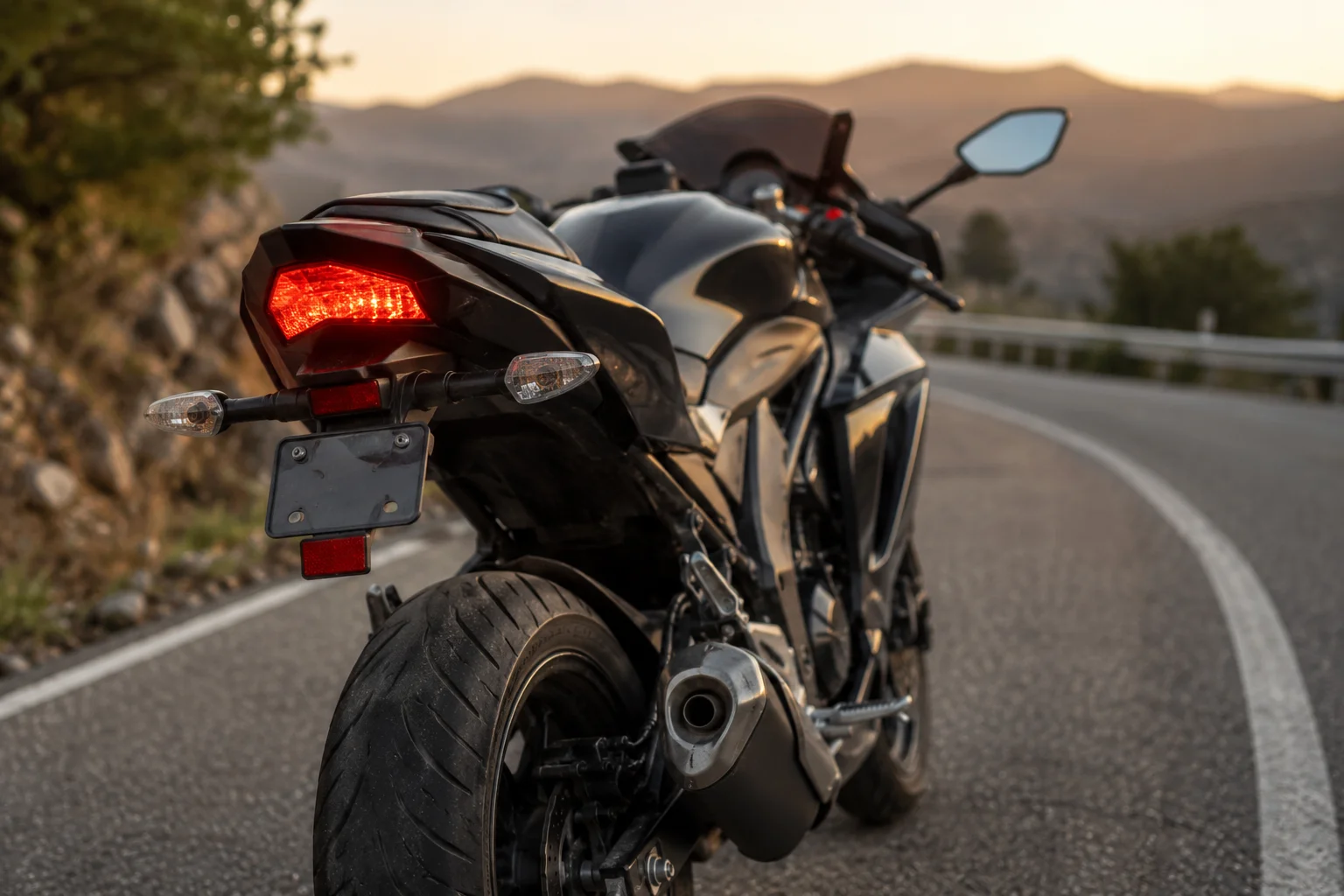

A motorcycle tail light that stops working is both a legal issue and a safety issue. In every US state, a functioning tail light and brake light are mandatory equipment. Other drivers see you by your tail light at dusk, in the rain, and in low-visibility conditions. When it fails, you become significantly harder to spot from behind.
The good news is that tail light failure on a motorcycle is almost always caused by one of seven things. Every single one of them is diagnosable at home with basic tools, and most are inexpensive to fix. Here is the complete diagnosis guide, cause by cause.
For replacement tail light assemblies across all major makes, browse Aliwheels’ Motorcycle Lighting category organized by make, model, and year.
Before You Start: Understanding Your Tail Light Circuit
Most motorcycles combine three functions in the rear light assembly: the running light that stays on whenever the ignition is on, the brake light that activates from the front brake lever and rear brake pedal, and often the turn indicators. These functions can fail independently. A running light that works but no brake light, or indicators working but no running light, are different faults pointing to different causes.
Knowing which function has failed narrows your diagnosis immediately. Before investigating anything, confirm exactly what does and does not work.
Cause 1 — Blown Bulb
The most obvious starting point. On motorcycles with conventional bulbs rather than LED assemblies, a blown filament stops the circuit. On dual-filament bulbs, the tail light and brake functions share one bulb with two separate filaments. One can fail while the other continues working.
Remove the bulb and inspect it visually. A broken filament is usually visible. If you cannot tell, test continuity with a multimeter across the relevant contacts.
Replace with the correct specification bulb for your model. Do not assume the same physical size is correct. Voltage rating, wattage, and base type all need to match your application.

Cause 2 — Blown Fuse
The tail light circuit on most motorcycles has a dedicated fuse. A sudden total failure of the tail light with no prior warning is often a blown fuse rather than a bulb or wiring fault.
Locate the fuse box, typically under the seat, in a side panel, or near the battery. Find the fuse for the tail light or rear lighting circuit. A blown fuse has a visibly broken wire inside the fuse body. Replace with an identical amperage fuse.
Critical: if the new fuse blows immediately or shortly after replacement, there is a short circuit in the wiring downstream of the fuse. Do not keep replacing fuses; trace and fix the short before fitting another.
Cause 3 — Corroded Wiring Connector
This is the most common tail light failure cause on motorcycles that are more than five years old, ridden in wet conditions, or stored without proper weatherproofing. The tail light connector sits at the rear of the bike in an area directly exposed to road spray, moisture, and temperature cycling.
Disconnect the tail light wiring connector and inspect the pins. Green or white oxidation on the metal contacts confirms corrosion. Even minor corrosion significantly increases contact resistance and can cause intermittent or total failure without any visible physical damage.
Clean corroded contacts with electrical contact cleaner and a small wire brush or contact cleaning tool. Apply dielectric grease to the pins before reconnecting. This is a free fix that resolves a large proportion of tail light failures on used bikes.
Cause 4 — Grounding Fault
Motorcycle electrical systems use the frame as the negative return path. The tail light assembly grounds to the rear frame or subframe through a dedicated ground wire or through its mounting hardware. When this ground path develops high resistance from corrosion, loose mounting bolts, or a broken ground wire. The circuit cannot be completed, and the light fails or dims.
Test the ground by running a temporary jumper wire directly from the light assembly housing to the battery negative terminal. If the light works with the jumper but not normally, the ground path is the problem. Clean the ground connection point on the frame and ensure the mounting hardware makes solid metal-to-metal contact.
Cause 5 — Failed Brake Light Switch
The brake light function is controlled by one or two switches. A hydraulic switch on the front brake master cylinder and a mechanical switch on the rear brake pedal mechanism. When either switch fails, the brake light stops activating even though the running light continues to work.
Test each switch independently. The front brake switch is typically a two-wire unit that closes when hydraulic pressure builds. The rear brake switch activates mechanically when the pedal is pressed. Both can be tested with a multimeter for continuity in the activated position.
According to rider experiences documented across multiple manufacturer forums, rear brake switches are more commonly ignored and more frequently fail than front switches, making them the first thing to check when brake light function is lost while running light continues normally.
Cause 6 — Failed LED Driver or Assembly
On motorcycles with integrated LED tail light assemblies, individual bulb replacement is not possible. The LED assembly uses an integrated driver circuit that can fail as a unit. The failure modes include complete assembly failure, partial LED failure where some LEDs illuminate but others do not, and driver circuit failure that causes flickering or dim output.
On LED systems, the first step is still the connector and fuse checks described above. If those pass, the assembly itself needs replacement. LED assemblies are not repairable at home; the integrated driver circuit and LED array require soldering equipment and components beyond the normal DIY scope.
Cause 7 — Damaged or Broken Wiring
Physical wiring damage from chafing against the frame, overtightened cable ties, heat exposure near exhaust components, or rodent damage causes tail light failure that does not resolve with any of the above checks. Wiring damage on the tail light circuit typically appears where the harness is routed around frame edges, through grommets, or near moving suspension components.

Inspect the wiring run from the fuse box to the tail light assembly. Look for chafed insulation exposing bare copper, broken wires where the harness flexes with suspension movement, or melted insulation near heat sources. Any damaged section needs repair with correct-gauge wire and properly insulated connections.
For model-specific tail light assemblies across all major makes, browse Motorcycle Parts at Aliwheels. Specific models stocked include the Kawasaki Vulcan 650 Tail Light 2015-2023 and the Aprilia Atlantic 500 Tail Light 2002-2006. You can also find tail light assemblies for Honda, Harley-Davidson, Yamaha, Suzuki, Triumph, and more. For electrical system support, including fuses and connectors, browse Batteries and Electrical.
Motorcycle Tail Light Quick Diagnosis Checklist
| Symptom | Most Likely Cause | First Check |
| The running light and brake light are both dead | Blown fuse or wiring fault | Check the fuse first |
| The running light works, but the brake light is dead | Failed brake switch or second filament | Test brake switches |
| Light flickers or dims | Corroded connector or grounding fault | Check the connector and ground |
| Partial LED illumination | Failed LED assembly | Replace assembly |
| The fuse blows repeatedly | Short circuit in wiring | Trace wiring for damage |
| Intermittent failure | Connector corrosion | Clean all connectors |
| Total failure after a wet ride | Connector water ingress | Check and dry the connector |
Conclusion
Motorcycle tail light failure is rarely the expensive nightmare riders fear when the light first goes out. Work through the seven causes in order: fuse, bulb, connector, ground, brake switch, LED assembly, and wiring damage. The fault reveals itself in most cases before you spend money on parts. The connector and ground checks alone resolve the majority of tail light issues on bikes over five years old without any parts cost whatsoever.
Frequently Asked Questions
Q: Is it illegal to ride with a motorcycle tail light not working?
A: Yes, in every US state. A functioning rear running light and brake light are mandatory equipment under federal vehicle lighting standards incorporated into state law. Riding with a failed tail light creates liability in any rear-end accident scenario and can result in a fix-it ticket in any traffic stop.
Q: My motorcycle brake light doesn’t work, but the tail light does. What is wrong?
A: The most likely cause is a failed brake light switch, either the front hydraulic switch or the rear mechanical switch. These are independent circuits from the running light. Test each switch for continuity in the activated position. On older bikes, both switches can fail simultaneously from age and corrosion.
Q: Can I replace an LED tail light assembly with a halogen one?
A: Technically possible in some cases, but not recommended. The mounting, connector, and lens profile are often specific to the original assembly type. More practically, LED assemblies draw less current and are more reliable than halogen equivalents. The correct path is LED replacement with an equivalent LED assembly for your model rather than reverting to halogen technology.
Q: My motorcycle tail light works when the bike is cold but fails when hot. What causes this?
A: Intermittent failure correlated with heat is almost always a connector issue: corroded pins that make contact when cold but lose contact as thermal expansion changes the pin geometry. Clean and regrease the connector. If the fault persists, the connector itself may need replacement as the pin retention clips can fatigue and lose reliable contact pressure over years of heat cycling.
Q: How do I find the correct replacement tail light for my motorcycle?
A: Search by make, model, and exact year at Aliwheels. Every tail light listing includes confirmed fitment data and the relevant year range. For any uncertainty, Aliwheels’ support team confirms fitment 24/7 before your order ships.