


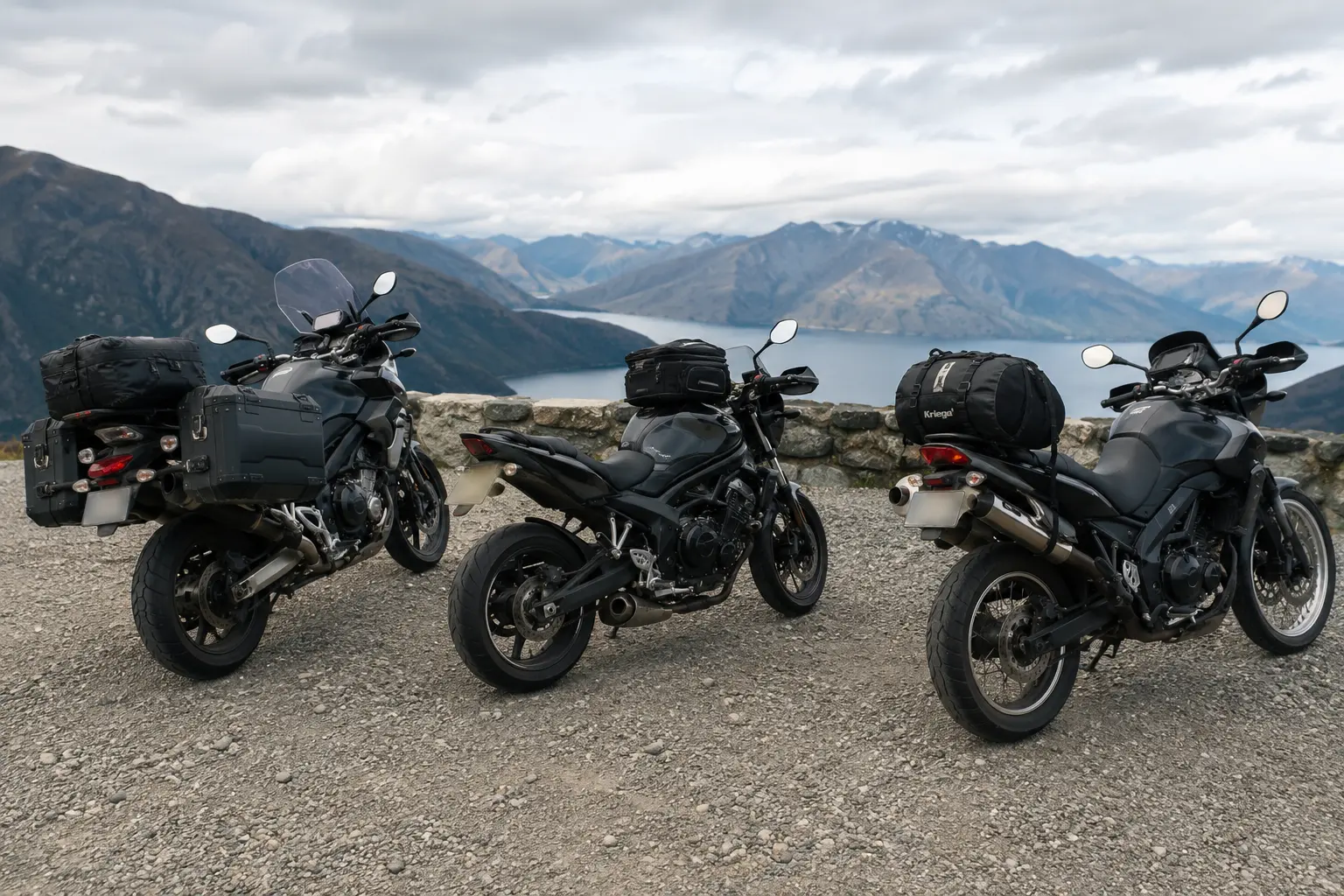

You are planning a trip. Or you are tired of riding with a backpack destroying your shoulders on the commute. Either way, you need luggage on the bike. And the moment you start researching, you find three completely different systems that all claim to solve the same problem.
Motorcycle saddlebags, tank bags, and tail bags are not the same. Each one solves a specific set of problems better than the others. The right setup depends entirely on what you are carrying, how far you are riding, and what your bike layout actually allows.
Here is the honest comparison, with no brand advocacy. Browse Aliwheels’ motorcycle luggage options here. Saddlebags | Tail Bags | Tank Bags
The Core Difference: Weight Placement Changes Everything
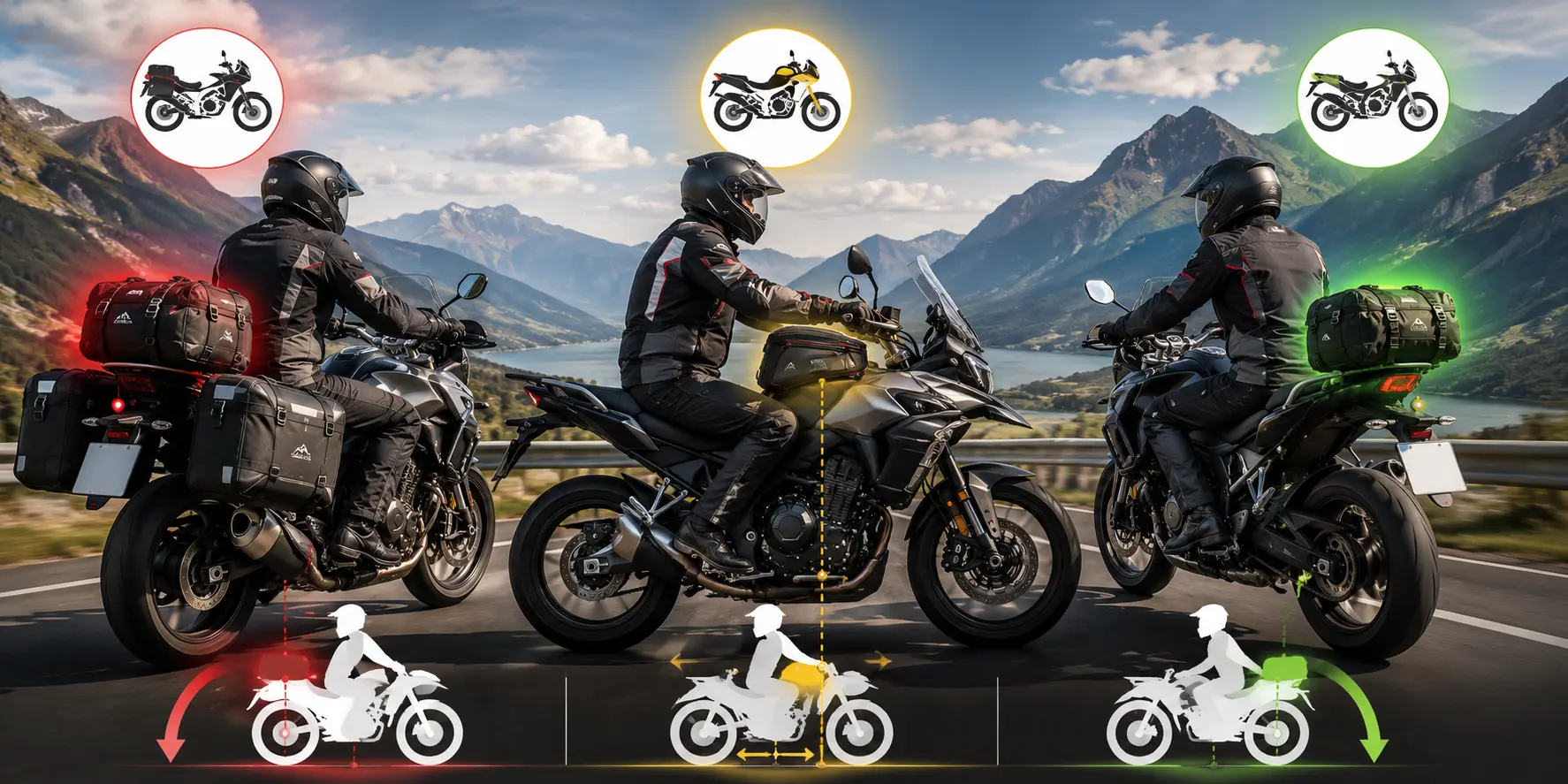
Before comparing individual bag types, understand the fundamental principle that governs all motorcycle luggage decisions: where weight sits on the bike determines how it handles?
Low and centered weight close to the engine and fuel tank has little impact on handling.
High or wide weight on the tail, up high, or sticking out from the sides raises the bike’s center of gravity and makes handling worse, especially at low speeds and in corners.
This is why luggage choice should be about balance and placement, not just convenience.
| Luggage Type | Weight Position | Handling Impact | Capacity | Access While Riding |
| Tank bag | Low and central — excellent | Minimal — best of all three | 5 to 30 liters typically | Easy — right in front of you |
| Tail bag / top case | High and central — moderate | Moderate — raises center of gravity | 10 to 50+ liters | Requires stopping |
| Saddlebags | Low and wide — variable | Moderate — adds width, some pendulum effect | 10 to 50+ liters per side | Requires stopping |
| Combined system | Distributed — best overall | Depends on loading discipline | Unlimited with planning | Tank bag accessible; others require a stop |
Motorcycle Saddlebags: Best For Volume and Touring
Saddlebags are the main part of any motorcycle touring setup. They provide the most storage space of any single bag type and let you carry everything needed for multi-day trips without using a backpack or trailer.
Hard Saddlebags vs Soft Saddlebags
| Factor | Hard Saddlebags | Soft Saddlebags |
| Security | Lockable — contents safe when bike is parked | No lock — unsecured when unattended |
| Waterproofing | Fully waterproof molded shell | Requires rain cover or waterproof liner |
| Impact protection for contents | Excellent — rigid shell protects fragile items | None — contents absorb any impact |
| Weight | Heavier — plastic or aluminum shell adds mass | Light — fabric only |
| Price | Significantly higher | Accessible price point |
| Mounting permanence | Usually semi-permanent mount system | Quick release — on and off in seconds |
| Bike aesthetics | Integrated look on touring bikes | More versatile across different bikes |
According to ADVrider’s luggage forum and the long-running BestRest Products community guides, the choice between hard and soft saddlebags comes down to two questions:
Do you have to leave the bags on the parked bike unsupervised?
Do you carry anything fragile?
Yes to either hard bag. No to both soft bags at a fraction of the cost.
When Are Saddlebags the Right Choice?
- Multi-day touring where you need more than 30 liters of total storage
- Carrying gear that needs to stay dry regardless of weather
- Bikes with factory mounting points for saddlebag systems
- Riders who park in public and need lockable storage
- Passenger riding where tank bag and tail bag space is limited by rider and pillion
When Are Saddlebags Not Suitable?
- Narrow bikes where saddlebags add significant width to lane filtering
- Off-road and dual-sport riding where bag contact with the ground in a fall is likely
- Short commutes where the mounting and dismounting overhead is impractical
- Bikes with exhaust routing close to where saddlebags would mount have a heat damage risk
Tank Bags: Best for Accessibility and Navigation
The tank bag is one of the most underrated pieces of motorcycle luggage. It sits right in front of the rider, so it is easy to reach while riding. You do not need to stop, reach behind you, or stretch in awkward ways.
Because of this, it is very useful for items you need often. For example, you can keep your phone, wallet, sunglasses, snacks, chapstick, and documents inside it. In addition, it is perfect for navigation tools.
Most tank bags also have a clear map pocket. Today, riders mainly use this as a phone window for GPS navigation. As a result, the tank bag has become even more important for touring riders who depend on turn-by-turn directions.
Magnetic vs Strap-Mount Tank Bags
Magnetic tank bags use strong magnets to attach to steel fuel tanks. They are quick to install and remove, leave no marks, and do not need any tools. However, they only work on steel tanks. They do not work on aluminum tanks or plastic fuel cell covers, so you should always check your tank material before buying.
Strap-mount tank bags use straps that go around the tank or attach to the frame and tank flanges. They work on any motorcycle, no matter the tank material. In addition, they tend to stay more secure at higher speeds than magnetic bags. The downside is that they take a little more time to mount and remove.
When Are Tank Bags the Right Choice?
- Daily valuables such as phone, wallet, keys that you need access to without stopping
- Navigation use with a transparent phone window on longer rides
- Short to medium trips where total volume is 10 to 25 liters
- Any bike where saddlebag mounting is impractical or where you prefer a clean look
- Two-up riding where the tail seat area is occupied by a passenger
Tail Bags: Best for Volume Flexibility and Versatility
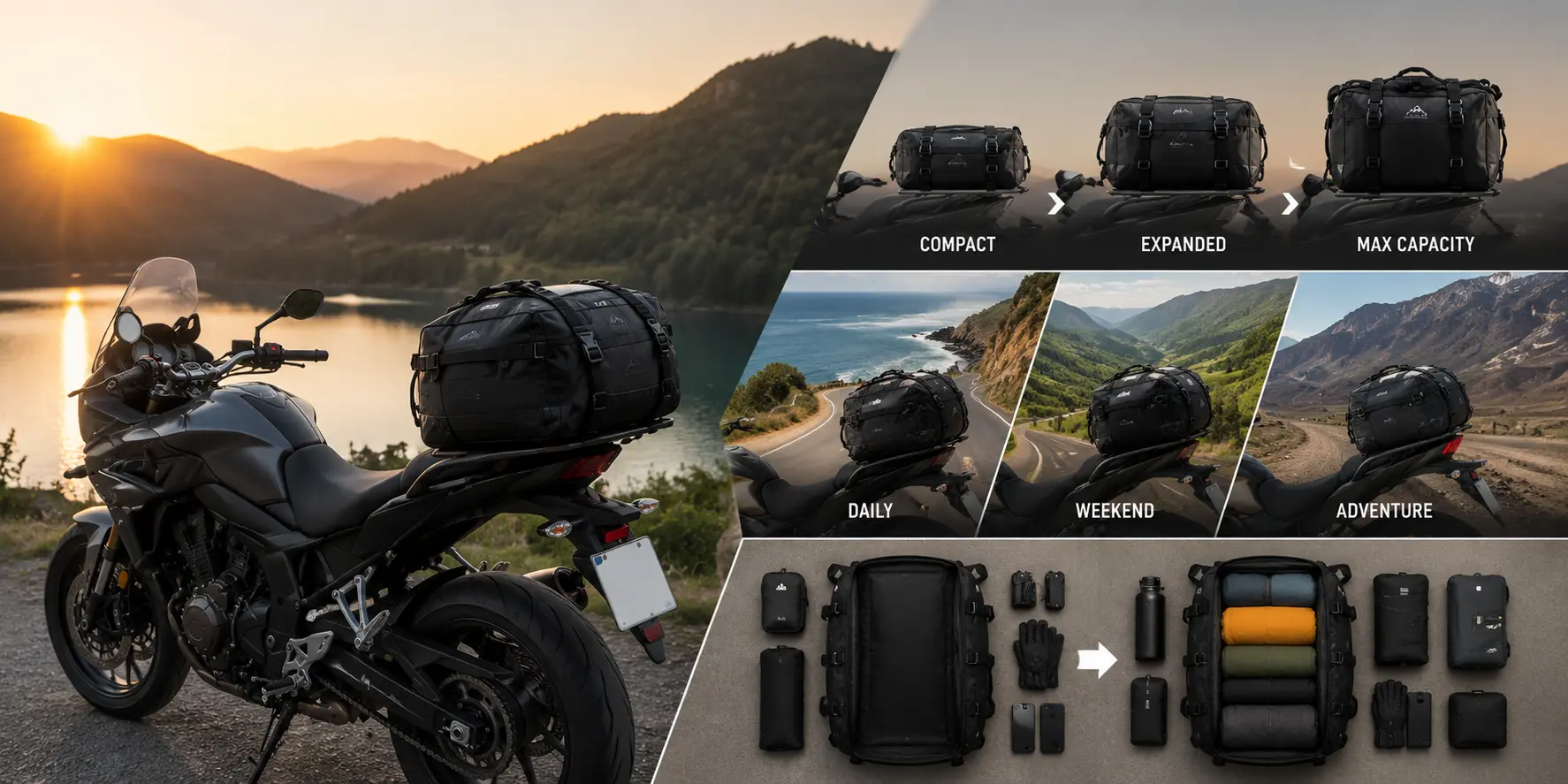
A tail bag mounts on the pillion seat or a rear rack and offers very flexible storage space. In fact, it often has the most expandable capacity of any single bag type. For example, a 20-liter bag can expand to 35 or even 40 liters using zippers and expansion panels. Because of this, it is a good choice when you are not sure how much gear you will need.
However, there is a downside. The weight sits high and at the back of the bike, which raises the center of gravity. As a result, a fully loaded tail bag can act like a swinging weight and change how the bike feels at low speeds and during parking. This is especially noticeable on naked bikes and sport bikes. Riders often report that heavy tail bags make handling feel less stable on solo rides.
When Tail Bags Are the Right Choice
- Weekend trips with variable gear loads where an expandable bag is practical
- Bikes where saddlebag mounting is not available or practical
- Commuters who need more volume than a tank bag but less than a full saddlebag system
- Riders who want one bag that is fast to mount and remove daily
The Right Setup by Riding
| Riding Profile | Recommended Setup | Why |
| Daily commuter, urban | Tank bag alone | Fast access, minimal mounting hassle, carries daily essentials |
| Weekend day tripper | Tank bag + tail bag | Combined capacity for a full day, accessible items forward, bulk items rear |
| Multi-day tourer | Saddlebags + tank bag | Maximum volume, lockable storage, navigation accessible |
| Adventure / ADV rider | Soft saddlebags + tank bag | Off-road durability, volume for remote riding, quick release if bags contact ground |
| Two-up touring | Hard saddlebags + tank bag | Passenger on pillion eliminates tail bag option, saddlebags provide the volume |
| Sport bike weekend rider | Small tank bag | Minimal aerodynamic impact, carries essentials without changing bike dynamics significantly |
Browse all luggage options: Saddlebags | Tail Bags | Tank Bags | All Riding Gear
Conclusion
No single luggage type works best for every riding situation.
- Motorcycle tank bags are best for easy access, and they have the least effect on handling.
- Motorcycle saddlebags are best for long trips because they offer more storage and better security.
- Motorcycle tail bags are best when you need flexibility and your load changes from trip to trip.
In general, riders get the best results when they choose luggage based on what they actually carry and how far they ride, rather than buying the biggest or most bags.
Start with the option that fits your most common rides. A tank bag is usually the best starting point for most riders because it solves the access problem that other luggage types do not. After that, you can add saddlebags or a tail bag when your trips need more space than a tank bag can provide.
Shop Aliwheels‘ full motorcycle luggage range: Motorcycle Saddlebags, Motorcycle Tail Bags, and Motorcycle Tank Bags. All with free worldwide shipping on orders over $300.
Frequently Asked Questions
Q: Can I use both saddlebags and a tail bag at the same time?
A: Yes, and many touring riders do. The combination provides maximum total volume for long trips. When doing so, load the heaviest items in the saddlebags rather than the tail bag to keep weight low and central. A heavily loaded tail bag combined with heavy saddlebags compounds the center-of-gravity effect and makes the bike significantly more difficult to maneuver at parking speeds.
Q: Do saddlebags affect motorcycle handling significantly?
A: Soft saddlebags with minimal load have minimal handling effect. Hard saddlebags or soft bags loaded with 15 or more pounds per side create a noticeable pendulum effect at low speeds. The handling difference is most noticeable during parking, U-turns, and slow tight maneuvers. At highway speeds the effect is less pronounced. The fix is always to load heavier items forward and lower, and to keep saddlebag loads balanced side to side.
Q: Will a magnetic tank bag scratch my fuel tank?
A: A properly fitting magnetic tank bag with a protective base pad should not scratch a tank in normal use. Problems occur when the bag is mounted over debris or grit, when the bag slides under heavy braking, or when a poorly fitting bag allows the magnetic housing to contact the tank directly. Clean your tank before mounting, use a bag with a full-coverage protective base, and confirm the magnets are not exposed through the base material.
Q: What is the maximum weight I should put in a tail bag?
A: Most tail bag mounting systems and pillion seat/rack ratings are designed for 10 to 20 kg (22 to 44 lbs) of luggage. Check your bike’s specific rear load rating in the owner’s manual. Beyond weight limits, remember that even within rated limits, heavy tail bag loads change handling enough to affect safety. Keep tail bag loads under 15 kg and balance them with front bags where possible.
Q: Are soft saddlebags waterproof?
A: Most soft saddlebags sold as touring or commuter bags are water-resistant but not fully waterproof in sustained heavy rain. Seams, zippers, and attachment points are common water ingress points. For reliable waterproofing, use soft bags with integrated waterproof liners, or pack contents in waterproof dry bags inside the saddlebag. Alternatively, invest in hard saddlebags with molded waterproof shells if your riding regularly involves wet conditions.