


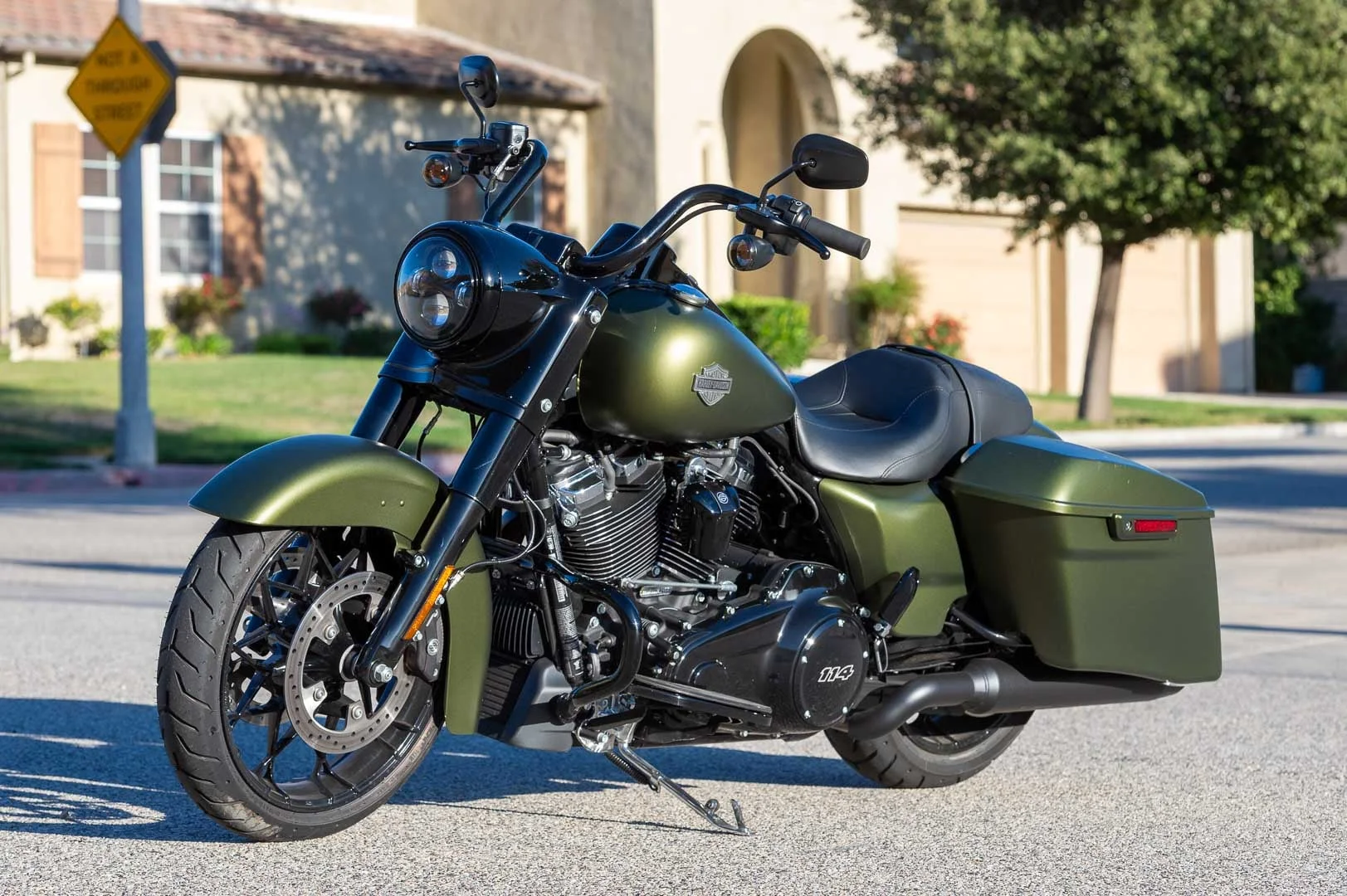

The Road King has earned its reputation as one of Harley-Davidson’s most enduring touring models, prized for its stripped-back, classic silhouette compared to the fully faired Street Glide and Road Glide. That detachable windscreen and round headlight give it a timeless look, but underneath the chrome, the Road King shares its drivetrain, electrical architecture, and touring-specific stress points with the rest of the FL platform, which means it also shares that platform’s well-documented failure patterns.
If you’ve owned a Road King for more than a few years, or you’re shopping for a used one, there’s a good chance you’ve run into at least one of the issues below. None of them are deal-breakers, and most are inexpensive to diagnose and fix once you know what you’re looking at. This guide walks through the problems. Road King owners report most often what actually causes them and which parts most commonly need replacing to fix them for good.
1. Charging System Failures: Stator and Voltage Regulator Problems
This is, by a wide margin, the most common complaint across the Road King’s history , and it isn’t unique to this model. It’s a Harley touring platform issue that shows up across the Softail, Dyna, and FL touring lines alike because they all share similar charging architecture.
Symptoms: Dimming headlight at idle, a battery that won’t hold a charge overnight, a “battery” or charging warning light, or in worse cases, the bike stalling at low RPM because the alternator isn’t putting out enough current to keep the ignition system alive.
What’s actually happening: The stator (the fixed coil assembly that generates AC inside the primary case) degrades over time, especially on bikes that see a lot of low-speed, stop-and-go city riding where the charging system never gets to run at its most efficient RPM range for long. The voltage regulator, which converts that AC output to clean DC and prevents overcharging, tends to fail alongside or shortly after the stator starts to weaken. Because these two components work as a pair, when one starts failing, it’s common for the other to follow within a few months if it isn’t replaced at the same time.
The fix: A multimeter test at the battery terminals with the engine running is the fastest way to confirm the problem before spending money; you’re looking for a stable 13.5–14.5V. If it’s reading low, erratic, or not rising above battery-resting voltage at all, the stator and regulator are the first parts to test and replace. Because these two parts fail as a pair so often, most experienced techs recommend replacing them together rather than one at a time. Browse Harley-Davidson parts for stator and charging components that fit the Road King’s engine generation. Fitment varies significantly between Twin Cam and Milwaukee-8-era bikes, so confirm your engine family before ordering.
2. Cam Chain Tensioner Noise (Twin Cam Engines)
If your Road King was built during the Twin Cam era (1999 through roughly 2016, depending on model year cutovers), this is one of the most talked-about mechanical issues in the entire Harley community, and Road King owners are not exempt from it.
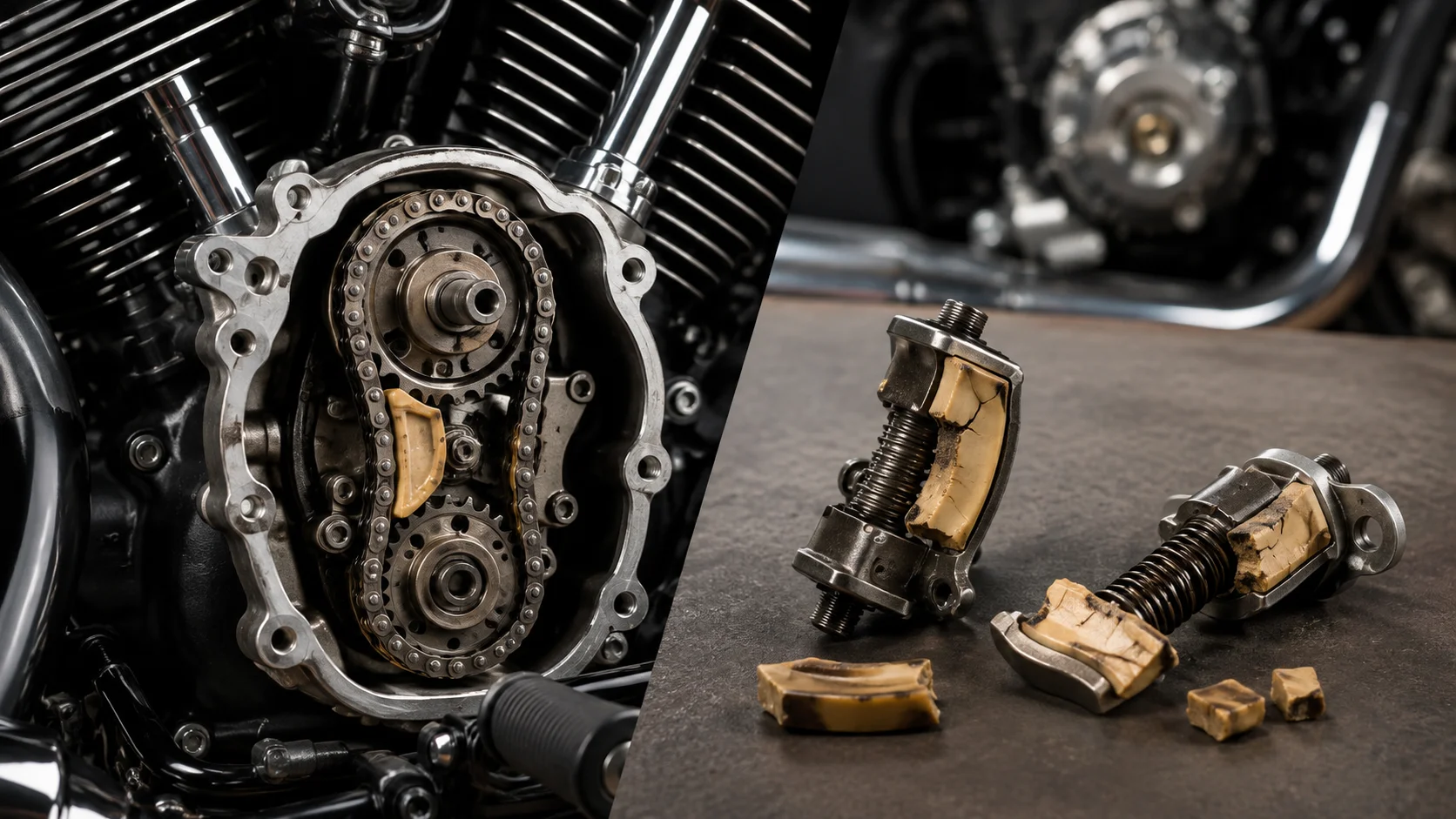
Symptoms: A rattling or ticking noise from the front of the engine, most noticeable at idle or during deceleration, that seems to get louder as the bike warms up.
What’s actually happening: The Twin Cam engine uses hydraulic tensioners with plastic shoes to keep the cam chains properly tensioned. Over tens of thousands of miles, the plastic shoe material wears down, and worn shoe debris can circulate through the oil system. In more severe, neglected cases, a shoe can fail outright, which is a serious problem since it can cause the chain to jump timing.
The fix: Don’t ignore a new rattle from the front of the engine on a Twin Cam Road King. Catching worn tensioner shoes early is a routine, moderate-cost repair; catching it late after a shoe has broken apart is a much bigger job. If you’re due for other engine work anyway, it’s worth having a technician inspect tensioner wear at the same time rather than waiting for a symptom to show up.
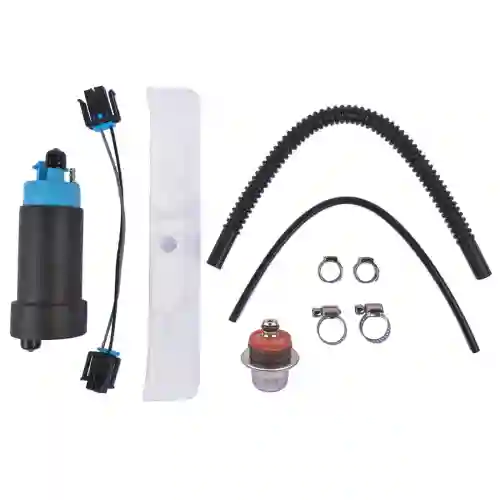
3. Fuel Pump and Fuel Delivery Problems
Touring bikes rack up highway miles fast, and the fuel pump is one of the components that simply wears out with age and mileage rather than failing due to any particular defect.
Symptoms: Hesitation or stumbling at highway speed, difficulty starting after the bike has been sitting, or a whining noise from the tank that gets louder as the pump degrades.
What’s actually happening: The in-tank fuel pump module contains a small electric pump and a fuel level sending unit. Both wear with age, and heat cycling from being parked in the sun on tour doesn’t help either. When the pump’s output pressure starts to drop, the engine leans out under load, exactly when you need full power most, like passing on the highway.
The fix: A fuel pressure test at the fuel rail is the definitive way to confirm this rather than guessing based on symptoms alone, since ignition and charging issues can sometimes mimic fuel starvation. If the pump is confirmed weak, replacing the whole module is the standard fix rather than trying to repair the pump in isolation.
We stock a direct-fit Road King FLHR fuel pump for 2017–2023 models if your bike falls in that year range; always double-check your exact model year against the listing before ordering, since Harley revised fuel system components more than once across the Road King’s run.
4. Wiring Harness Chafing and Electrical Gremlins
Few things are more frustrating on a touring bike than an intermittent electrical fault that only shows up occasionally and disappears the moment you try to diagnose it.
Symptoms: Turn signals that flicker unpredictably, a speedometer that occasionally goes dark, or accessories cutting out over bumps but working fine at a stop.
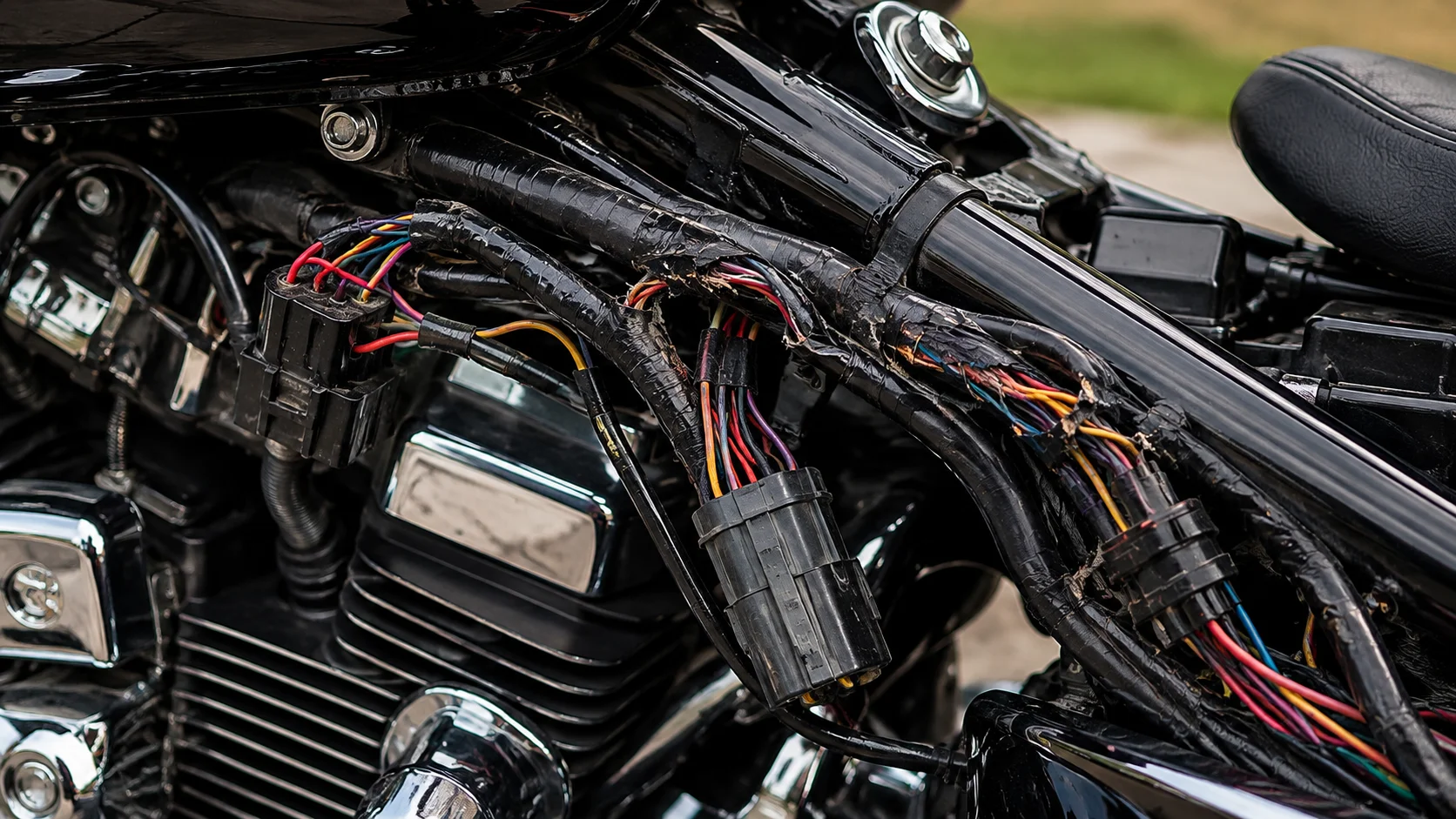
What’s actually happening: The main wiring harness routes through the steering head and frame, and after years of steering lock-to-lock and vibration, insulation can wear thin exactly where the harness rubs against frame components. A worn spot that intermittently grounds out is a classic source of “phantom” electrical problems that are genuinely difficult to trace without a careful, methodical inspection.
The fix: Rather than replacing components one at a time hoping to get lucky, a visual inspection of the harness at the steering head and frame pass-through points , looking specifically for shiny worn spots, exposed copper, or melted insulation , often finds the actual cause faster than electrical component swapping. This is one of the few issues on this list where patience during diagnosis saves real money.
5. Heat Management in Slow Traffic
This one isn’t a failure exactly, but it’s consistently one of the most-reported rider complaints about the Road King and its touring siblings, and it’s worth addressing because there are real fixes for it.
Symptoms: Noticeable heat radiating onto the rider’s right leg and boot from the rear cylinder, especially uncomfortable in stop-and-go traffic or hot climates.
What’s actually happening: The rear cylinder on an air-cooled (and to a lesser extent, oil-cooled Milwaukee-8) V-twin runs hotter than the front cylinder by design, and airflow that would normally cool it disappears the moment the bike stops moving. This is a known characteristic of the platform rather than a defect, but it becomes genuinely uncomfortable for riders doing significant city or slow-traffic touring.
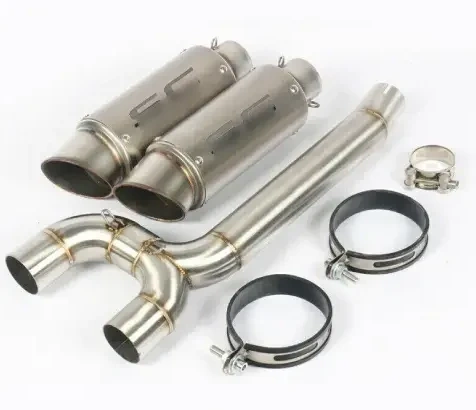
The fix: Better heat shield management and upgraded exhaust systems can do wonders to minimize the amount of heat that reaches the rider without giving up the sound and look most Road King owners want. Browse our motorcycle exhaust selection for heat shields and exhaust options that fit the touring platform.
6. Fork Seal Leaks and Front-End Wear Components
High-mileage touring bikes put a lot of cumulative stress on the front suspension, especially given how much weight a fully loaded Road King carries on long trips.
Symptoms: A thin film of oil on the fork legs, a front end that feels less controlled or slightly harsh over bumps, or visible fluid pooling near the lower fork seals after the bike has been sitting.
What’s actually happening: Fork seals wear out from age and mileage like any other seal, and once they start leaking, fork oil escapes and the damping characteristics change , usually for the worse, right when you need predictable handling most, fully loaded on a long ride.
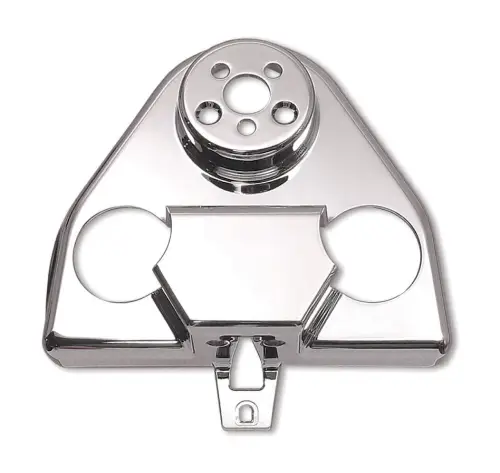
The fix: Fork seal replacement is routine maintenance on any high-mileage touring bike, and it’s a good opportunity to also inspect other wear-prone front-end components. If you’re already in there, this is a sensible time to check the handlebar riser and clock/lock assembly hardware, especially on Road King Classic (FLHRC) models; we carry both a fork lock clock cover and a handlebar riser cover for 2007–2013 Road King Classic models, both prone to chrome pitting and wear at this mileage range.
7. Windshield Buffeting and Wind Noise at Highway Speed
The Road King’s detachable windshield is part of its signature look, but the stock design is a compromise, and plenty of owners find it creates more buffeting than they’d like on long highway stretches.
Symptoms: Helmet buffeting, wind noise, or a “pressure wave” feeling at highway speed that gets worse the longer you ride.
What’s actually happening: Windshield height and shape directly affect the air pattern that reaches the rider’s helmet. A shield that’s slightly too short or angled wrong for your height and riding position can create turbulent air right at head level, even though the bike is otherwise comfortable.
Windshield fitment is highly personal. The right shield height depends entirely on your height and riding posture. Rather than assuming the stock unit is defective, try a different profile. Browse our windshields and windscreens section to find the perfect height and tint for your setup.
8. Clutch and Primary Chain Wear
Heavy touring bikes face significant stress during low-speed, stop-and-go city riding. Because of this, the clutch and primary chain wear out faster than they would on a lighter highway bike.
Symptoms: You may feel the clutch slipping under hard acceleration or notice notchy engagement. You might also hear a primary case rattle that changes when you pull the clutch lever.
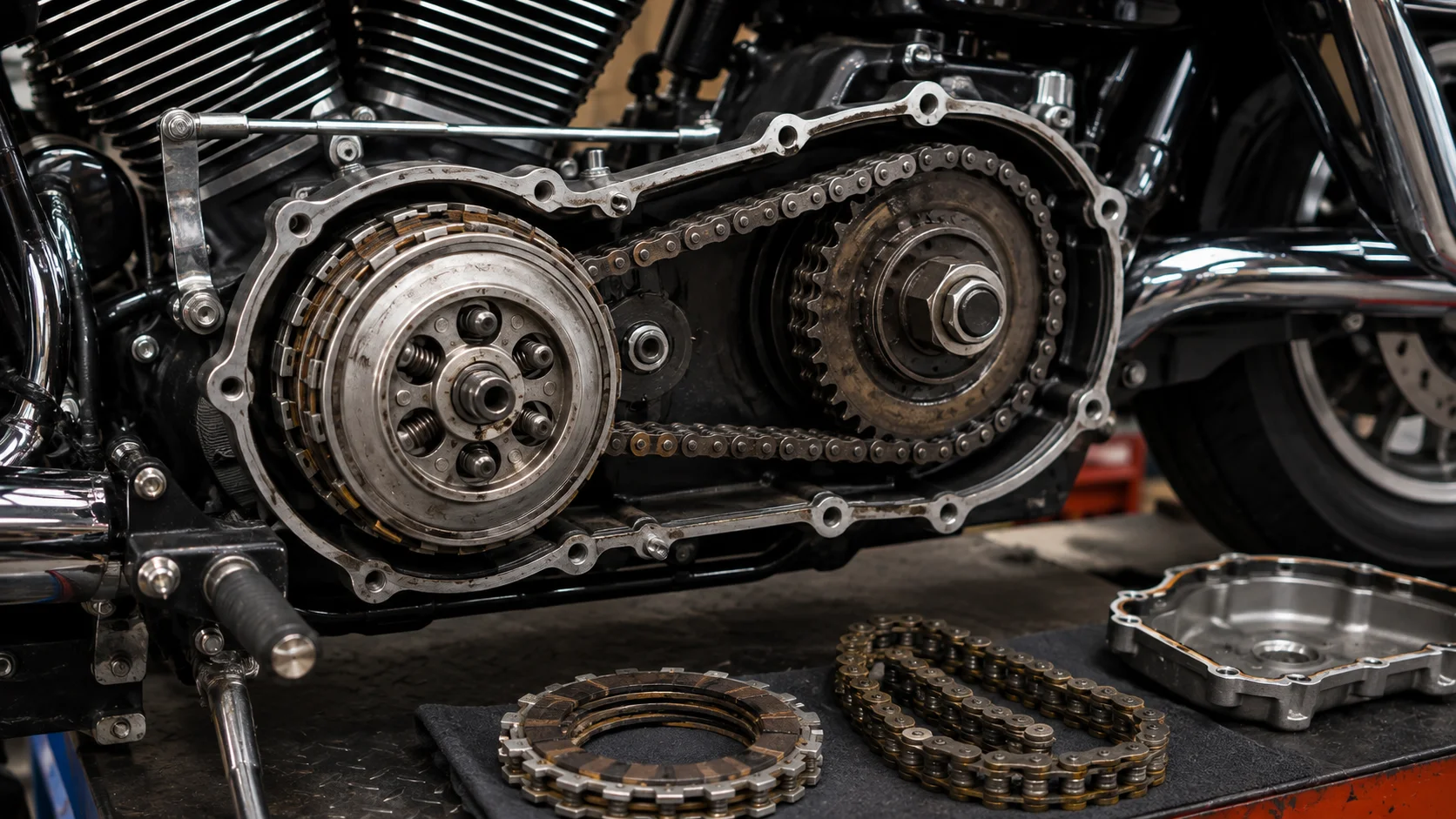
Like any friction component, clutch plates naturally wear down over time. At the same time, the primary chain gradually stretches with mileage. This changes chain tension and causes noise if you don’t adjust it periodically.
Primary chain tensioning is a routine adjustment for every scheduled service. Catching a worn primary chain early is far cheaper than fixing the secondary damage it causes. If the clutch itself is worn, plate replacement is a standard, well-understood job for anyone familiar with the platform.
9. Rear Shock and Suspension Wear Under Touring Loads
A Road King loaded for a multi-day trip puts heavy, continuous stress on the rear suspension. Over time, the stock shocks struggle to handle this compared to light solo riding.
Symptoms: The rear end feels vague or wallowy in corners. You may also notice a harsher ride over bumps than when the bike was new. Additionally, the motorcycle squats significantly under acceleration when loaded with gear and a passenger.
Shock damping fluid and internal seals degrade with heat and age over time. While the shock still holds the bike up, it loses its ability to control compression and rebound. Because this degradation happens gradually, most riders don’t notice the difference. They often only realize the wear when riding a newer bike back-to-back with their own.
Rear shock performance doesn’t fail suddenly like an electrical or fuel issue. Instead, it degrades slowly over time. If your Road King regularly carries heavy touring loads, have the rear shocks checked based on age and mileage alone. ‘It still works’ is not the same as ‘it works well’ when riding two-up with luggage at highway speeds.
A Simple Preventive Maintenance Habit That Catches Most of This Early
Almost everything on this list is cheaper to fix when caught early. Fortunately, most components give clear warning signs before failing completely. A few habits go a long way:
- Listen closely for new noises from the front engine area or the primary case. Never dismiss a new rattle as just a normal Harley sound.
- Check your battery voltage with the engine running every few months, not just when the bike won’t start. Catching a weakening stator before the battery dies stranded is a much better position to be in.
- Inspect your fork legs for oil film during routine cleaning. You will usually spot a leaking seal long before it affects handling.
- Check the steering head wiring if you notice an intermittent electrical fault. Doing a quick visual inspection first prevents wasting money on unnecessary replacement parts.
Frequently Asked Questions
How do I know if it’s my stator or my battery that’s failing? Test voltage at the battery terminals with the engine running at a moderate RPM, not just idle. A healthy charging system should read between 13.5V and 14.5V. A battery that loses charge after sitting for a few days usually needs replacement. However, if voltage doesn’t rise while the engine is running, the issue is likely your stator or voltage regulator.
Is cam chain tensioner noise dangerous to keep riding with? Early-stage tensioner wear on its own generally isn’t an emergency, but it’s not something to ignore indefinitely either. A severely worn tensioner shoe can fail and cause the chain to jump timing. Replacing worn tensioners proactively is far cheaper than fixing catastrophic engine damage. If you notice new ticking or rattling from the front of the engine, get it checked sooner rather than later.
Are Road King parts interchangeable with Street Glide and Road Glide parts? Partially. All three models share the same FL touring chassis, engine, and drivetrain within a given generation. Because of this, key parts like fuel pumps, charging systems, and clutch components are often interchangeable. However, bodywork and windshields are not. The Road King’s headlight setup mounts differently than the Road Glide’s shark-nose or the Street Glide’s batwing fairing.
Does the heat issue mean something is wrong with my bike? No, noticeable rear cylinder heat in slow traffic is a normal characteristic of air-cooled V-twin engines. It is not a sign of mechanical failure. While uncomfortable, it isn’t dangerous. Installing the right exhaust and heat shields will reduce the heat, but a repair won’t eliminate it entirely.
Keep Your Road King on the Road
Every issue above is well understood, well documented, and, importantly, fixable with the right parts and a bit of patience. None of these issues mean you chose the wrong bike. They are simply the standard maintenance realities of a heavy, high-mileage touring motorcycle.
If you’re chasing down any of these issues, browse our full Harley-Davidson parts catalog. We offer fitment-verified components for all Road King model years, including charging systems, fork hardware, and windshields. Be sure to confirm your exact model year and engine generation before ordering to avoid returns.