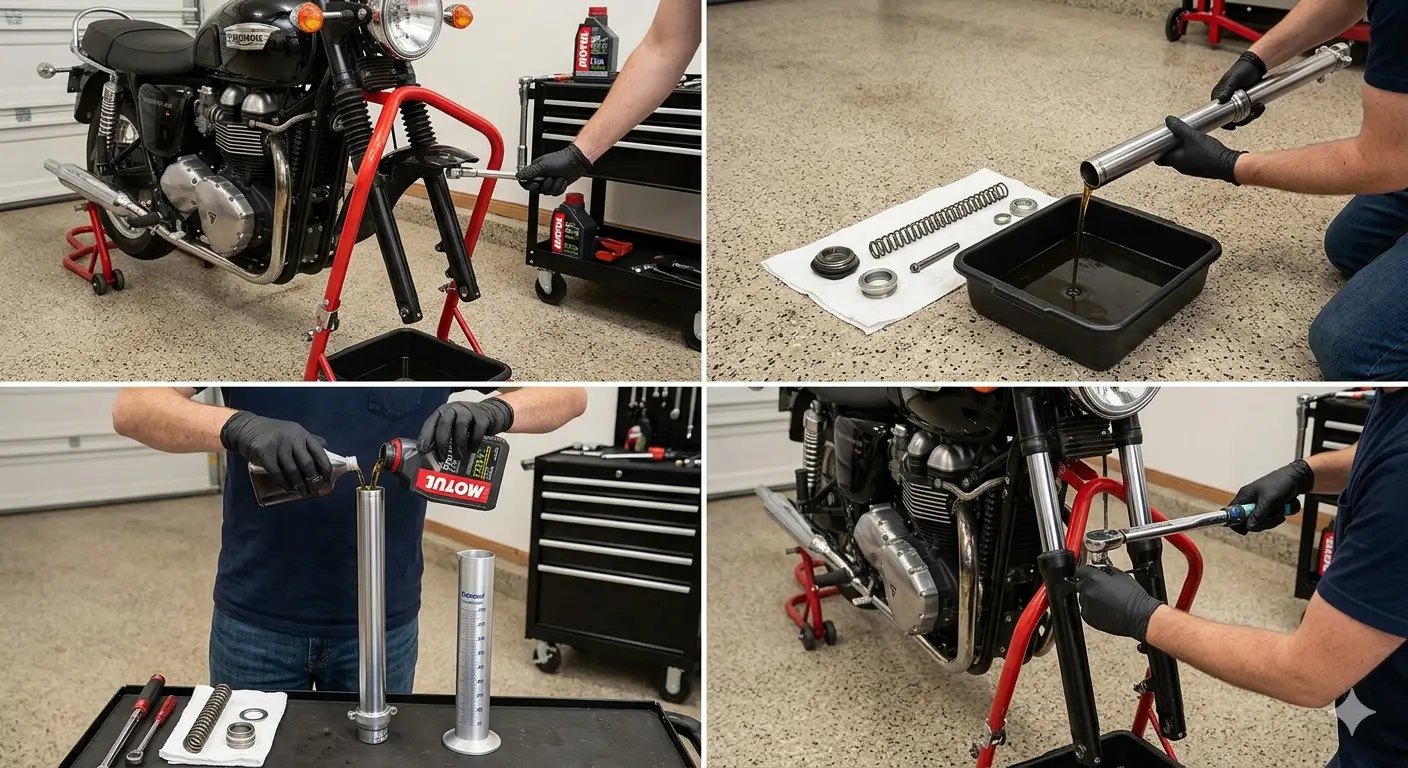




Every Kawasaki Ninja rider asks the same question at some point. Is this normal, or is something actually wrong? The Ninja lineup spans everything from the beginner-friendly Ninja 300 to the supercharged H2R, and each one has its own personality when it comes to wear and tear. Knowing what to expect helps you catch small issues before they turn into expensive repairs, and it helps you shop smarter if you’re looking at a used bike.
This guide breaks down the most common problems reported by real Ninja owners, organized by model and generation. We pulled these patterns from owner forums, dealer service notes, and manufacturer recall records, so you get a picture grounded in real riding experience, not guesswork. Whether you already own a Ninja or you’re comparing models before a purchase, this guide shows you exactly what to check, why it happens, and what it typically takes to fix. If you’d rather start by confirming your exact model and year first, our Kawasaki maintenance parts guide walks through how the Ninja lineup breaks down generation by generation.
Why Ninja Problems Vary So Much by Model
The word “Ninja” covers a huge range of machines. A Ninja 300 and a Ninja H2R share a name, but they don’t share an engine, a price point, or a typical rider. That’s why a single “Kawasaki Ninja problems” list rarely tells the full story. A beginner bike ridden gently around town wears differently than a supercharged flagship pushed hard on a track day.
Because of that, the smartest way to research reliability is by model and generation, not by brand alone. Kawasaki as a manufacturer has a solid reputation for durable engines, especially the parallel-twin and inline-four platforms that power most of the Ninja lineup. Still, every model has a handful of recurring weak points that show up again and again in owner reports. Below, we break those down one model at a time.
Ninja 300 and Ninja 400: Common Issues
The Ninja 300 and Ninja 400 are entry-level sportbikes, and they’ve earned a solid reputation as reliable first bikes for new riders. Most owners put thousands of trouble-free miles on these machines. Still, a few recurring issues show up often enough across owner forums and service records that they’re worth knowing before you buy or right after you do.
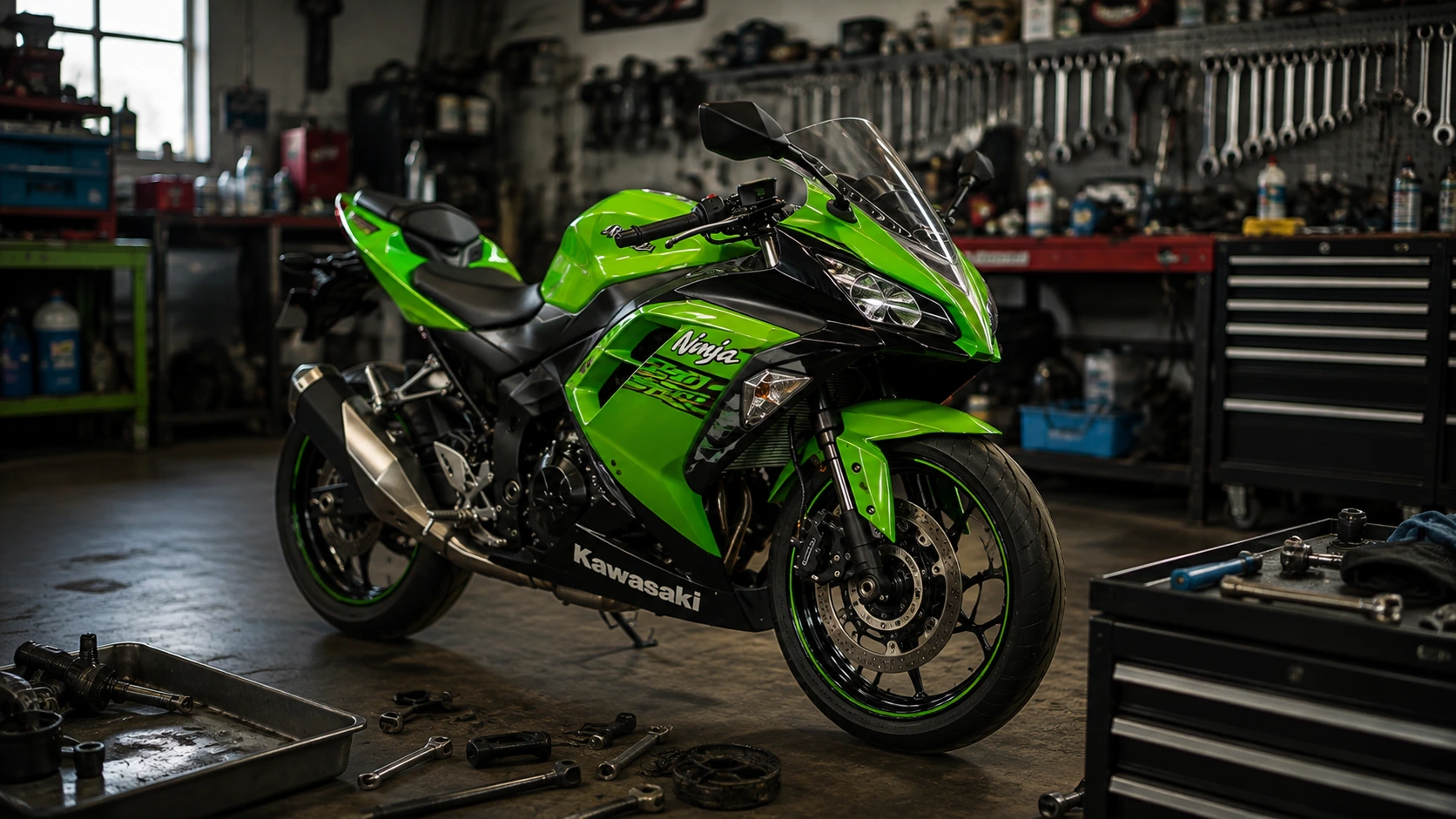
Rough Idle and Stalling
This is probably the most frequently reported issue on the Ninja 300, especially on cold starts. Riders describe the idle hunting up and down on its own, or the engine stalling shortly after startup, before it fully warms up. In most cases, this points to a dirty throttle body or a fouled idle air control valve rather than anything more serious. A professional throttle body cleaning, along with a check of the idle air passage, resolves this for the majority of owners. If the problem persists after cleaning, a mechanic should check the fuel mixture and sensor readings, since a small vacuum leak can cause the same symptoms.
Clutch Plate Wear and Slippage
Over time, the clutch plates on any motorcycle wear down, but Ninja 300 owners report this happening a bit earlier than expected if the bike sees aggressive riding. You’ll notice the engine revving higher than it should without a matching increase in road speed, particularly under hard acceleration. Shifting can also start to feel less precise. If you ride hard, or if you bought the bike used and don’t know its history, plan to inspect the clutch plates at your next service rather than waiting for the manufacturer’s default interval.
ABS Valve Debris (2013 Models)
This is a documented, recall-level issue rather than just an anecdote. Kawasaki issued a recall for early Ninja 300s after finding that foreign particles could get trapped in the ABS inlet or outlet valve, which risked anti-lock brake failure under hard braking. If you’re shopping for a used 2013 Ninja 300, this is one of the first things to ask about. Confirm the recall was completed, and if you’re unsure, most dealerships can check a bike’s VIN against outstanding recalls in a matter of minutes.
Riders looking to add extra protection against drops and tip-overs, common on entry-level sportbikes still being learned on, often pair this maintenance routine with a crash bar engine guard for the Ninja 250 and 300, which shields the engine cases and clutch cover in a low-speed fall.
Uneven Brake Pad Wear
A smaller but consistently reported issue involves the outer brake pads wearing down noticeably faster than the inner pads on some units. Kawasaki traced this back to the rear brake hose guide interfering with the rear caliper on certain builds. It’s not dangerous on its own, but uneven wear should always prompt a full brake inspection, since it can be an early sign of a caliper that isn’t sitting quite right. On the Ninja 400, this same inspection is a good time to check the rear brake pedal for corrosion or bent alignment, especially on bikes that have seen a low-speed drop.
Fairing Gap and Rattle
This one is cosmetic, not mechanical, but it comes up constantly in owner discussions. Panel gaps in the fairing can widen slightly as the bike ages, and some riders notice a light rattling sound from the fairing at certain RPM ranges, especially at highway speed. It doesn’t affect how the bike rides or performs. If the noise bothers you, tightening the fairing bolts and checking for worn rubber grommets usually quiets it down.
High Idle After Rain or Extended Storage
A smaller subset of owners report their Ninja 300 or 400 idling unusually high, or struggling to hold a steady idle, after the bike has been rained on or left sitting for an extended period. This is usually moisture-related and tends to resolve on its own after a short ride, but persistent high idle after the bike has fully dried out is worth having checked.
Ninja 650: Common Issues
The Ninja 650 has been on the market since 2006, so its problems vary quite a bit depending on which generation you’re looking at. A first-generation 650 from 2006 to 2008 has a different set of known issues than a modern model. Here’s what shows up most often across the model’s long history.
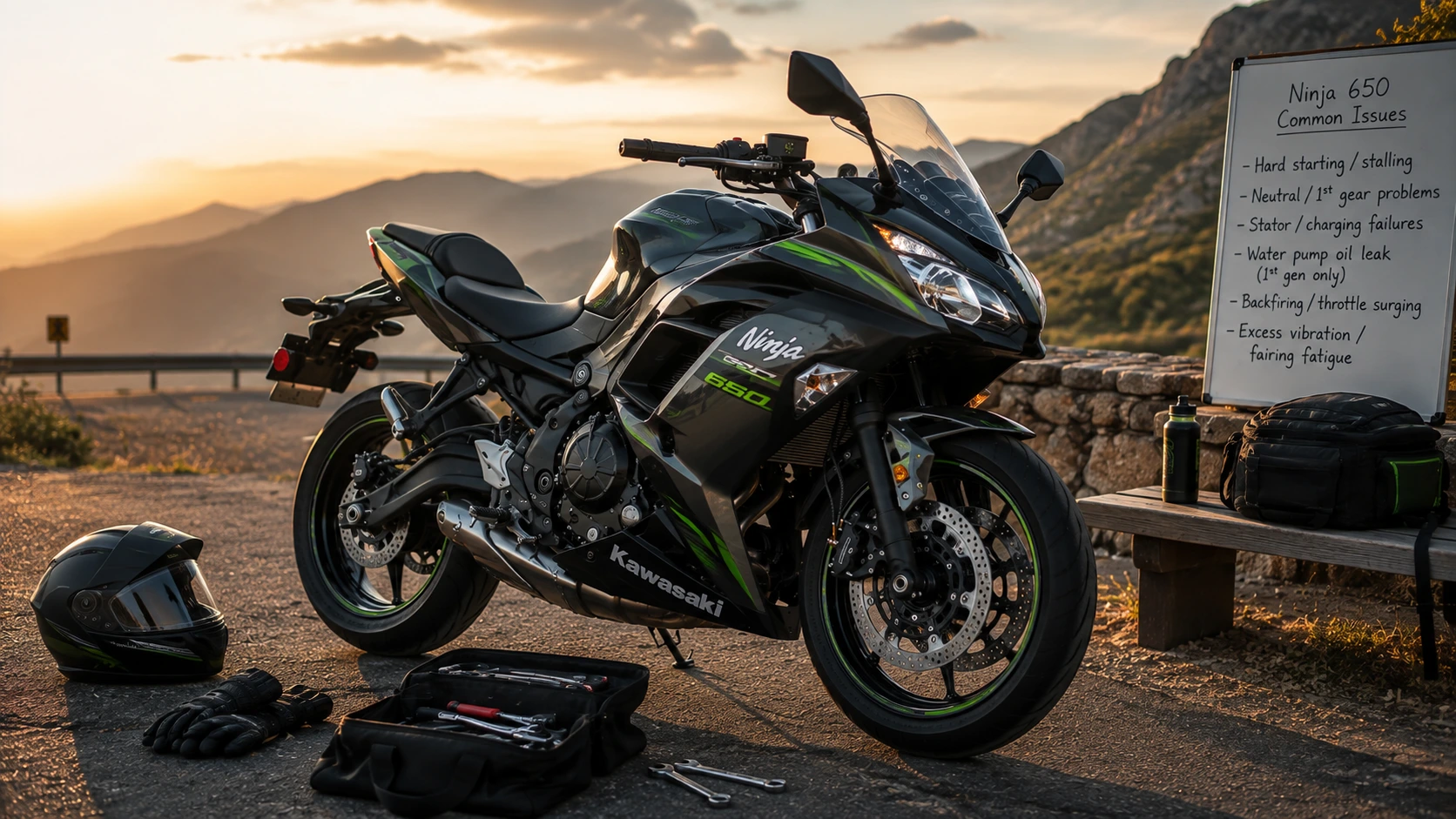
Hard Starting or Stalling After the Bike Sits
This is one of the most frequent complaints across Ninja 650 forums, and it’s especially common on 2006 to 2010 models. Riders describe the bike firing up briefly, then bogging down and dying as soon as the throttle is applied, particularly after the bike has sat unused for a few weeks in humid or rainy conditions. The most common cause is stale fuel breaking down in the tank and carburetor or fuel injectors. A dirty air filter and emulsified oil from moisture buildup can compound the issue. If your Ninja 650 has been sitting, don’t assume the worst. Start by draining and replacing old fuel, cleaning or replacing the air filter, and checking the oil for a milky appearance before looking at anything more involved.
Trouble Finding Neutral or Shifting Into First Gear
Some riders report the bike resisting a shift into first gear when coming to a stop, sometimes requiring a bit of clutch feathering to slot into gear. Low or degraded oil is a frequent cause, since oil condition directly affects how smoothly a wet clutch transmission shifts. A shifter linkage that’s adjusted too tight can cause the same symptom. Riders on forums also point to the positive neutral finder mechanism as a possible contributor in some cases. Staying current on oil changes, using the oil weight Kawasaki specifies, prevents most of this from developing in the first place.
Stator and Charging System Failures
Like many motorcycles, the Ninja 650 relies on a stator to keep the battery charged while the engine runs, and this component is a well-known wear point across the broader Kawasaki parallel-twin platform, not just the 650. Warning signs include a battery that drains overnight even when the bike hasn’t been ridden, headlights or dash lights that dim or flicker at idle, and a bike that struggles to start despite a battery that tested fine recently. Testing the stator’s charging output with a multimeter is a quick diagnostic step any mechanic, or a confident DIY rider, can perform in a few minutes.
Water Pump Oil Leak (First-Generation Models)
Owners of 2006 to 2008 Ninja 650R models sometimes report a slow oil leak developing from the water pump assembly, typically after the bike passes roughly 36,000 kilometers, or around 22,000 miles. The fix involves replacing the pump, the shaft, and the associated gaskets. Most owners who’ve had this repair done report no further issues afterward, and bikes with well over 90,000 kilometers on the original engine are not unusual among well-maintained examples.
Engine Backfiring and Throttle Surging
A backfire on deceleration, or a surge in engine speed that doesn’t match throttle input, usually points to an air-fuel mixture problem. The engine is running either too lean, with excess air, or too rich, with excess fuel. Persistent backfiring under load, rather than just an occasional pop on deceleration, deserves prompt attention, since it can affect performance and long-term engine health if left unaddressed. If diagnostics point toward a wiring or sensor fault rather than a fuel issue, checking your Ninja 650 headlights and surrounding electrical connections is a reasonable next step, since corroded connectors near the front end can throw off sensor readings on some units.
Excess Vibration and Fairing Fatigue
Kawasaki addressed vibration concerns on some Ninja 650 units with a recall that added foam padding near the fairing to dampen the effect. Owner reports on this fix are mixed. Some riders say it resolved the issue completely, while others still notice some vibration at certain RPM ranges. If vibration feels excessive or has gotten worse over time, it’s worth having the fairing mounts and engine mounts inspected rather than assuming it’s just how the bike feels.
Engine Overheating: A Cross-Model Issue
Overheating shows up often enough across the Ninja 250, 300, 400, and ZX-6R that it deserves its own section rather than getting buried under one model. Riders in hot, humid climates report this most, but it isn’t purely a weather problem.
Radiator Fan Not Activating
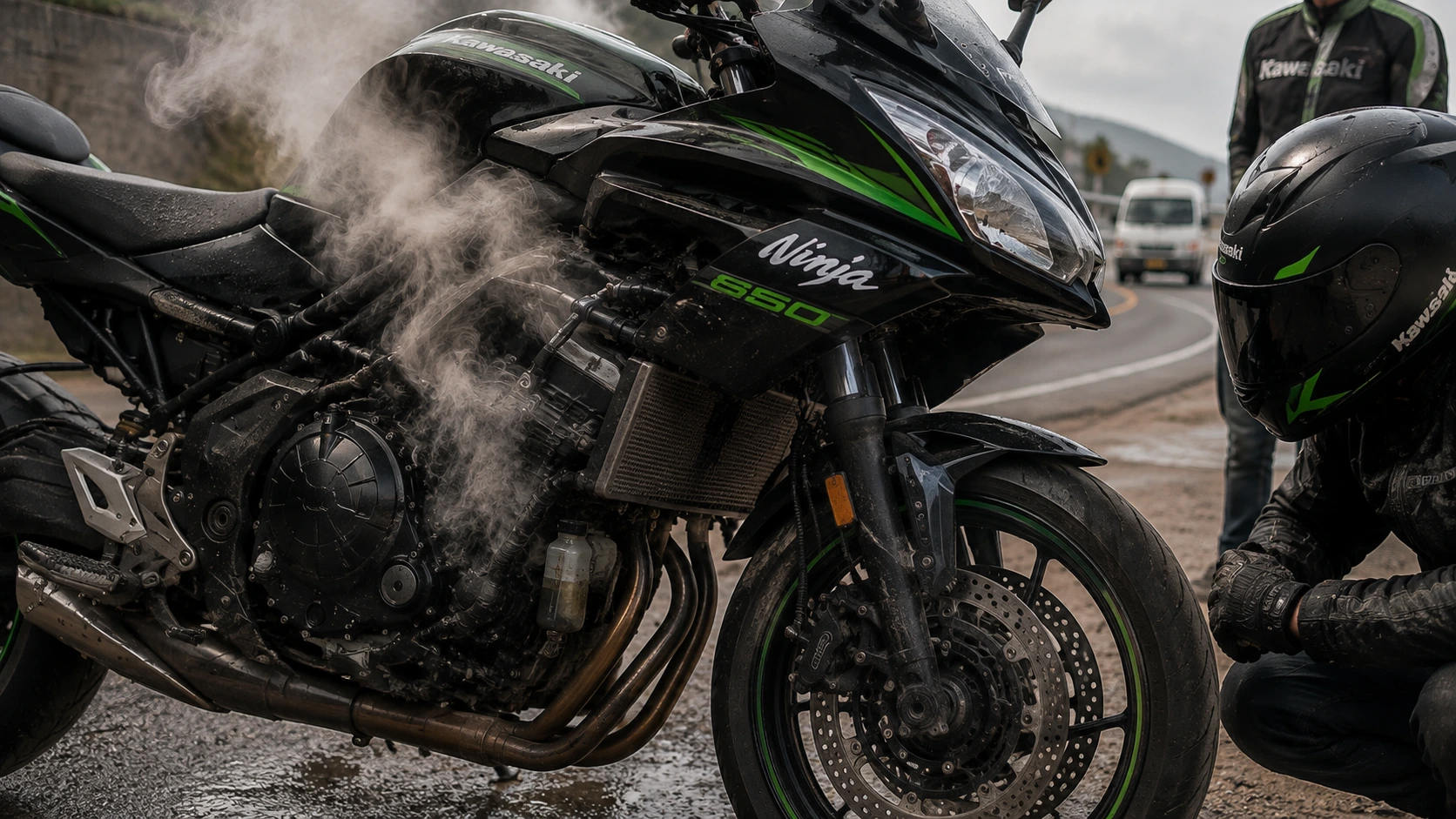
Some Ninja 400 owners report the temperature gauge climbing steadily while stopped at lights or idling in traffic, with the cooling fan failing to kick in when it should. This is a documented issue Kawasaki has addressed under warranty on some units when the fan sensor or wiring is confirmed faulty. If your fan isn’t audibly running once the temp gauge climbs past the midpoint, that’s the first thing to check.
Thermostat and Radiator Blockages
On the Ninja 250 and 300, a temperature gauge that creeps toward the red at idle, then drops once you’re moving and getting airflow, usually points to a thermostat stuck partially closed or a radiator with reduced airflow from debris. Flushing the radiator and testing the thermostat separately from the rest of the cooling system isolates which one is actually failing.
Running Hot Is Not Always a Problem
ZX-6R owners often report temperature readings in the 100 to 105 degree Celsius range as normal, according to experienced riders on ZX-6R-specific forums. What matters more than the number itself is whether the temperature climbs steadily without leveling off, or drops sharply once you’re moving. A steady, unresponsive climb, especially at highway speed, points to an actual cooling problem rather than a bike simply running warm by design.
Official Recall: Voltage Regulator Overheating on ZX-6R and ZX-10R
This one is worth flagging directly, since it’s a documented safety recall rather than a forum anecdote. On certain 2008 to 2011 Ninja ZX-10R and ZX-6R models, the voltage regulator can overheat and cause uncontrolled current output, which in turn can undercharge the battery and lead to engine stalling or difficulty starting. Kawasaki’s correction involves a dealer replacing the voltage regulator at no cost. If you own or are buying a bike from these model years, checking whether this recall was completed is a quick, worthwhile step, since stalling caused by a failed voltage regulator can happen without warning.
Ninja ZX-6R and ZX-10R: Common Issues
These are performance-focused machines, and their issues tend to skew more mechanical than the smaller, commuter-oriented Ninjas. Riders pushing these bikes harder, whether on a track day or an aggressive commute, tend to uncover wear points sooner than someone riding gently.
Stator and Rectifier Failures
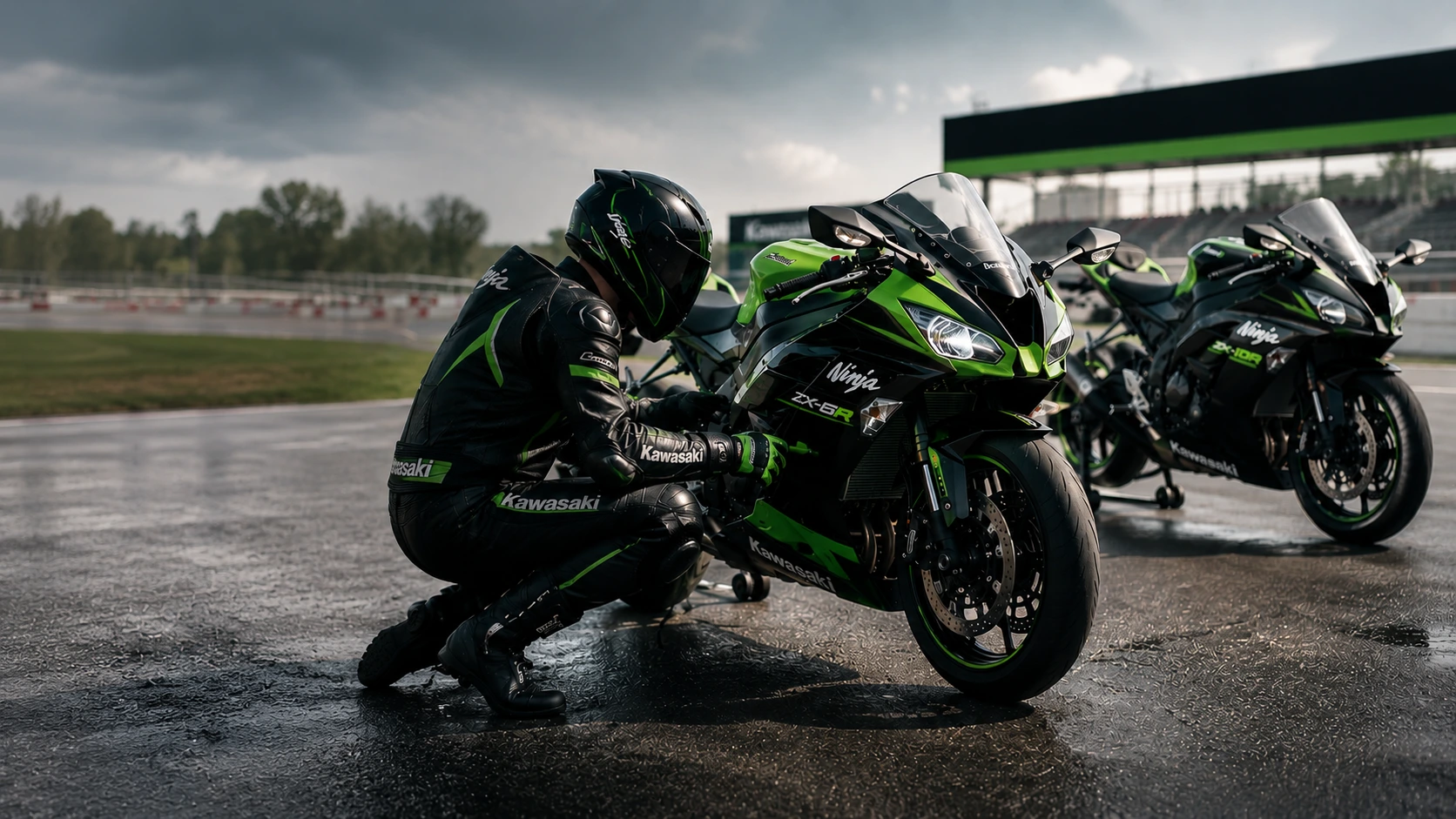
This is the single most consistently reported issue across ZX-10R generations, and it shows up particularly often on 2006 to 2007 models, often called the “gen 2” bikes. The factory stator commonly fails somewhere between 15,000 and 20,000 miles. Many owners replace the OEM unit with an aftermarket stator and rectifier, and several long-term owner reports suggest the aftermarket parts hold up longer than the original equipment. If you’re buying a used gen 2 ZX-10R, ask directly whether the stator has already been replaced. Owners of the larger-displacement ZX-14R facing the same charging symptoms can find a direct-fit regulator for the 2006 to 2011 ZX-14R, which covers the years most affected by this failure pattern.
Valve Spring Retainer Failures
This issue is specific to second-generation ZX-10R models, roughly 2006 to 2007. The factory valve spring retainers on these years are thinner than later designs and more prone to failure under sustained hard use, including racing, aggressive canyon riding, or high-mileage commuting. Riders who proactively upgrade to retainers from later generation bikes, or to a reputable aftermarket part, report noticeably better long-term durability. This is a preventive fix worth considering if you own or plan to buy one of these specific model years.
Noisy Valve Train
A ticking or chattering sound from the top end of the engine is a fairly common trait across Kawasaki’s inline-four sportbikes, including both the ZX-6R and ZX-10R. Light chatter that’s present on a cold start and clears up within a minute or two as the engine warms is generally considered normal and not a cause for concern. A rattle that lingers well past warm-up, or a deeper knocking sound that persists once the engine is fully warm, is different and deserves a closer look, since it can point to valve clearance that’s out of spec or, in more serious cases, bottom-end bearing wear.
Oil Leaks, Notably on the 2007 ZX-6R
The 2007 model year ZX-6R carries a specific reputation among owners for developing minor oil leaks, often appearing alongside the noisy valve train mentioned above. Neither issue is usually severe in isolation, but the combination is common enough that it’s worth factoring into a pre-purchase inspection if you’re shopping for this exact model year used.
Inconsistent Front Brake Feel
Some 2006 to 2007 ZX-10R owners report more lever travel than expected before the front brakes fully engage, sometimes described as a “spongy” feel compared to other model years. Reports on this vary quite a bit from bike to bike, which suggests it may be more related to individual maintenance history, such as brake fluid age or air in the lines, than a universal design flaw. A test ride, along with a fresh brake fluid flush if the bike’s history is unknown, is the best way to evaluate this before buying.
Windscreen Vibration at Higher Speeds
A smaller, more cosmetic complaint involves the windscreen developing a noticeable vibration or buzz at highway speeds on some ZX-10R model years. This doesn’t affect the bike’s mechanical health, but it can be an annoying long-ride companion. Aftermarket windscreens or added dampening hardware are common owner fixes.
Faster Than Average Tire Wear
ZX-10R owners frequently report changing tires every 2,200 to 3,200 miles under normal street riding, noticeably sooner than on a standard commuter bike. This isn’t a defect. It reflects the tradeoff that comes with a high-performance sportbike built for grip and cornering speed rather than longevity. It’s simply a cost worth budgeting for if you’re considering one of these models for regular use.
Quickshifter Glitches on Newer Models
On more recent ZX-10R generations equipped with a factory quickshifter, a small number of owners report occasional missed or hesitant shifts, particularly at very low RPM or during aggressive downshifts. This tends to be intermittent rather than a constant fault, and a firmware or ECU update from the dealer resolves it for most affected riders. If a hesitant shift turns out to be mechanical rather than electronic, a worn or bent gear shift lever for the ZX-6R is worth ruling out before assuming the quickshifter itself is at fault.
Ninja H2R: Maintenance Notes
The H2R sits in its own category entirely. As a supercharged, track-focused machine, it doesn’t generate the same volume of owner-reported “problems” as the mass-market Ninjas, largely because most units see far fewer total miles and require specialized care from the very first ride. Instead of a typical problems list, here’s what H2R ownership actually demands, and where things can go wrong if that care lapses.
Certified Dealer Service Is Not Optional
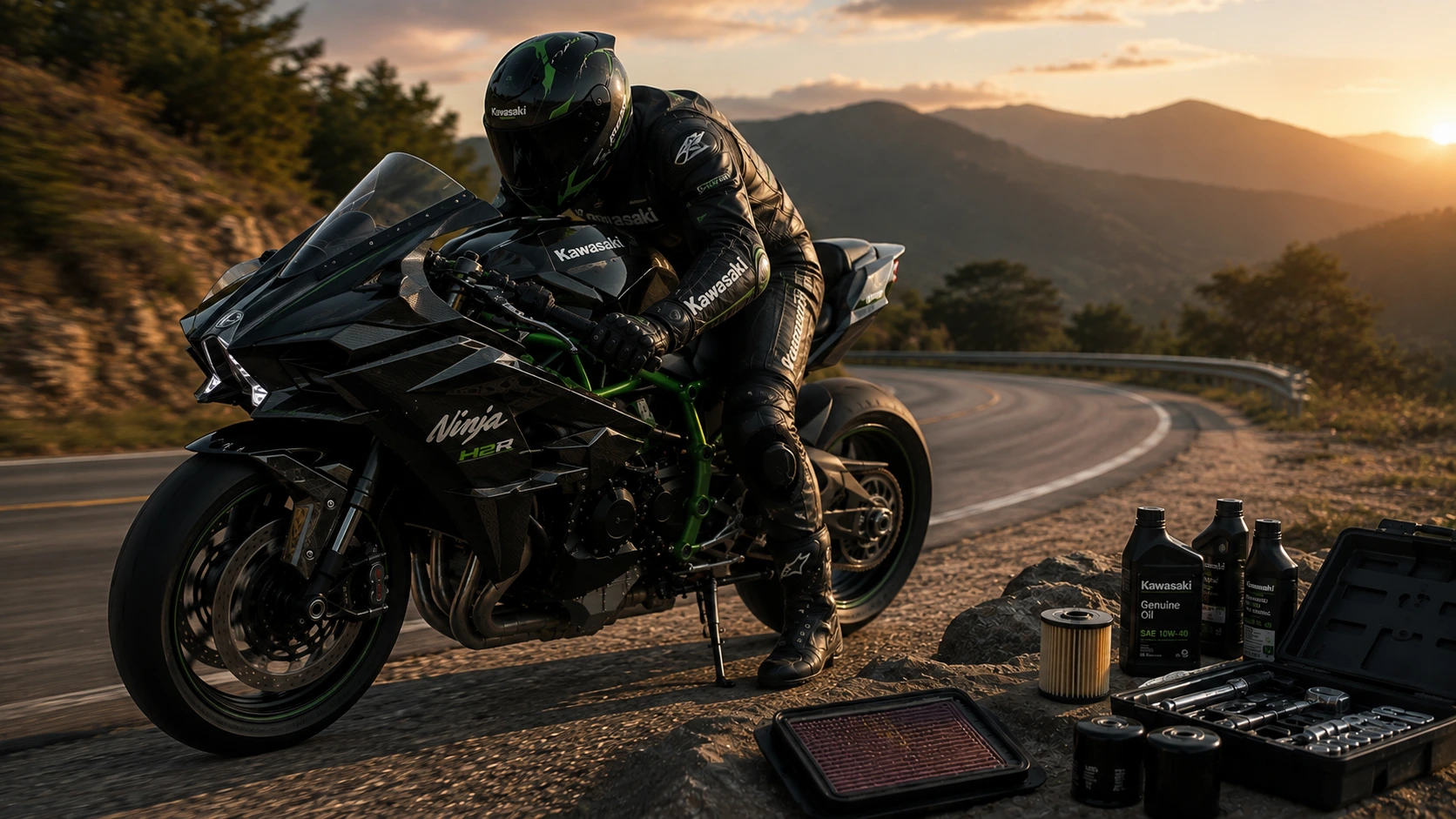
Kawasaki requires H2 and H2R servicing to go through dealerships with factory-trained technicians who’ve completed specific certification for the supercharged platform. Skipping this to save money at an independent shop risks both your warranty and the health of components that behave very differently from a naturally aspirated engine.
Oil Changes Matter More Than on Any Other Ninja
The supercharger creates significantly higher internal pressure and heat than a standard engine produces, which puts extra stress on engine oil. Staying strictly on schedule with oil changes, rather than stretching the interval the way some riders do on other bikes, meaningfully protects the engine’s internals over time.
Premium Fuel Is Non-Negotiable
Because of the boost generated by the supercharger, the H2R requires high-octane fuel to prevent detonation. Running lower-octane fuel isn’t just a performance downgrade here. It risks fracturing piston rings and causing heat-related damage to the pistons that can be expensive and complex to repair.
The Cooling System Works Harder
The additional heat generated by forced induction means the H2R’s cooling system operates under a more sustained load than a standard Ninja’s. Regular coolant level checks and staying ahead of even small leaks matter more on this platform than almost anywhere else in the lineup.
Valve Train Ticking on Higher-Mileage Units
As with the ZX-6R and ZX-10R, a rhythmic ticking sound that grows louder with RPM often points to valve train wear or a need for a valve clearance adjustment. Given how few H2R units accumulate high mileage, this is worth monitoring closely on any unit that has seen substantial track time.
Noticeably Higher Overall Maintenance Costs
Between specialized parts, mandatory certified dealer servicing, and the premium components used throughout the bike, total maintenance costs on the H2R run well above any other Ninja model. This reflects the bike’s position as a flagship performance machine rather than any inherent unreliability, but it’s an important budgeting reality for anyone considering ownership. Even comfort-related components carry a premium here. A worn or damaged Ninja H2 passenger seat is a good example of a part that’s model-specific enough to need exact-fitment sourcing rather than a generic aftermarket substitute.
Buying a Used Ninja: A Quick Reliability Checklist
If you’re shopping for a used Ninja rather than troubleshooting one you already own, a few extra checks can save you from an expensive surprise.
First, ask for the full service history, and don’t be shy about walking away if the seller can’t produce any records at all. A bike with gaps in its maintenance history is a bigger risk than the specific model or mileage.
Second, start the bike from cold if at all possible. A rough or unstable idle on a cold start, especially on a 300 or 400, tells you a lot before you even pull out of the driveway.
Third, listen closely once the engine is fully warm, not just at startup. Valve train noise that persists after warm-up on any of the four-cylinder models is worth a mechanic’s opinion before you commit.
Fourth, check the VIN against open recalls, particularly on 2013 Ninja 300s and early ZX-10R generations. This takes a few minutes at most dealerships, and it’s free.
Finally, factor in the model-specific costs above. A ZX-10R will need tires more often than a Ninja 650. An H2R will need dealer-only servicing at a higher price point than any other bike in the lineup. Understanding these costs upfront, rather than discovering them after the sale, makes for a much better ownership experience.
Conclusion
Every Ninja model has its own personality, and its own short list of things worth watching closely. Staying ahead of these common issues, rather than reacting only after something breaks, keeps repair costs down and keeps your bike reliable for years of riding. Whether you’re maintaining a Ninja 300 you’ve owned since your first year of riding, or you’re doing your homework before buying a used ZX-10R, understanding these model-specific patterns puts you in a much stronger position than guessing.
When it’s time to replace a worn part rather than just diagnose it, browsing Kawasaki motorcycle parts on Aliwheels by exact model and year helps you confirm fitment before you order, so the part you receive matches your bike the first time.
Frequently Asked Questions
Are Kawasaki Ninjas generally reliable motorcycles?
Yes, as a whole, the Ninja lineup has a solid reliability reputation, especially the smaller displacement models like the 300, 400, and 650. Like any machine with tens of thousands of units on the road, common wear points do exist, but most are well documented, well understood, and inexpensive to prevent with regular maintenance.
What is the most common Kawasaki Ninja problem overall?
Across the model range, charging system issues, meaning a failing stator or rectifier, come up more consistently than almost any other single problem. This affects everything from the Ninja 650 to the ZX-10R, and it’s worth including in routine checks on any Kawasaki with meaningful mileage.
Do older Ninja models have more problems than newer ones?
Generally, yes, simply due to age and accumulated mileage rather than any dramatic design flaw. First-generation Ninja 650 models and second-generation ZX-10R models tend to show up more often in owner problem reports, largely because those platforms have had the most years, and the most miles, to reveal their weak points.
How much does Ninja H2R maintenance typically cost compared to other Ninjas?
H2R maintenance runs significantly higher than any other model in the Ninja lineup, due to mandatory certified dealer servicing and the cost of supercharger-specific parts. This is a known and expected part of owning a flagship performance machine, not a sign of poor reliability.
Why does my Kawasaki Ninja run hot or overheat?
Overheating usually comes down to one of three causes: a cooling fan that isn’t activating when it should, a thermostat stuck partially closed, or a radiator with reduced airflow from dirt and debris. On certain 2008 to 2011 ZX-6R and ZX-10R models, Kawasaki also issued an official recall for a voltage regulator that could overheat and cause stalling, so checking recall status is worth doing before assuming the cooling system itself is at fault.